

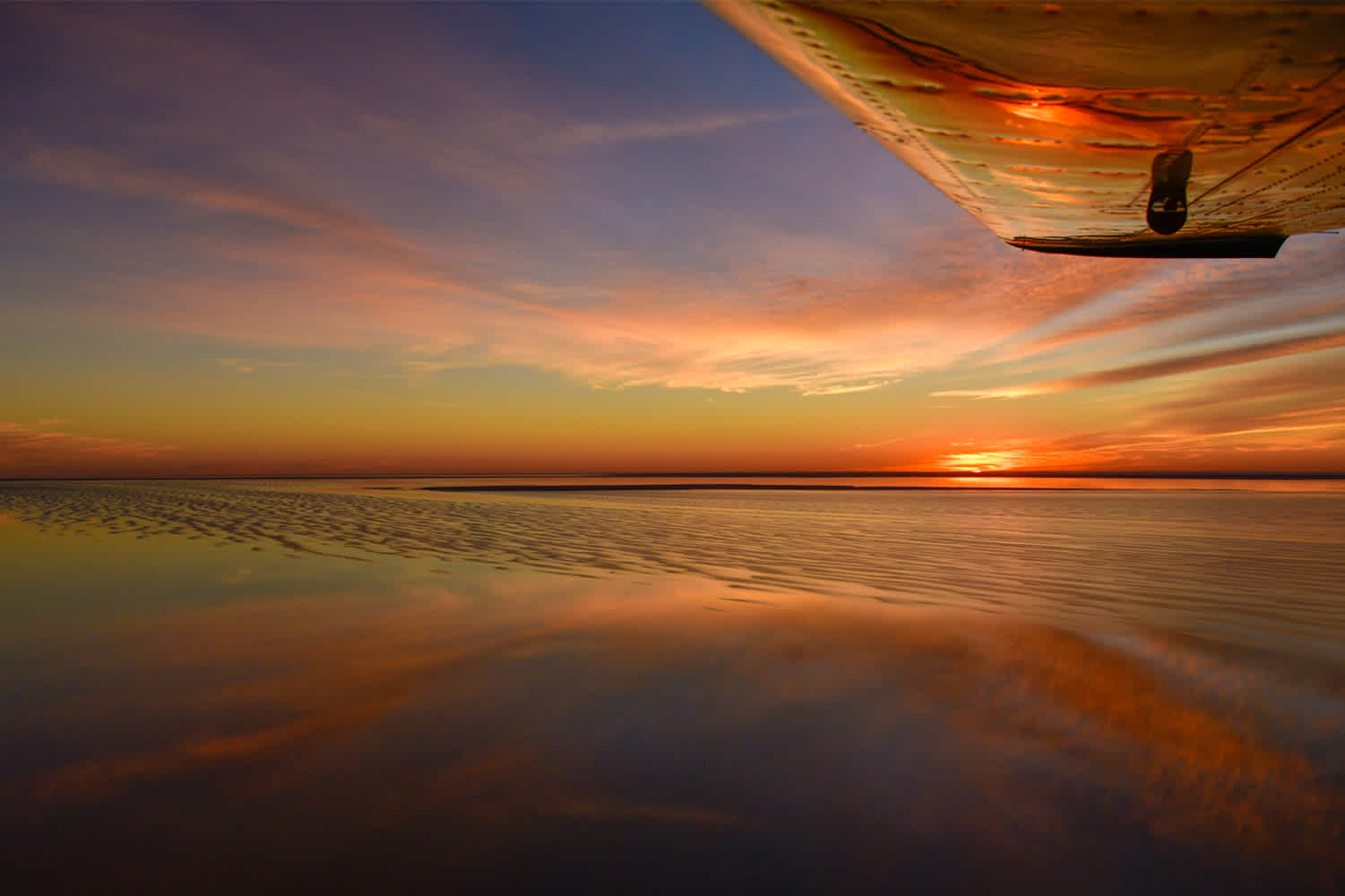
Kati Thanda-Lake Eyre, usually barren, is about to make an incredible transformation. Source: Outback Spirit
A remote part of Australia, normally described as a barren “salt pan”, is on the cusp of an incredibly rare phenomenon that will see the sacred region explode with life.
Tour operators are bracing for an influx of visitors hoping to catch a glimpse of the breathtaking scenes as South Australia’s Kati Thanda-Lake Eyre transforms into an inland sea. Predictions expect that water levels will be highest they have been since 1974 — more than 50 years ago.
South Australia’s Department of Environment reported last week that 600 -1000 gigalitres of water is currently making its way into South Australia from Western Queensland after a 2,000 kilometre band of rain swept across the country in March. The deluge saw parts of the outback go underwater with residents cut off for weeks.
Water is already entering Kati Thanda – Lake Eyre, a 77km stretch of lake in northern South Australia, with the Bureau of Meteorology forecasting the Queensland floodwaters will start filling the lake in June onwards.
“There are predictions that the water levels are higher than in 1974, which was a huge flood year for Lake Eyre,” Amy Barham from tour operator Outback Spirit told Yahoo News of the incredible phenomenon.

Aircraft crews are set to take tourists to witness the incredible scenes from June 1. Source: Outback Spirit

South Australia’s Kati Thanda-Lake Eyre is about to transform into an inland sea. Source: Outback SpiritWhat happens when Kati Thanda-Lake Eyre fills?
The salt lake is Australia’s lowest point at 15.2 metres below sea level. The lake has only filled to capacity three times in the past 160 years.
And when it fills, bony bream, hardyhead, shrimp, catfish and perch are carried in by the waters, and their populations explode in the lake. Breeding birds fly from as far away as China and Japan to enjoy the feeding frenzy along with natives like pelicans, robins, cockateils, ducks and ibis.
Along the dunes, wildflowers, grasses, and shrubs will burst into life too.
Unfortunately, as the native wildlife proliferates, so too will invasive pests, local residents Annemarie van Doorn and her husband, Luke Playford, told the Sydney Morning Herald.
Invasive pigs, camels, cats and foxes will also be attracted to the rarely-seen waters. Buffel grass, branded one of Australia’s “most devastating invaders”, is likely to spread like wildfire too.
“Lake Eyre flooding, historically, is usually every 3-4 years,” Barham explained. “In saying this, we have seen flood waters make it’s way to Lake Eyre every year since 2019 – some years are longer and more significant than others.
“This year is set to have the most substantial water fill we’ve seen in the last 15 years.”

Incredible sunsets and sunrises are witnessed across the region. Source: Outback Spirit

The region explodes with wildlife such as flocks of pelicans as water flows in. Source: Outback SpiritHow to see Kati Thanda-Lake Eyre
For the Arabana people, the lake is considered to be “sacred” and “dangerous to visit without the guidance of cultural authority”. Swimming, driving, and boating were already prohibited when a fresh set of recreational bans came into force earlier this year preventing visitors from walking in the area.
Tourists are still able to admire the lake from the air or from viewing platforms.
A range of tour operators will be taking tourists to the region on scenic flights to witness the spectacular landscape. “Our first tour of the season departs Adelaide on the 1st June,” Barham explained.
“People can expect to see the Lake from the air, the water running through all the channels that link in with Lake Eyre and the kaleidoscope of colours that the water brings with it,” she said.
As for how long the waters will last, Barham said, “it’s hard to say”.
Do you have a story tip? Email: newsroomau@yahoonews.com.
You can also follow us on Facebook, Instagram, TikTok, Twitter and YouTube.
