
The United States and China have agreed to cut levies on each other’s goods by 115% for 90 days, in a major de-escalation of the trade war ignited by US President Donald Trump.
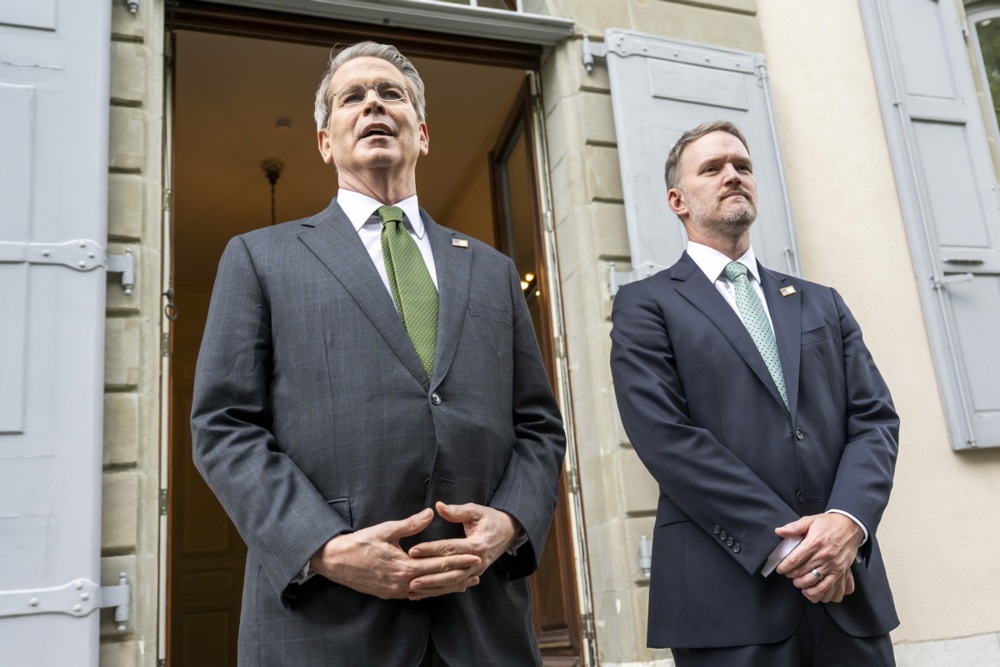
Washington’s duties on Chinese goods will fall from 145% to 30%, while Beijing’s tariffs on American goods will drop from 125% to 10%, US Treasury Scott Bessent told reporters after meeting with senior Chinese officials in Geneva.
“We had very robust discussions. Both sides showed great respect to what was a very positive process,” Bessent said.
In a statement, the White House said that Beijing and Washington would “establish a mechanism to continue discussions about economic and trade relations”.
The European Commission, which oversees the bloc’s trade policy, said “we want to lower barriers, not increase them… This announcement appears to go in that direction, so we welcome it.”
The dollar surged following the announcement, rising 1.17% against a basket of other countries and 1.16% against the euro.
Stocks also rose, with the EURO STOXX 50 of eurozone equities up 0.47% and the German DAX up 0.72% as of 10:30am CET on Monday.
Monday’s announcement follows Trump’s imposition of sweeping “reciprocal” levies on US trading partners last month, leading to tit-for-tat retaliation by Beijing that triggered fears of a potential decoupling between the world’s two largest economies.
EU officials have feared that Trump’s tariffs on Beijing could lead to billions of dollars’ worth of Chinese goods being re-directed and “dumped” on European markets, inflicting further damaging the bloc’s long-suffering industries.
The EU is still subject to a 10% blanket US levy as well as 25% duties on steel, aluminium, and cars.
The European Union Chamber of Commerce in China said it was “encouraged” by Monday’s announcement but warned that “uncertainty remains” for EU firms operating in China.
“This [uncertainty] is partly because certain tariffs have only been suspended for 90 days, and partly because of the erratic nature in which these tariffs were implemented in the first place,” said the Chamber, which represents more than 1,700 companies.
(om)