
Lejla A. Babović, former Head of Delegation for Bosnia and Herzegovina at Eurovision, gave an interview discussing the contest and the country’s potential return.
Nine years after Bosnia and Herzegovina’s last participation in Eurovision, Lejla A. Babović appeared on BHRT’s morning program “Jutro za sve”, where she described the financial difficulties and the current political landscape of the contest.
“Once BHRT has a stable source of funding, Bosnia and Herzegovina will be able to return. That would be achieved with the help of sponsors and advertising. Eurovision is not something that BHRT, or any public broadcaster, can fully finance on its own. Even RTS, Serbia’s public broadcaster, with an annual budget of 170 million euros, relies on sponsors. In contrast, BHRT has only 15 million—and sometimes even less.”
BHRT’s outstanding debt to the EBU remains a major obstacle, currently estimated at 8 million euros. Despite the grim outlook, Babović praised the current government’s efforts.
“I must commend the current government. They are really trying, unlike the previous ones. However, the results are still not here. This problem didn’t start yesterday. Since 2017, it has been swept under the rug. Everyone thought the EBU would simply forgive the debt, as it did in the past, but that didn’t happen. We need to get serious. BHRT was established by the Parliament of Bosnia and Herzegovina, and the state must fulfill its duty as guarantor.”
Babović also commented on the changing attitude of the EBU toward Bosnia and Herzegovina. In the early years, especially during and after the war, the EBU was more understanding and supportive.
“They erased some of our debts up until 2004. But if you compare that to the support Ukraine receives today, it’s not even close. Ukraine has the EBU’s full backing, something Bosnia and Herzegovina never had.”
On the cost of participation, Babović emphasized how hard it is for small countries to keep up without the EBU’s support.
“It’s impossible to participate in Eurovision without at least half a million euros. That’s a huge amount for BHRT. Eurovision may only last two nights on screen, sometimes even one, but the delegation has to be there for at least 15 days. There are mandatory accommodations, outfit costs, your team must represent the country with dignity. Eurovision is, in essence, a state-level promotion.”
The former Head of Delegation also expressed concerns about the contest’s evolution.
“Eurovision is everything but a song competition. It’s about staging, effects, and money. Competing with countries like Sweden and Germany, with nearly unlimited budgets, is unrealistic for us. However, Bosnia and Herzegovina can offer quality—meaningful lyrics, powerful songs, and strong vocals. That’s our strength.”
Babović concluded the interview with her thoughts on politics and the double standards she believes the EBU and Eurovision are currently applying.
“All of this is my personal opinion. After Russia invaded Ukraine, the EBU quickly expelled Russia from the contest without considering the financial consequences. That decision left a large financial gap, which both the EBU and the rest of the broadcasters are now feeling. With Israel, however, they didn’t make the same decision. I don’t understand it. If Russia is out, then by the same logic, KAN, Israel’s public broadcaster, should have skipped a few years.”
Still, Babović offered a note of hope for a possible return in 2026, which would mark ten years since the country’s last appearance.
“If we pay off the debt by November and start working seriously, we could return in 2026. But it requires effort from BHRT, the state, sponsors, and the people—to choose the right song and come back as serious contenders.”
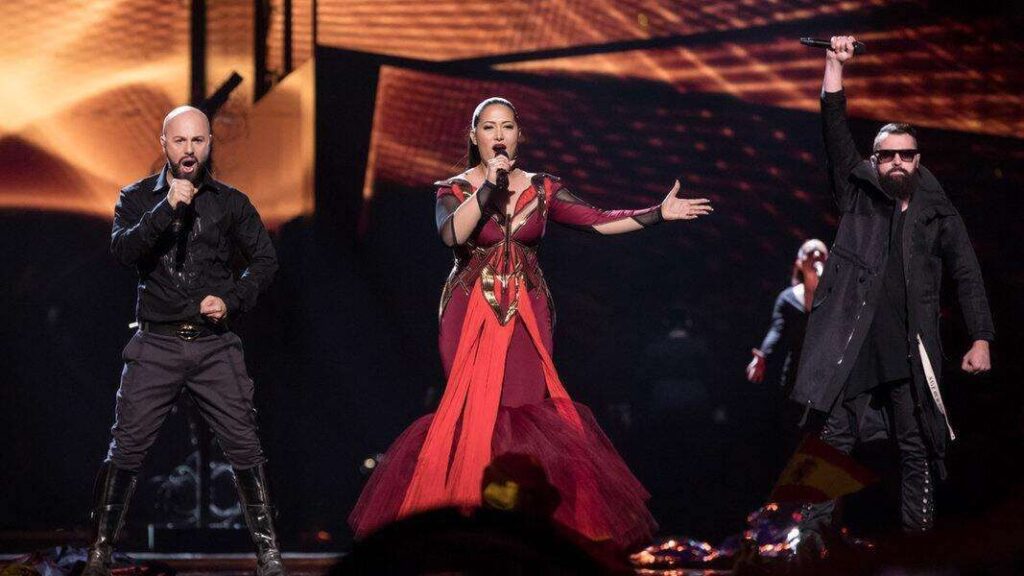
The last time Bosnia and Herzegovina participated in the Eurovision Song Contest was in 2016, when—for the first time ever—the country failed to qualify for the final, finishing 11th in the first semifinal.
Stay tuned on Eurovisionfun for all the news regarding the Bosnian participation at the Eurovision Song Contest!
Source: klix.ba