
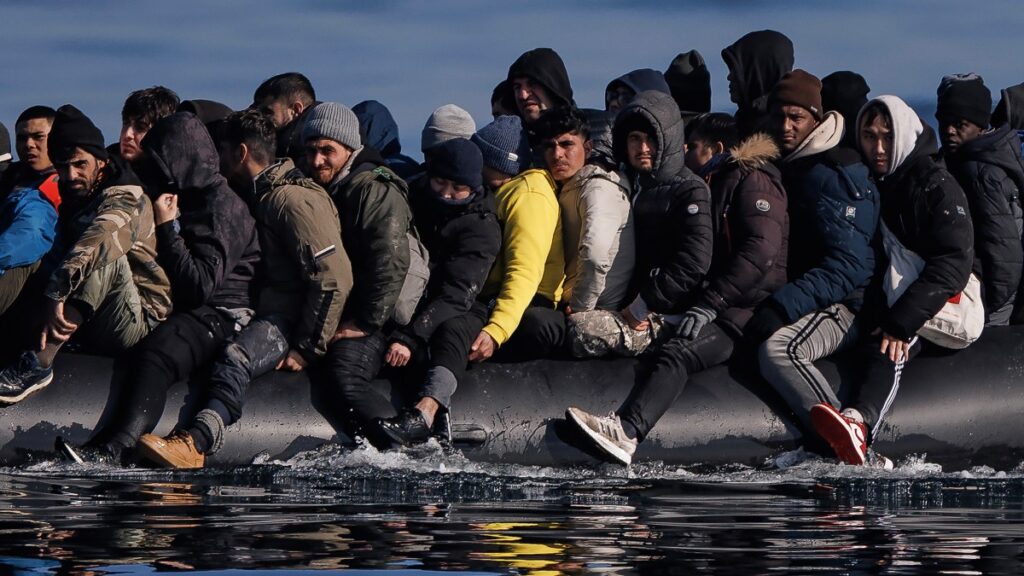
Britain will ask Kosovo to take small-boat migrants as part of plans to open a series of “return hubs” overseas, The Times can reveal.
The western Balkan country is on a shortlist of nine countries drawn up by ministers and officials as potential destinations for overseas hubs where rejected asylum seekers would be sent after they have exhausted all their avenues of appeal in the UK.
Vjosa Osmani, Kosovo’s president, has also said that her country would be “open” to talks over a potential deal to take Britain’s failed asylum seekers.
Kosovo joins Serbia, North Macedonia, Bosnia-Herzegovina and several countries outside Europe that have been shortlisted as nations ministers want to approach.
No formal talks have yet begun with any countries but ministers are understood to want to have made progress by the time Britain hosts a meeting of western Balkans leaders in London in autumn, where illegal migration will be top of the agenda.
Ministers had hoped Albania would be open to hosting one of Britain’s return hubs but Edi Rama, its prime minister, ruled it out last week.
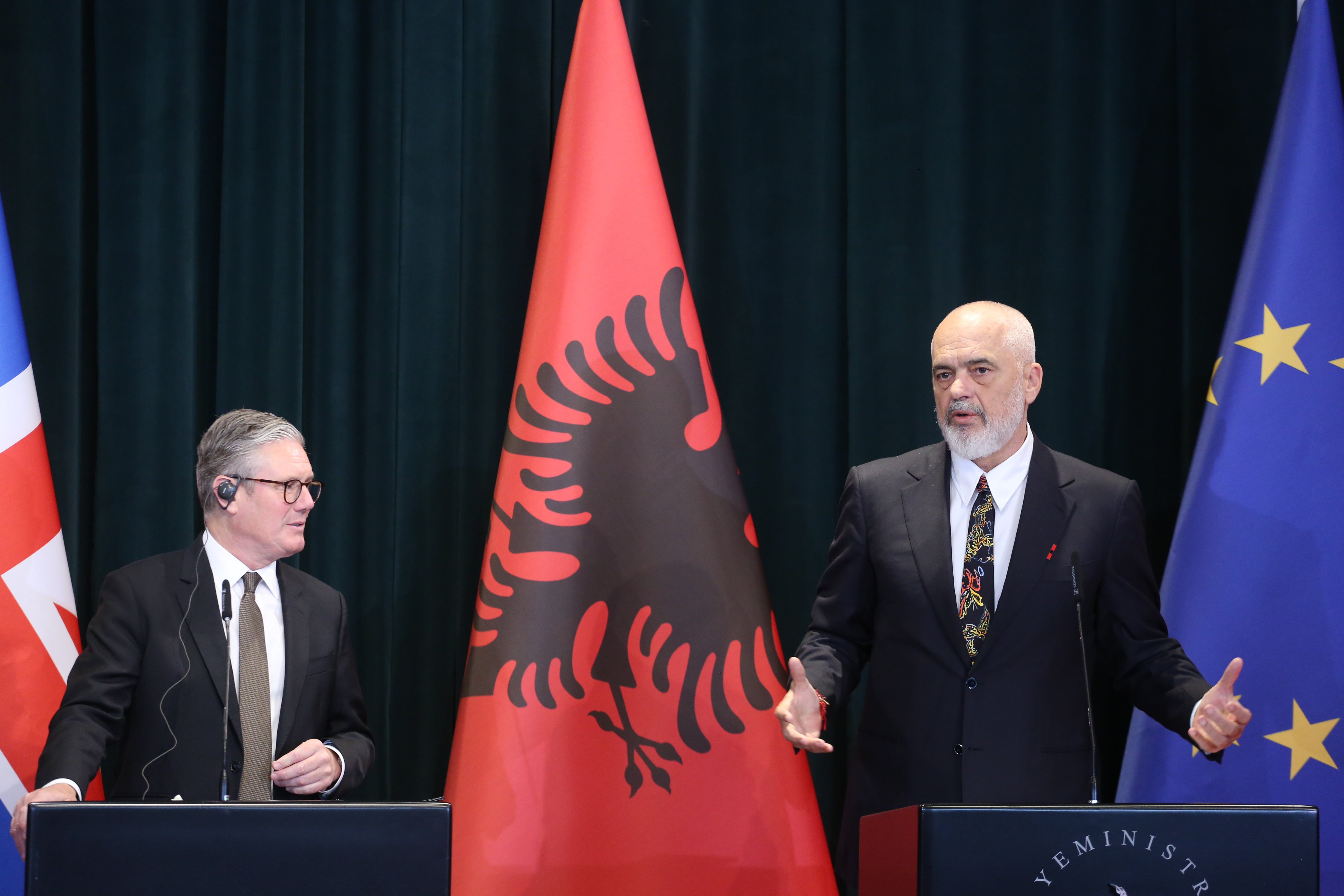
Sir Keir Starmer with Edi Rama, the Albanian prime minister
MALTON DIBRA/EPA
Senior government sources said Kosovo was a “plausible” country for setting up a return hub because it is on one of the main routes used by illegal migrants on their way towards the European Union. Nearly 22,000 illegal migrants used the western Balkans route to enter the EU last year, according to the Foreign Office.
Evidence of migrants passing through the country hosting return hubs is seen as a crucial step towards smoothing the legal process for deporting migrants. The UK would be able to argue that they had the opportunity to claim asylum in a “safe” country but chose not to.
More than 3,000 migrants entered the EU after travelling through the western Balkans in the first four months of the year, including 804 in April, according to Frontex, the EU’s border agency. Afghans, Turks and Syrians accounted for the largest number of arrivals.
• Two migrants die as record number cross Channel in one day
Starmer is under mounting pressure over his failure to combat the rising numbers of migrants arriving in small boats. A record 13,573 migrants have arrived in small boats so far, 37 per cent higher than at the same point last year.
Kosovo, one of the poorest nations in Europe, has a population of about 1.6 million and is bordered by Serbia to the north and east, North Macedonia to the south east, Albania to the southwest and Montenegro to the west.
President Osmani of Kosovo said last week that her country would be open to the idea of hosting one of Britain’s return hubs. “There’s been no formal talks with the UK on this issue. It hasn’t been raised so far,” she said.
“We would be open to discussing it, however I can’t say more than that because I don’t know the details. I cannot give an answer on a request that hasn’t been made so far.”

Italy built a migrant camp in Albania after signing a deal with the country in November
ADNAN BECI/AFP/GETTY IMAGES
Several other European countries are exploring offshore hubs for illegal migrants, including Italy, Denmark, Germany, the Netherlands and Switzerland.
Any deal would require Britain to pay for each failed asylum seeker relocated.
Kosovo has shown its willingness to strike international deals to take Europe’s unwanted migrants. In 2021 it agreed a €200 million deal with Denmark to take 300 of its foreign prisoners, who will serve the rest of their sentence in Kosovo until they can be deported back to their home country, although the agreement has not yet been implemented.
• Here in Kent they want to stop the boats. Did voting Reform help?
David Lammy, the foreign secretary, visited Kosovo last month where he struck a deal to supply UK technology to stop the country being used by organised crime groups to smuggle illicit goods and migrants bound for Britain.
The EU announced in March that it approved of member states pursuing return hubs and Starmer is said to be keen to collaborate with other European countries. The Netherlands is in negotiations with the Ugandan government about opening a return hub.
Speaking during his trip to Albania earlier this month, the prime minister confirmed that the UK government was pursuing the idea of setting up return hubs, adding: “I see them as a really important innovation.”
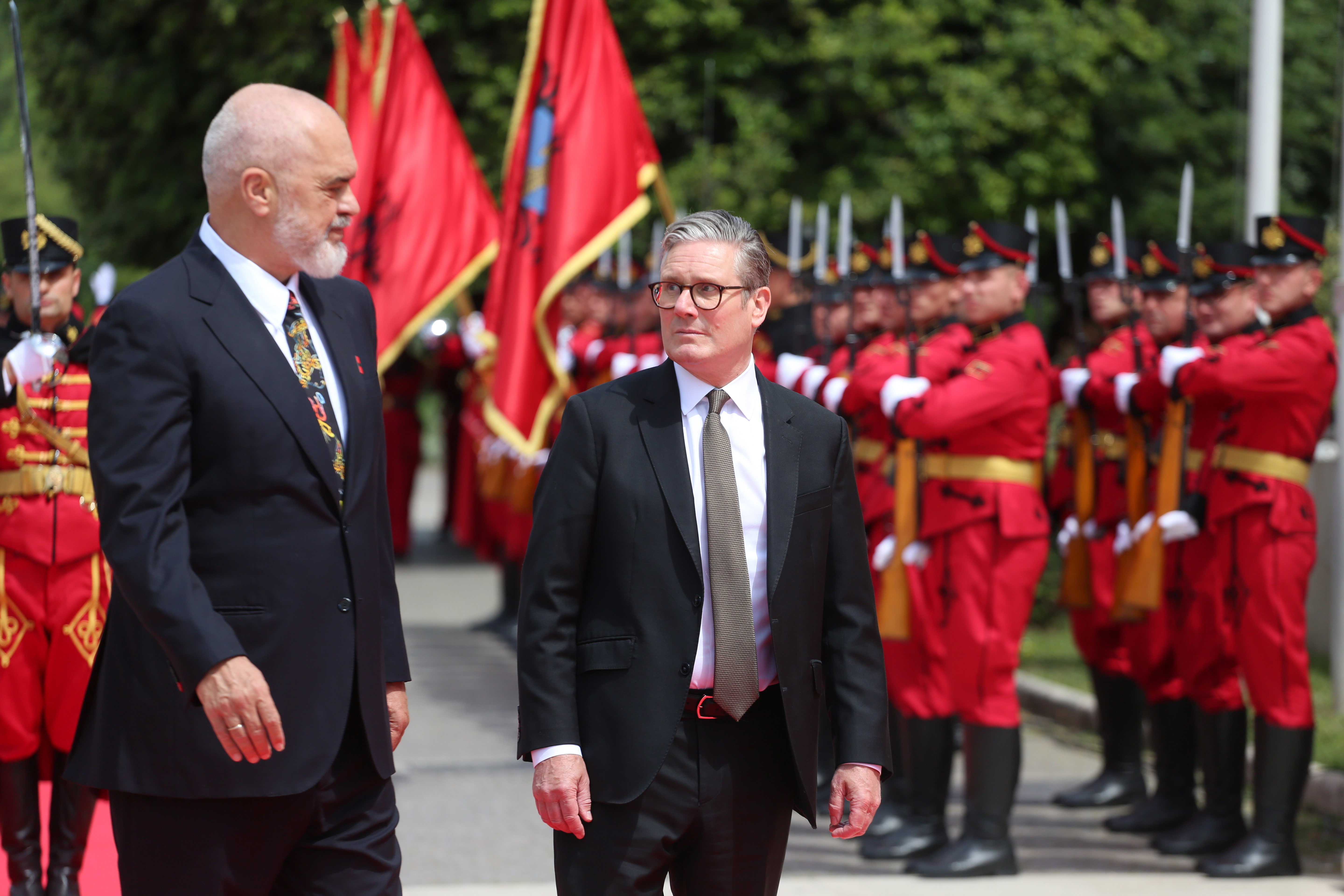
Rama and Starmer in Albania earlier this month, although the country will not be hosting one of the UK’s return hubs
MALTON DIBRA/EPA
Last month The Times revealed that the concept of return hubs had won the endorsement of the UNHCR, the UN’s refugee agency, in a move that was described as game changing by government insiders.
Yvette Cooper, the home secretary, discussed the prospect of paying countries in the Balkans to take Britain’s failed asylum seekers at a meeting with Filippo Grandi, the UN high commissioner for refugees.
• Britain’s asylum hotel ‘king’ becomes a billionaire
The UNHCR’s support of the hubs is seen as vital to their feasibility because its intervention in the Supreme Court case against the Conservative government’s Rwanda scheme ultimately led to it being ruled unlawful.
Labour’s plans would differ from the Conservative government’s Rwanda deportation scheme, which was designed to send illegal migrants to the African country on a one-way flight within days of arriving in the UK without hearing their case for asylum but was scrapped as one of Starmer’s first acts as prime minister.
Government sources have ruled out the prospect of pursuing a return hub in Rwanda because Labour does not view it as a safe country.
Government sources have said that any return hub scheme would need to meet Starmer’s test of being “affordable, workable and legal”.