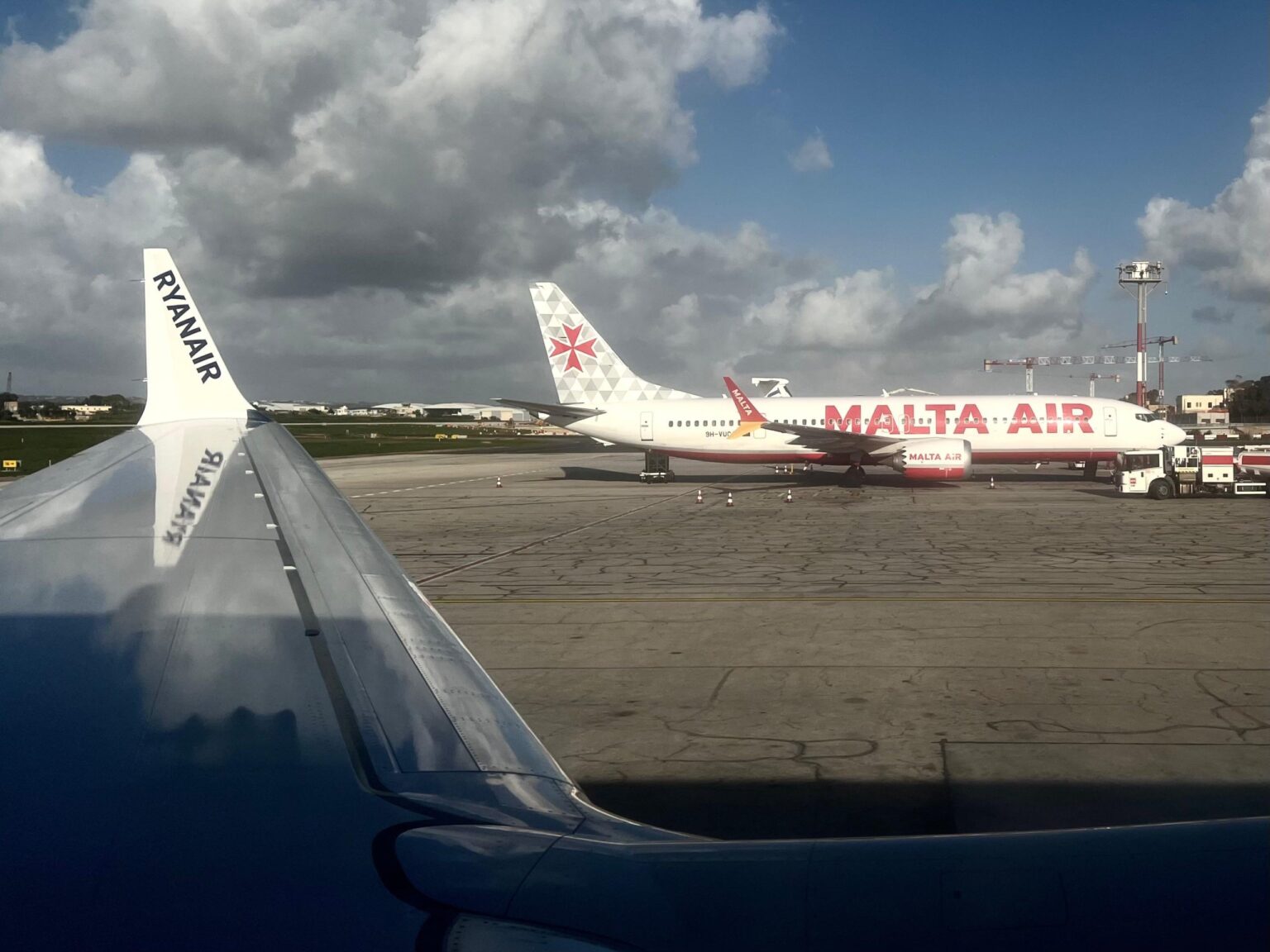
Prime minister Robert Abela has refused to describe the 2019 Malta Air agreement as a “deal” due to its “negative connotations”, whilst defending the controversial arrangement that saw Ryanair acquire full control of the airline for just €25,000.
Speaking to journalists on Friday, Abela repeatedly avoided using the term “deal” when discussing the Malta Air agreement, instead describing it as a “commercial transaction that was executed”.
The Prime Minister sought to deflect criticism by highlighting the subsequent creation of KM Malta Airlines following the closure of Air Malta.
When pressed on whether he agreed with the arrangement that saw the government lose control of Malta Air, Abela attempted to avoid direct engagement with the question, stating: “There was a commercial transaction that was executed and we look forward.”
‘Easy to be critical in hindsight’
Under continued questioning about his stance on the agreement, particularly given that the government had effectively ceded control of the airline, Abela acknowledged the controversy but defended the decision-making of the time.
“It’s easy to be critical in hindsight,” the Prime Minister said as he clearly steered away from criticising the preceding Labour administration, arguing that critics must “take into consideration the reality of the time when the deal was struck.”
Throughout his comments, Abela consistently referred to the Malta Air arrangement as a “commercial transaction” rather than using the term “deal”, suggesting a deliberate attempt to distance his administration from the language typically associated with the controversial agreement.
Despite the apparent reluctance to endorse the Malta Air arrangement directly, Abela went on to praise Ryanair and emphasise the important role that low-cost airlines play in Malta’s tourism sector.
The Prime Minister’s comments come as the full details of the Malta Air agreement have emerged, revealing the extent to which the government had limited its own influence over the airline’s future.
The Malta Air arrangement, originally struck in 2019 during Konrad Mizzi’s tenure as tourism minister, has come under renewed scrutiny following revelations about its terms. The government retained only a single golden share in the airline, which Ryanair was contractually entitled to purchase after five years for €25,000.
The agreement, signed on 11 June 2019, included a “call option” clause that gave Ryanair’s holding company, Gulliver Holding Ltd, “the right but not the obligation” to purchase the government’s golden share no earlier than five years from the contract’s signing date.
Ryanair exercised this option on 12 June 2024, exactly five years and one day after the original agreement, having notified the government of its intentions on 16 May 2024. Tourism authorities reportedly concluded they had “no choice but to respect the contract and go along with the sale” after exploring all available options.
Mizzi’s defence of original agreement
Disgraced former minister Konrad Mizzi, who negotiated the original agreement, has defended the arrangement as “a major success story”. Mizzi argued that the golden share was intended as “a special policy tool to monitor implementation by the private investors and to ensure the benefits to the country were maximised.”
Mizzi is now being prosecuted for corruption related to the hospital privatisation deal and the 17 Black scandal. He denies all accusations.
According to Mizzi, the arrangement enabled Malta Air to register over 180 aircraft in Malta, carry almost five million passengers across 68 routes, and drive up traffic by 11 per cent. He claimed the Malta base represented “an investment in excess of $800 million and supports thousands of jobs in Malta’s economy.”
Abela’s careful language around the Malta Air agreement comes at a time when his administration faces questions about various inherited arrangements from the previous Labour government.
The Prime Minister recently reinstated Ronald Mizzi, the permanent secretary who signed the Malta Air agreement, to public office after he had resigned when faced with fraud charges in the Vitals investigation.
Air Malta was closed last year after decades of financial mismanagement and political interference left it with unsustainable losses.
The European Commission rejected a proposed €290 million state aid package, ruling it breached EU competition rules. As a result, the government dissolved Air Malta and launched a new national carrier, KM Malta Airlines, which began operations in March 2024.
Maltese taxpayers ultimately absorbed €356 million in Air Malta’s accumulated losses. To gain EU approval for the new airline, the government agreed to conditions including partial privatisation. Around 30–35% of KM Malta Airlines will be sold to private investors, with finance minister Clyde Caruana saying late last year the move is necessary and should happen quickly.