
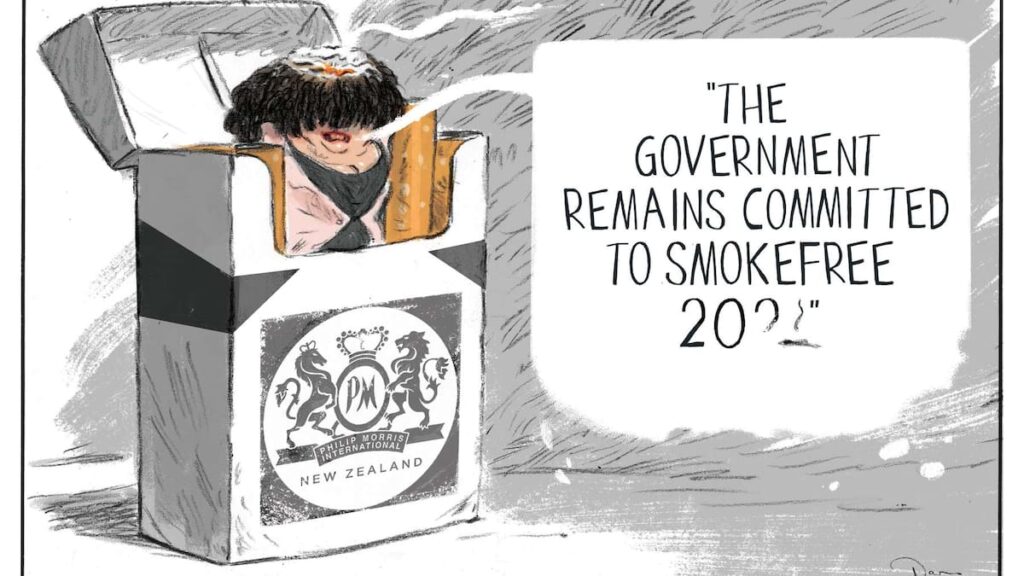
Today is World Smokefree Day, and the goal of Smokefree 2025 was launched 14 years ago.
“We were on track to lead the world in tobacco control, now we appear to be leading the world in vaping.
“We’re just chasing a new kind of addiction – and calling it progress.”
Harding said the repeal of smokefree measures “blindsided everyone” and that the previous policies were a “significant step forward” in reducing respiratory disease and health inequities, particularly for Māori and Pacific communities.
“The Government’s strategy seems to be, ‘Let’s just add vapes to the mix’, which is just another product that has harmful health effects and ensures future generations are nicotine-dependent,” said Harding.
Associate Health Minister Casey Costello, who led the Government’s work on smoking regulation, said the Government was committed to the Smokefree 2025 target and had “continued and accelerated the initiatives, programmes and services that has contributed to our quit-smoking successes”.
Smoking rates were declining and New Zealand had one of the world’s lowest smoking rates, she said.
“We also remain focused on doing all we can to prevent youth vaping. More restrictions are coming into force on June 17.
“These join the other regulations we have already introduced, following a period where New Zealand was initially slow to regulate against vaping before we came into government.
“I am pleased to see research showing that regular youth vaping rates are showing decreases over the last three years.”
Costello has faced criticism over her party’s reported ties to the tobacco industry.
Labour health spokeswoman Ayesha Verrall said the 2025 smokefree goal was at risk.
“We need to be doing everything we can to meet it, to save lives, and keep people healthy and out of hospital.
“Our world-leading smokefree laws were scrapped by the National Government, and smoking rates in New Zealand have risen for the first time in over a decade.”
Verrall said the policies Costello has enacted echoed what the tobacco lobbyists had been asking for.
“She even oversaw the creation of a $216 million tax break to tobacco companies to encourage use of a product that there is no evidence reduces harm.
“The interests of tobacco lobbyists seem to be her biggest priority, not the health of New Zealanders.”
Verrall said she was concerned vapes were a new addiction for children rather than a tool to help people quit smoking.
“There is growing evidence of the long-term harm vaping causes to the lungs.”
In response, Costello said the provisions that were repealed by the Government had not been in effect yet and were not having any influence or impact on smoking or vaping rates.
The Government was focused on preventing youth vaping and had increased penalties for anyone supplying vapes to under-18s.
New vaping measures due to come into force next month include banning disposable vapes, further proximity restrictions for specialist vape retailers, and restrictions on displaying vapes, which will also apply to product images for online vape stores.
“Most smokers are older and have been smoking for some time, so they need help to quit,” Costello said.
“Our approach is about achieving smokefree through consent, not coercion – and having much better regulations and enforcement. A key part of that approach is to allow access to safer and lower-cost nicotine products, like vaping.”
Jaime Lyth is a multimedia journalist for the New Zealand Herald, focusing on crime and breaking news. Lyth began working under the NZ Herald masthead in 2021 as a reporter for the Northern Advocate in Whangārei.