
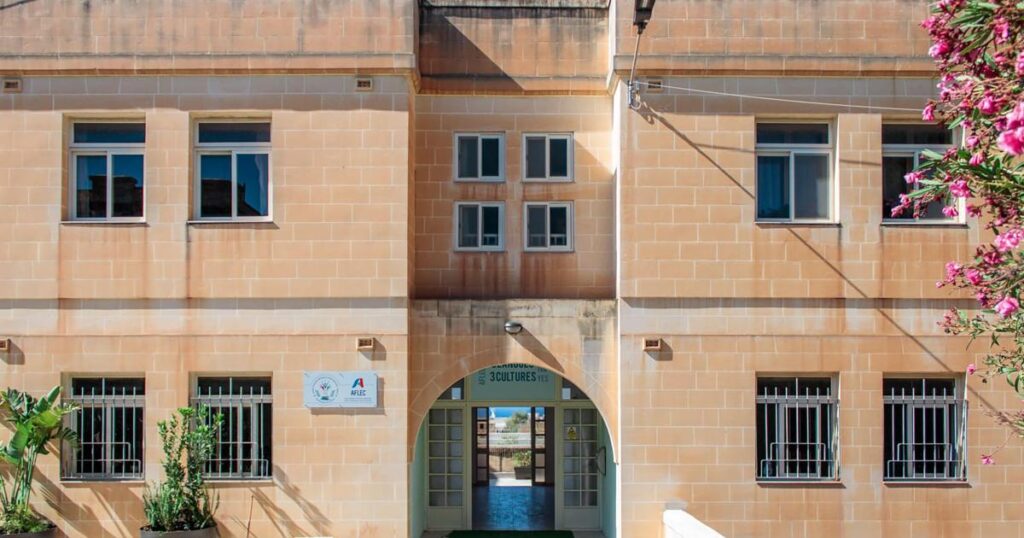
Malta’s first French-English bilingual school will open its doors to pupils in September.
The French Bilingual International School – Malta, will follow the internationally recognised French curriculum alongside the Cambridge curriculum for English.
Students will also have daily lessons focused on Maltese language and culture in the private school operating from part of the Pembroke parish centre under a 10-year lease.
The idea was conceived by the Association Franco-Libanaise pour l’Éducation et la Culture (AFLEC), a French non-profit that already operates seven schools in Lebanon, the UAE, and Tunisia.
Anne Douaire-Banny, who is coordinating the school’s launch, said there had long been demand for a French school in Malta, but larger operators were hindered by the perceived small market.
“We’re not aiming to build a large business, but rather successful schools – and for us, success means happy families and strong learning outcomes,” she said.
Described as a “boutique private school”, Douaire-Banny acknowledged that fees are high but competitive within the local international school market.
According to the school’s website, tuition fees for this year are €9,500 for pre-school children (ages 3-5) and €11,300 for elementary students (ages 6–10). There are also joining fees.
Douaire-Banny said Malta’s location within Europe also adds to its appeal.
This is not a language school – both languages are given equal importance and taught in the context of culture
She noted growing interest from both foreign and Maltese families. Among the Maltese, some are mixed-nationality couples seeking an international education for their children, while others are Maltese parents who want to broaden their children’s language exposure while maintaining ties to their own culture.
Viviane Derégnaucourt, the head of school, said students will be prepared for international exams that will allow them to continue their education either in Malta or abroad.
There are no language requirements for admission. Students can join whether they are already bilingual or not.
“This is not a language school – both languages are given equal importance and taught in the context of culture,” she said.
She explained that each class will be led by two homeroom teachers: one French-speaking and one English-speaking, working closely together. Maltese language and culture will be taught daily, and discussions are ongoing with the University of Malta to develop curricula for both native and non-native speakers.
AFLEC president Paul Raucy emphasised the association’s commitment to education and cultural diversity: “We are not creating a French club. This is an international school with rich cultural diversity. We value education, culture, and languages deeply.”