
The Trump administration’s proposed budget for 2026 slashes about 90 percent of the funding for one of the country’s cornerstone biological and ecological research programs.
Known as the Ecosystems Mission Area, the program is part of the U.S. Geological Survey and studies nearly every aspect of the ecology and biology of natural and human-altered landscapes and waters around the country.
The 2026 proposed budget allocates $29 million for the project, a cut from its current funding level of $293 million. The budget proposal also reduces funds for other programs in the U.S. Geological Survey, as well as other federal science agencies.
The budget still needs to be approved by Congress and scientists are seizing the opportunity to save the E.M.A. In early May, more than 70 scientific societies and universities signed a letter to Interior Secretary Doug Burgum, urging him not to eliminate the program.
Abolishing the E.M.A. was an explicit goal of Project 2025, the blueprint for shrinking the federal government produced by the conservative Heritage Foundation. That work cited decades-long struggles over the Interior Department’s land management in the West, where protections for endangered species have at times prevented development, drilling and mining.
The E.M.A. is also a core part of federal climate research. The Trump administration has sharply reduced or eliminated funds for climate science across federal agencies, calling the study of climate change part of “social agenda” research in an earlier version of the budget proposal.
“It’s appalling,” said Peter Groffman, an ecosystems ecologist at the City University of New York and a leader of the Ecological Society of America. “This is a division that does very important work, and does it very well.”
Universities and other institutions are unlikely to be able to carry on the work, he said.
There are no immediately apparent plans from the administration to transfer E.M.A. research to other federal agencies.
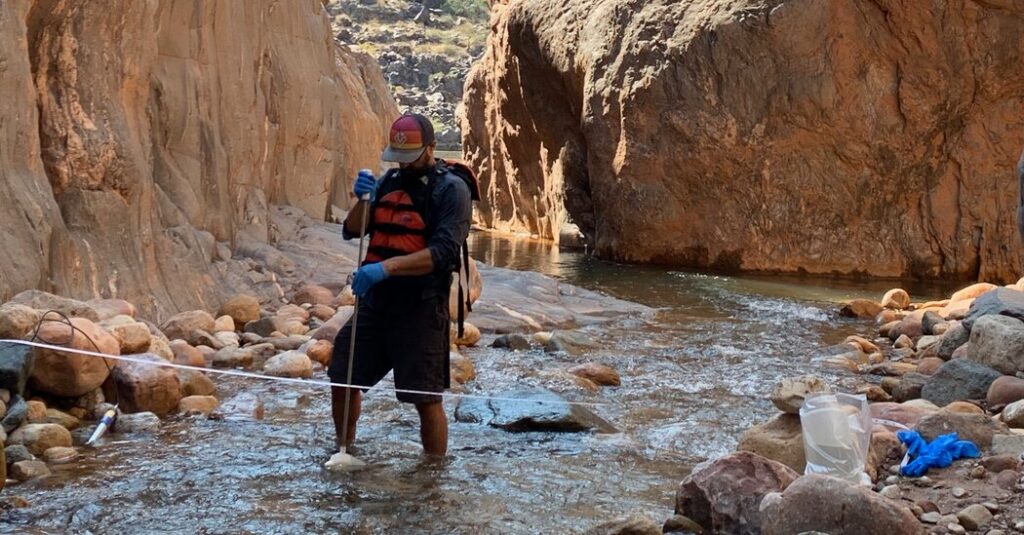
The E.M.A. runs dozens of biology and climate science centers, cooperates with universities in 41 states to identify and carry out pressing ecology and environmental health research, and more. Here is a snapshot of its work.
Long-term investments in rangeland research
Ending the E.M.A. would waste millions of dollars and countless hours that have already been invested in long-term experiments that federal researchers are uniquely situated to carry out.
Researchers in the Southwest, for instance, have been monitoring how vegetation in arid landscapes — including rangelands — is changing under warmer and drier conditions. Simultaneously, they’ve been carrying out yearslong experiments simulating future climate conditions for native and invasive rangeland plants, information that ranchers can use to prepare for grazing.
Losing long-term experiments would deprive federal agencies of critical base-line data needed to monitor changes in the ecosystem.
“The investment is huge, and we’re going to lose it,” said Jayne Belnap, a retired soil ecologist who worked at the Southwest center for nearly 30 years.
Predicting and preventing wildfires
Warmer and drier conditions and an increase in pests are making forests more susceptible to wildfires. Researchers at the Fort Collins Science Center have been assessing how climate change is driving these increases and what management practices are most effective to limit damage and economic losses from wildfires. Scientists in Alaska are studying wildfires in boreal forests, which are on the rise. And researchers in Oklahoma are exploring the risk of megafires in the Great Plains.
The Trump administration has said in an executive order that it supports treatments to reduce wildfire risk, yet defunding the E.M.A. would most likely cut crucial wildfire research that could inform fire prevention and response.
Tracking invasive species and diseases
Healthy, sustainable populations of fish and wildlife are critical for ecosystems to function normally. But human activities and climate change have raised the risk of invasive species, from cheatgrass that is choking grazing lands to carp that are threatening to overwhelm the Great Lakes.
Scientists at the E.M.A. research how to monitor, treat and prevent the encroachment of invasive species and the spread of disease in fish and wildlife, as well as in plant life.
Cooperative research units in 41 states, run by the E.M.A., bring together federal scientists, states and universities to work collaboratively. Students are researching whirling disease in Colorado’s rainbow trout, chronic wasting disease in Minnesota’s white-tailed deer, levels of harmful “forever chemicals,” or PFAS, in fish and more — including bird flu, which is devastating domestic and wild bird populations.
The units work almost exclusively on problems selected by states, and they provide significant economic benefits by fighting invasive species and shoring up wildlife populations, said Jack Payne, a wildlife ecologist who worked closely with cooperative programs in multiple states over two decades.
“It’s an incredible return on our federal tax dollars,” he said. “It’s a tremendous program for our quality of life, and for the health and success of our natural resources.”
Managing and protecting water supplies
Water supplies around the country are under strain and face threats like pollution, seawater infiltration and drought. Researchers at the E.M.A.’s South-Central Climate Adaptation Science Center in Oklahoma study how much water crops and other plants use and investigate ways they can use less water.
The E.M.A.’s environmental health program tracks chemicals in water supplies across the country, and monitors harmful algae blooms that can release neurotoxins into drinking water.
Researchers at centers in Colorado and Montana develop early warning systems for droughts, which are useful for people who manage water supplies as well as for fisheries.
Studying the birds and the bees
The E.M.A. runs the Bird Banding Lab, whose work informs waterfowl and game bird management and enables migratory bird tracking. The program also runs the national bird breeding survey, which tracks more than 400 species of birds.
Native bees are essential pollinators in almost every ecosystem in the country and are crucial to plants and crops, but climate change and human activities have disturbed them. The U.S. Geological Service Bee Lab, located at the Eastern Ecological Science Center, is the country’s foremost facility for identifying and documenting native bees. Its two lab workers support hundreds of scientists doing research around the country.
“We’re the heavyweight of native bee work,” said Sam Droege, a wildlife biologist and longtime leader of the Bee Lab. “But their only plan is to eliminate the E.M.A.”