
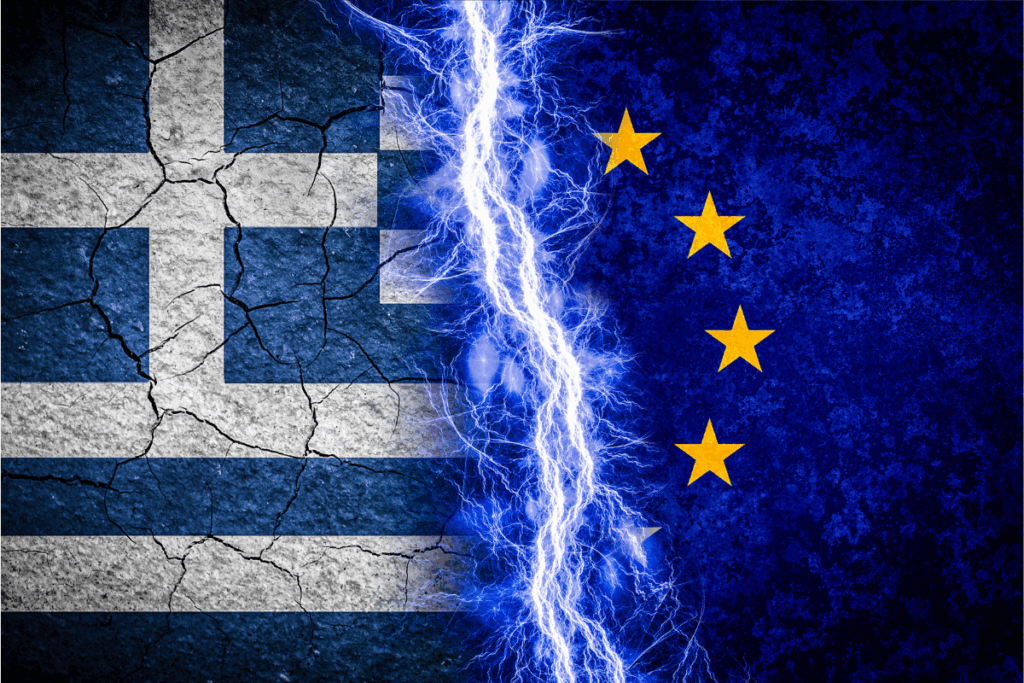
Tensions rise as Greece is ordered to repay €670M to the EU in a historic farm subsidy scandal. Credit: Cappan from Getty Images
It went unnoticed for years; payments were distributed to farms that did not actually farm, to land that was not cultivated, and to beneficiaries who barely existed on paper. Now, the EU has issued a bill of €670 million to be repaid by Greece, following one of the longest-running cases of subsidy mismanagement. At the heart of this scandal is a system that should have fed rural growth, but instead nourished negligence. Brussels is demanding accountability, Athens has responded by shutting down its farm subsidy agency altogether, a dramatic move that signals reform, but “how was this allowed to happen for 15 years?”. And this is one of the biggest scandals to impact the future of any subsidies, the future of agricultural policy, not just in Greece but the European Union.
Most Read on Euro Weekly News
A leak that became a flood
For more than a decade, Greece has received billions in agricultural aid through the EU’s Common Agricultural Policy:
- A funding programme that supports farmers across the bloc.
- For Greece, that sizable portion of that money went missing in plain sight.
According to the EU Commission, the €670 million now being reclaimed was paid out between 2009 and 2023 to beneficiaries who were not qualified or had not met the minimum farming qualifications.
- Some were not actively cultivating land.
- Others had no farm operations at all.
The mechanisms intended to detect this were local inspections, eligibility checks, and digital cross-referencing, which either failed or were never fully implemented. This misuse was not just limited to a single ministry or political moment. Instead, it unfolded across various governments and oversight cycles.
It was under the watch of an agency that became synonymous with bureaucratic blind spots. It wasn’t until a recent investigation, prompted by a series of EU audits and whistleblower alerts, that the full picture came into view. And when that came, Brussels acted: Repay the money, clean house, and rebuild trust.
Athens responded by taking drastic action; it directly dismantled the agency in charge of subsidy management altogether. It was called OPEKEPE, the Greek Agricultural Payments organisation, which was mainly responsible for distributing EU farm subsidies; they managed billions in agricultural aid. Yet, these oversight mechanisms provided unreliable protection against corruption at best, and none at worst. But whether that marks the beginning of reform or just damage control remains to be seen.
The machinery of mismanagement
This wasn’t just a case concerning a few fraudulent claims that were slipping through the cracks. What happened in Greece was more systemic: an infrastructure of subsidies that quietly enabled this misuse, not by accident, but by design.
For years, OPEKEPE relied on the outdated land registries, the inconsistent field inspections, and minimal cross-checking with other public databases. Those subsidies were granted based on what was declared, not what was always verified:
- Non-farmers received payments
- Land that was not actively cultivated was listed as Eligible
- Thousands of claims were approved with little to no on-the-ground verification
Because the flow of the EU’s money was steady, and the monitoring was slow, there was no incentive to fix the system, only to keep it running.
Everyone knew, and no one acted.
As of early 2019, OPEKEPE’s own auditors raised red flags, including one whistleblower who discovered that subsidies were being paid out for fake land leases. She was later removed from her post. The local media picked up the pieces of the story over the years by reporting on payouts to non-farmers and abandoned fields.
Even the real farmers complained about their neighbours receiving aid over land they have not used. However, little changed, and the successive governments treated the system as a cash cow, a technical and untouchable stream of cash flow.
The efforts to rectify this were buried, and in the end, it took the European Public Prosecutor’s Office to intervene. They raided offices and forced the scandal into full view. By then, the damage was done and not just to EU funds, but to the very idea that oversight existed at all.
The fallout: Who pays, and who doesn’t
Now that the EU has called in the debt, the big question is: Who will actually feel the impact?. That official answer is straightforward: The Greek state will repay the €670 million by using public funds.
That is the unfortunate case in this scandal: that the taxpayers will foot the bill, not the individuals or entities that profited and benefited from years of misused subsidies in the first place.
So far, there is no indication whatsoever of prosecutions, nor plans to recover the funds directly from those who filed false claims. The political response is primarily focused on institutional clean-up rather than individual accountability, because, as you are now aware, the Greek government often fails to assist its own citizens.
Pressure on any future funding
Beyond the repayment issue on a large scale, Greece is in an unfortunate position of facing increased scrutiny on future CAP applications. Brussels is highly unlikely to tolerate another round of vague registries and outdated checks. Greece could possibly face:
- Strict auditing requirements
- Delays or reductions in CAP distributions
- Loss of trust among small-scale farmers who depend on the aid.
The irony is that legitimate farmers, those who abide by the rules, are now facing delays or restrictions due to the system’s past failures. This is already a country that is still recovering from a previous EU-level crisis, debt bailouts, pension disputes, and oversight of the pandemic recovery fund. This scandal opens up a new front: Credibility management.
The cost of looking away
Greece’s €670 million repayment is more than a budget correction; it is a reckoning. A subsidy system to support farmers became a vehicle for misuse, corruption and years of political avoidance. The shutdown of OPEKEPE is the end of an agency, but the real reform has just begun.
Across the EU, this scandal lands at a crucial time, as the Common Agricultural Policy enter a new phase with tighter controls and climate-linked funding. Brussels faces a test: can it enforce integrity without punishing the farmers who rely on the system? And can trust be rebuilt in regions where it was never strong to begin with? For Greece, this is more than a fine, maybe the last one, as the public will possibly foot this bill.