
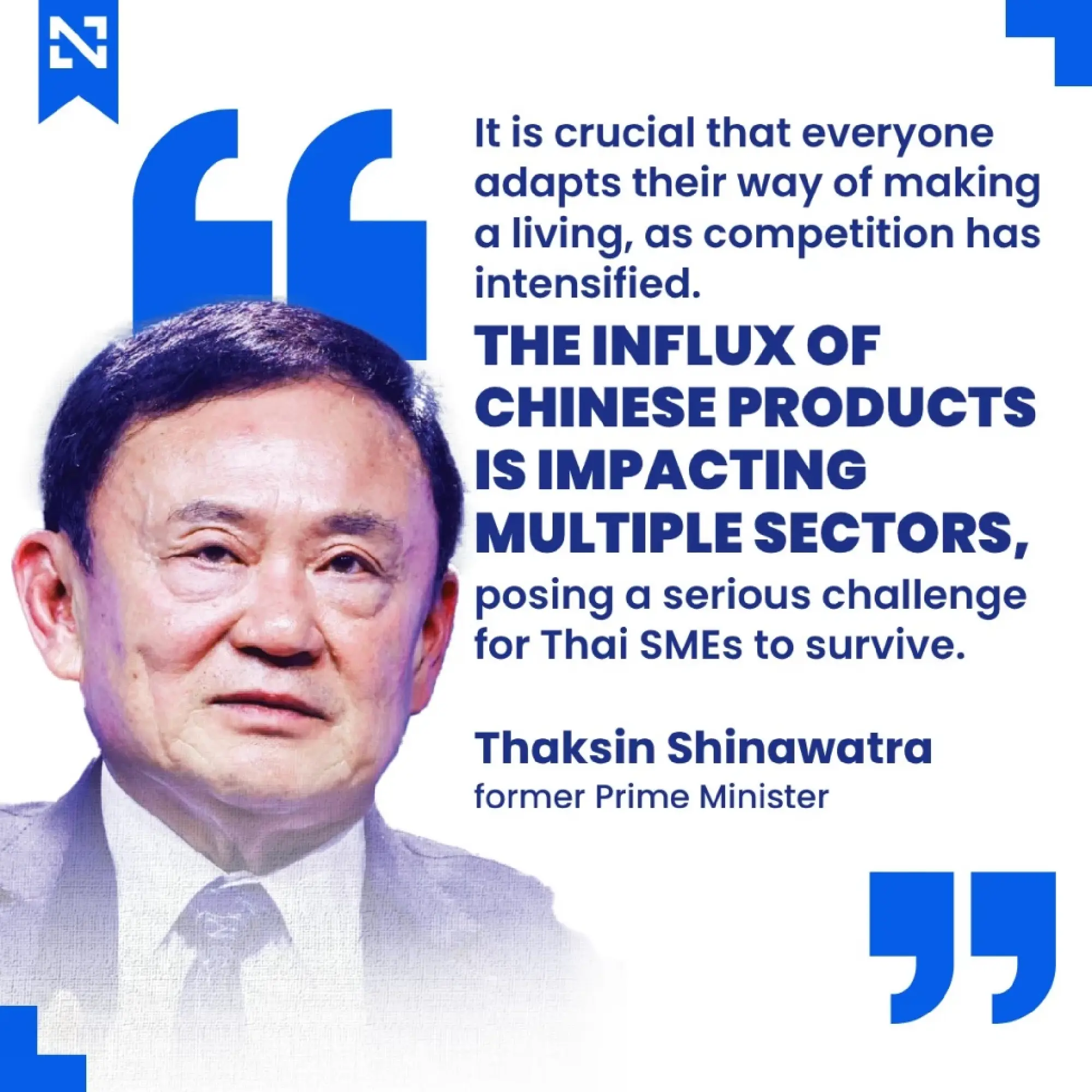
Speaking about the current economic uncertainty driven by US tariff policies, Thaksin remarked that Thais must fundamentally change how they earn a living. He pointed out that Thailand is facing intense competition, particularly due to a surge of Chinese imports flooding the market and affecting multiple sectors.
He noted that the government is currently investigating improperly imported Chinese products, many of which fail to meet quality standards. These illicit imports, he warned, threaten the survival of Thai SMEs and must be addressed urgently.
As for ongoing tax negotiations with the United States, Thaksin observed that progress may stall temporarily due to a US trade court ruling suspending a previous directive by President Donald Trump. However, Thaksin expressed confidence that Trump could appeal the decision and eventually win.
“Therefore, trade talks must continue. Negotiations are happening on several levels, and the current conditions are starting to ease, giving Thailand more room to engage,” he said.
When asked about his own involvement in the negotiations, Thaksin clarified that any assistance he can offer will be limited to within Thailand, as he had requested permission to travel abroad but was denied.
When asked about his greatest economic concern at present, Thaksin identified household debt as the most pressing issue. He noted that out of 5 million affected households, debt resolution had already been achieved for 500,000.
He expressed confidence that resolving the debts of this initial group within the year would help ease the overall burden and allow the public to better adapt.
Regarding proposals by MPs to write off debts for the poor, Thaksin dismissed the idea, stating that such an approach would not be adopted.
Instead, he said the government plans to use funds from the Financial Institutions Development Fund (FIDF), along with mechanisms from state-owned specialised financial institutions, to manage and restructure household debt. Full debt forgiveness, he warned, could lead to a moral hazard.
Thaksin also emphasised the importance of ensuring policies truly reach the people. He pointed to the Interior Ministry as the key ministry responsible for this, but criticised it for not fully engaging at the grassroots level. With just two years remaining in the current government’s term, he said it is crucial that the Interior Ministry steps up its efforts to serve the public effectively.
To this end, he suggested that for Pheu Thai Party policies to be fully implemented, the Interior Ministry should be placed under the party’s oversight.
“I haven’t yet raised this with the party leader, but if I were to analyse the situation, I think it’s time we had that conversation. Let Pheu Thai take the lead—so we can finally deliver the policies the people were promised. Time is running out,” Thaksin said.
He added that other ministries key to revitalising the government’s image and helping secure electoral victory include the Agriculture, Commerce, Finance, and Transport Ministries—each playing a crucial strategic role.
“The Agriculture, Commerce, Finance and Transport Ministries are all vital. Transport, in particular, is central to delivering the 20-baht flat fare rail project,” he said.