
Breadcrumb Trail Links
Not all growth is progress and not all urgency is an excuse for irresponsibility
 (Getty Images)
Article content
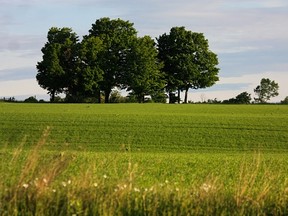
Canada’s vast beauty remains one of the qualities Canadians love best. Such grandeur provides confidence and belief in our identity, especially in the struggle with our southern neighbour, our new awakening.
For many, such a threat feels almost existential, and the way we are choosing to face it is to enter a building phase that hasn’t been seen for decades, to build faster, locally and nationally, with expansive projects suitable to the times. There’s a kind of romantic nationalism in it, the concept of Canada standing tall and together.
Advertisement 2

Article content
But there’s a catch, a familiar one. In our rush to confirm our collective identity, we run the risk of sacrificing our commitment to environmental stewardship. In our desire to act, we might well over-react at the expense of our ecological future. Building our domestic and global capacity feels right, but it could be a political trap. In such times, politicians feel the need to deliver visible progress such as factories, highways and energy corridors. Shovels in the ground. Pride in our hearts. Citizens frequently feel the need for speed over scrutiny.
In reality, Canada has been slow in building capacity because of the endless regulations, jurisdictional wrangling, and delayed approval. Reforms in these areas are long overdue. But with the recent calls for accelerated permit process, exemptions from environmental assessments, and relaxed standards on emissions for new industrial operations, we create the possibility of ecological damage. The logic is depressingly familiar: exceptional times call for exceptional measures. We’ve all witnessed how bad policy frequently begins as an exception.
Advertisement 3
Article content
We are assured this new era of building is about resilience. But resilience without responsibility is recklessness in disguise. We must be careful that our “build, build, build” designs don’t become the mindless “drill, baby, drill” voiced south of the border.
This isn’t a call to stop building. We need strong domestic supply chains. We need jobs and industrial capacity. But we also need to build differently, with constraint., with humility, with respect for our Indigenous populations and with a recognition that not all growth is progress and not all urgency is an excuse for irresponsibility.
Economic resilience matters. No country can afford to be naïve about its vulnerabilities in a world of shifting alliances and weaponized trade. But the real measure of a country’s strength is not how quickly it can react, it’s how well it can remember who it is while doing so. We must learn from our historical mistakes while still pursuing modern possibilities.
Advertisement 4
Article content
The coming years will define Canada’s economic path. But they also will define its moral one. Will we be the kind of nation which panics its way into short-term solutions? Or will we be the kind which refuses to trade its ecological future for a quick political win? The 40 per cent increase in the atmospheric concentration of carbon dioxide generated by humanity since the industrial revolution can’t simply be ignored.
Environmental stewardship isn’t a box to check once the economy is secure. It’s part of the economy. It’s part of the national character. It’s part of the inheritance we owe future generations. The longer we pretend this is simply about economics, the more likely we are to engineer outcomes we later will regret, and that our kids will have to endure.
We know the signs and urgent warnings. In the north there is rapid warning, permafrost thaw, infrastructure collapse. In the west, it’s forest fires, floods, drought, heat, water scarcity. In central Canada it’s heatwaves, storms, and flooding. And in the east there is sea-level rise, massive storms, coastal erosion.
We must keep ourselves from a state of moral shrinkage, where we convince ourselves we can fix the planet later, after the economy is safe. That really isn’t a strategy, but a form of denial. What Canada decides in the next few years will reveal what kind of country it really is. Not just in the eyes of others, but in the mirror it holds to itself.
Glen Pearson is co-director of the London Food Bank and a former Liberal MP for London North Centre. glen@glenpearson.ca
Read More
-
Pearson: Agriculture key to nation’s sovereignty, resilience
-

Pearson: Canada must return to its roots as building nation
Article content
Share this article in your social network