
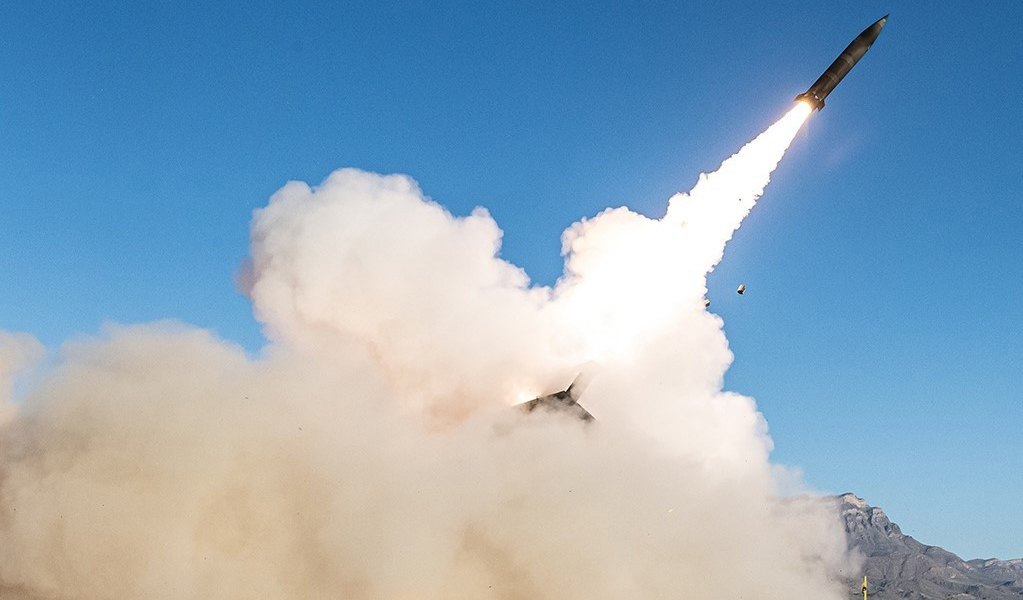

The Australian government announced on 6 June 2025 that it is joining the United States Army’s Precision Strike Missile (PrSM) program.
The missile will be a key part of establishing the country’s Defence Force’s long-range strike capabilities. The two governments have executed a Memorandum of Understanding covering the production, sustainment, and follow-on development of the PrSM. This includes Australia’s commitment of $310 million over 10 years to the program.
By becoming a full cooperative partner in the PrSM program, Australian industry will be able to participate in the PrSM supply chain, providing components, sub-components, and overall in-country program support. The Defence Force is also planning the formation of a Long-Range Fires Regiment that will include the PrSM in its arsenal. One hundred and fifty million dollars will be committed to acquiring the launchers and missiles required to equip this regiment. The forces are currently receiving the HIMARS, the first of which were delivered in March 2025.
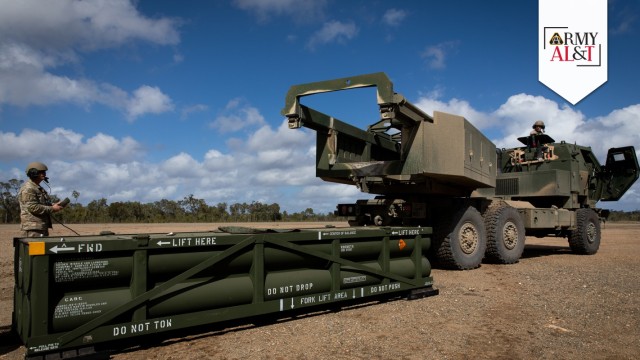
The Precision Strike Missile (PrSM) is developed by Lockheed Martin. It is a next-generation, long-range precision-strike missile developed for the U.S. Army. A surface-to-surface weapon system that can be fired from the MLRS and HIMARS launchers, it is intended to attack, neutralize, suppress, and destroy targets up to 499+ kilometres away. PrSM is provided as a containerized munition with two PrSM rounds per launch pod, each containing an IM energetic payload.
PrSM leverages advancements in missile technology, guidance systems, and propulsion to deliver enhanced performance. In May 2025, Lockheed Martin demonstrated the firing of an extended-range PrSM, reaching beyond the current 499 km limit. A version with a new anti-ship seeker is also being developed, which will be able to attack moving ship targets.
Australia’s fielding of the HIMARS and the PrSM offers a significant capability to the country’s military, supporting its focus on controlling the northern approaches.
by Stephen W. Miller