
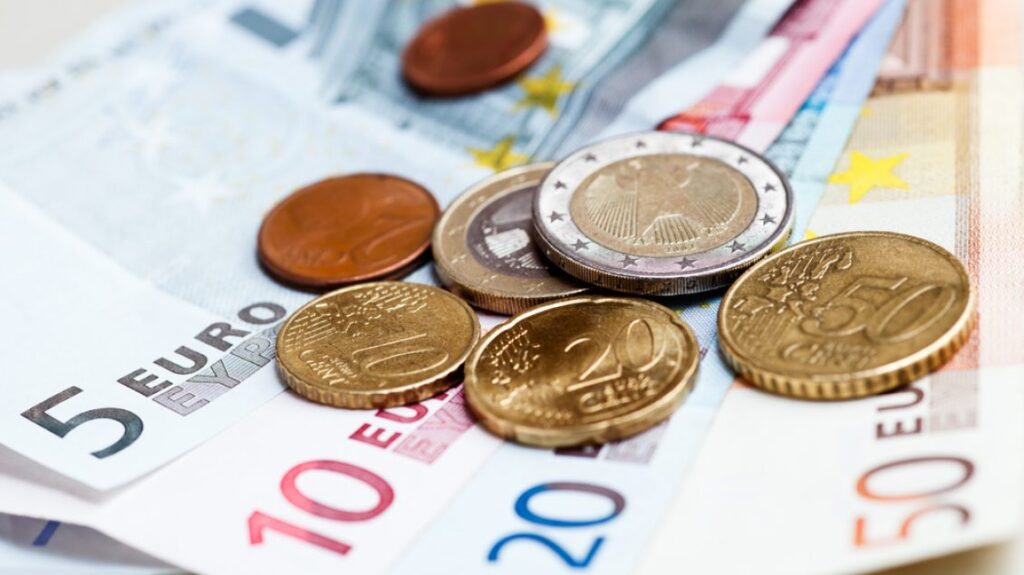
Kosovo’s trade deficit reaches 6 billion euros, economists warn of deep crisis

Express newspaper
08/06/2025 8:50
Kosovo ended 2024 with another negative balance: the trade deficit increased by 7.4% compared to the previous year, reaching a value of about 6 billion euros, reports Ekonomia Online.
Data from the Kosovo Agency of Statistics (KAS) indicate a further widening of the gap between imports and exports, while economists warn of serious consequences if the government does not change its economic course.
University professor of economics, Medain Hashani, in an interview with Ekonomia Online, sees the situation as a direct consequence of the lack of support for local producers and the poor attraction of foreign investment.
He describes the government’s economic policies as harmful to the country’s long-term development, emphasizing that the lack of a clear strategy for the manufacturing industry and the failure to build a competitive environment for local businesses has brought Kosovo to this alarming state.
“The reasons for the trade deficit are due to the enormous increase in imports at the national level, because we in the Kosovo economy have had an extremely negative trade balance since the beginning, but the negative trade balance in 2024 was about 6 billion euros and this 6 billion came due to the non-subsidization of manufacturing businesses by the Government of Kosovo, the failure to create a climate for foreign investments. At the national level, we must focus on attracting foreign investors, increasing production and replacing products that are imported at a general level with local products. This is a very wrong policy that the Government of Kosovo has applied and the lack of subsidization of manufacturing enterprises has caused a high level of imports. Also, in terms of finance, we have an increase in prices at a general global level and this has greatly influenced us to have a high trade deficit and this deficit is continuing in 2025. These are some of the factors that have influenced us to have a negative trade balance,” he said.
Hashani believes that the lack of domestic production and the weakening of export capacities have created a dangerous economic spiral. He notes that exports to the United States have fallen significantly.
“We have had exporters before, who if we take only the part of exports with the US, we have had exporters who have exported to the US and from above, as it was somewhere, about 200 million. Exports to the US are now about 20 million. This shows that in addition to not subsidizing any manufacturing enterprise, the development of products in Kosovo and the increase in exports have been hindered. So a government that does not have a clear plan-program for the economic development of the country creates such a situation, because if you do not have production and exports, which were done earlier, not that it was supported, but it was hindered and it has influenced us to have a very low level of exports, such as about 14.8 percent in relation to imports that have a higher participation than exports. These are some of the factors that have hindered development,” he said.
The situation, according to Hashani, has worsened even more after the liberalization of the energy market, which began on June 1 of this year. The high cost of energy, according to him, has caused manufacturing companies to curb their activity.
“We are now in a new economic situation, when the liberalization of the energy market has begun on June 1st, and these manufacturing enterprises, which are part of the 14.8 percent that have exported, according to information from the Kosovo Chambers of Commerce, which represent these manufacturing businesses, have only stagnated production due to the high cost of energy. It is expected that during 2025, if no steps are taken by the government to eliminate this barrier that has caused us to have an increase in unemployment due to the malfunctioning of production in Kosovo,” Hashani told EO. /EO/
aaaaa