

Warning signs are flashing for the New Zealand economy’s performance in the second quarter of the year, with services sector activity slumping hard last month and mirroring a similar fall in manufacturing.
BNZ senior economist Doug Steel and economist Matt Brunt said the combined services and manufacturing data for May “look nothing short of disastrous”.
“Sure, [first quarter] GDP growth looks set to be strong but there are clear warnings that the New Zealand economy has hit a brick wall in Q2, and this is despite the substantial revenue growth flowing from the agriculture sector. If there was ever an argument for the provision of further stimulus from the central bank [Reserve Bank], then this is it,” they said.
The BNZ – BusinessNZ Performance of Services Index (PSI) for May showed a substantial 4.1 drop in the month to 44. (A PSI reading above 50.0 indicates that the service sector is generally expanding; below 50.0 that it is declining). The average level during the history of the survey has been 53.0.
The services sector makes up about two-thirds of our GDP. This latest fall in fact takes the index back to levels seen in June 2024, which was the start of a steep recession.
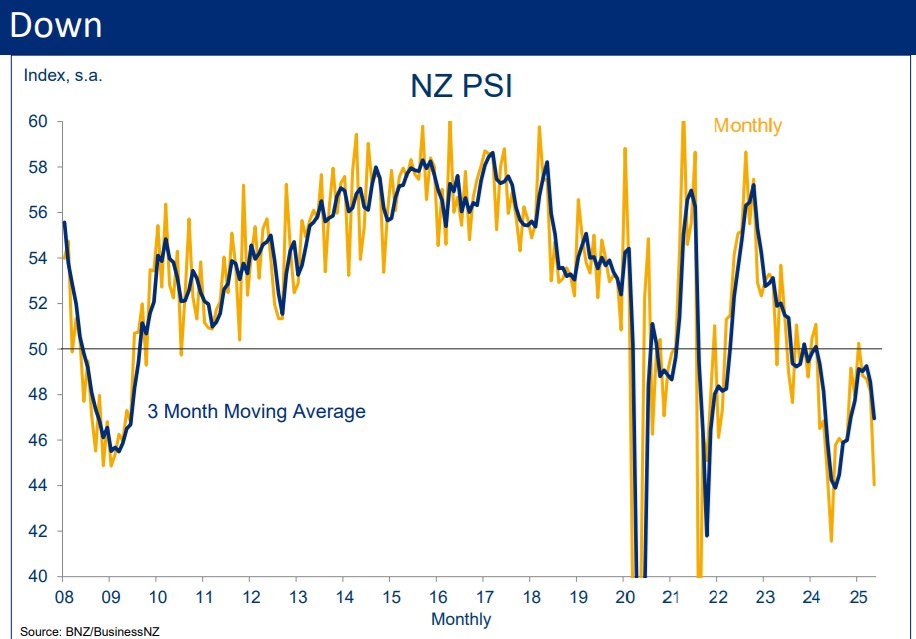
“It is now at a level seldom seen and consistent with a rapidly shrinking services sector,” Steel and Brunt said.
The latest BNZ – BusinessNZ Performance of Manufacturing Index (PMI) that was released on Friday also came down with a bump in May, from 53.3 to 47.5.
Steel and Brunt said the two index results together, “are consistent with the economy returning to recession”.
“We’re a long way from forecasting this, but the data are a reminder of just how vulnerable the economy currently is.
“Ironically, we anticipate this week’s Q1 GDP figures to show an increase of 0.7% for the quarter (data due on Thursday).
“Our economic forecasts are then for a modest recovery over the rest of the year.
“A key driver of this expectation was the recent strength in the combined PMI and PSI. The big question now is whether the suggested softening in activity will outweigh the starting point optimism.”