
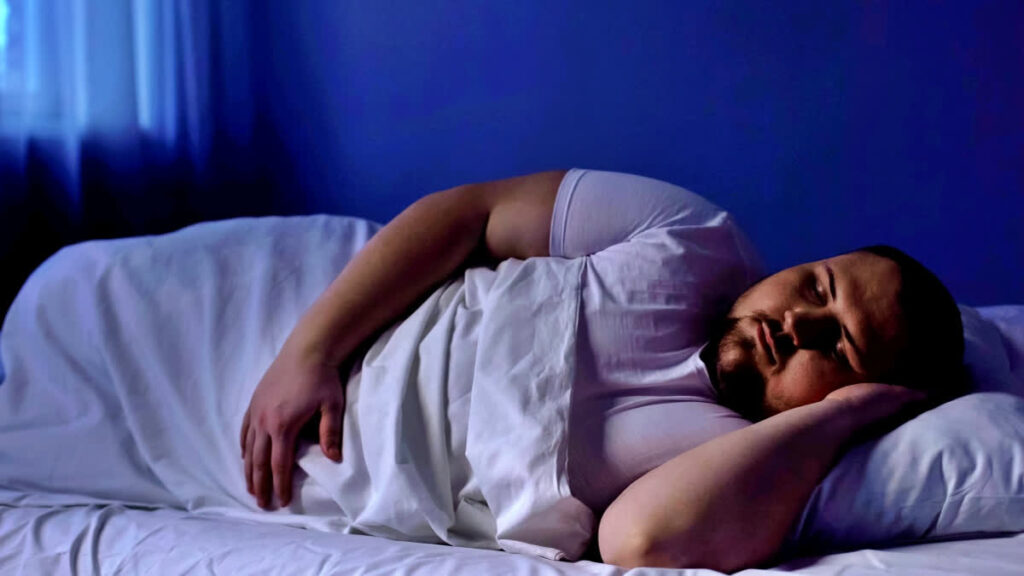
You’re in bed, it’s a hot summer night. Your fan is wheezing like a 90s rickshaw, and your back is stuck to the mattress. You toss, you turn, you try that “left side, right side” trick your mom taught you as a kid. Nothing works. Just when you finally start to drift off… you stop breathing.
That’s literally what’s happening to millions of people around the world suffering from sleep apnea (a serious sleep disorder where your breathing repeatedly stops and starts during the night). Thanks to global warming, it’s about to get much worse. Yes, climate change is now messing with our sleep. That too, in the creepiest, most silent way possible.
Climate-Induced Sleepless Apocalypse
A recent study published in the journal Nature Communications has just thrown cold water on our collective pillow. Researchers from Flinders University in Australia, led by Dr. Bastien Lechat (sleep expert), found that rising nighttime temperatures are directly increasing the severity of sleep apnea. “This study helps us to understand how environmental factors like climate might affect health by investigating whether ambient temperatures influence the severity of OSA,” says Dr Lechat.
This is the first time someone has scientifically asked, “Could heatwaves also be suffocating us in our sleep?” And the answer is YES. The study pulled data from over 116,000 people across 29 countries, using super-sophisticated under-mattress sensors. Imagine Fitbit, but for your mattress.
Findings of the Study
“Overall, we were surprised by the magnitude of the association between ambient temperature and OSA severity. Higher temperatures were associated with a 45% per cent increased likelihood of a sleeper experiencing obstructive sleep apnea on a given night,” says Dr Lechat. That’s almost half! Most people don’t even know they have sleep apnea. You could literally be choking in your sleep every night and not know it. If you thought sleep apnea was just for people who snore loudly and eat three biryanis a day, think again. It affects nearly 1 billion people globally. It doesn’t just make you sleepy or cranky in the morning. It’s linked to high blood pressure, heart disease, dementia, depression, and even deadly car accidents.
The researchers also found that Europe is likely to suffer even more, possibly because fewer people there have air conditioners. Australia and the US might fare slightly better, but only because their cooling game is stronger. As for us here in India? We’re somewhere in the middle. Many of us live in homes that turn into ovens at night, and most middle-class families still think using AC for more than four hours is a financial sin.
Impact On The Economy
The study didn’t just stop at health. It calculated the economic impact of this rising sleep disorder. They looked at “Disability Adjusted Life Years” (DALYs): a fancy way of measuring how many years of healthy life are lost because of illness or early death.
In 2023 alone, global warming-linked increases in sleep apnea caused the loss of 800,000 healthy life years across 29 countries. To put that in perspective: that’s similar to what you’d see with bipolar disorder or Parkinson’s.
The economic cost is $98 billion. Out of this, $68 billion came from health and well-being loss, and $30 billion was from people being too tired to be productive at work. So, that half-asleep colleague in Zoom calls is probably costing your company real money.
What Can You Do?
Here’s what you can do, starting tonight:
- Check your sleep: If you snore loudly, wake up gasping, or feel dead tired every morning, talk to a doctor. It’s not just “bad sleep.” It could be sleep apnea.
- Cool your room: Even if you don’t have an AC, invest in good ventilation, breathable bedding, or a fan that doesn’t sound like a blender.
- Support climate policies: Yes, it sounds distant but better climate = better sleep = longer, healthier lives.
- Push for research and coverage: Demand insurance cover for sleep disorders. Advocate for employers to offer sleep health screenings.
India is not a country that handles mass fatigue well. We already honk in traffic jams and fight over queue jumps. Add sleep deprivation, and we’ll be a nation of rage zombies. The next time someone tells you climate change is “exaggerated,” ask them this: “Do you like breathing? Even while you sleep?” Because the future might just be hot, sleepless, and gasping for air.
Source:
https://www.nature.com/articles/s41467-025-60218-1
Read more: