
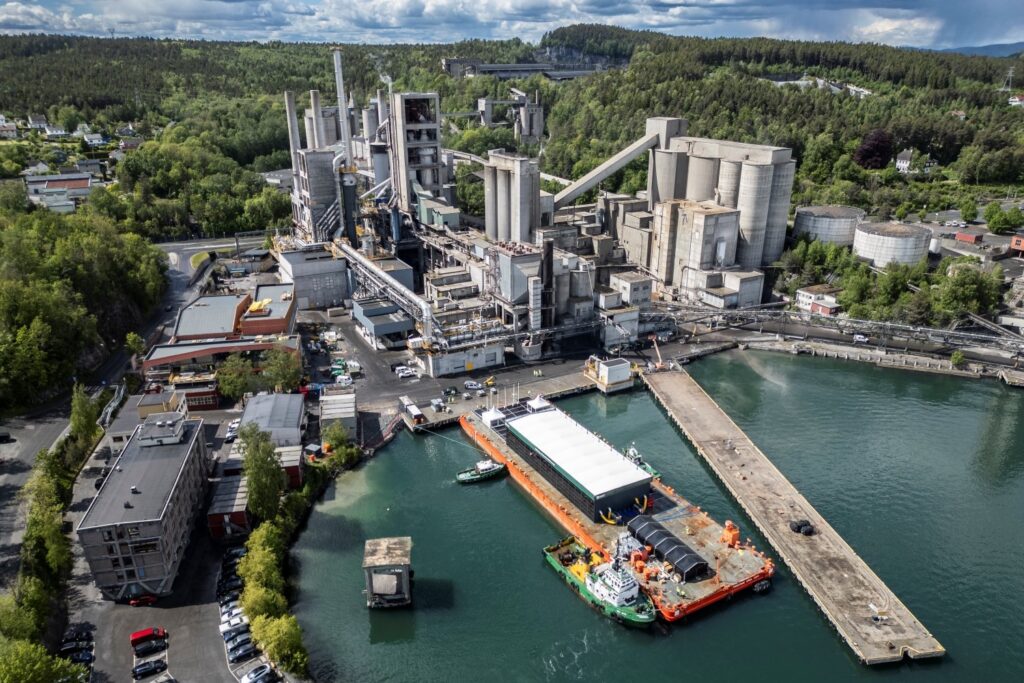
Norway has become home to the first full-scale carbon capture system at a cement plant — a major step in decarbonizing one of the world’s most emissions-intensive industries. The carbon capture facility, located at Heidelberg Materials ’ plant in Brevik, southeast Norway, is now capable of capturing up to 400,000 metric tons of CO2 annually — roughly half of the site’s emissions.
Cement production accounts for about 7% of global greenhouse gas emissions, making the sector a critical target for climate solutions.
“DAC can pay for itself,” Harvey Hodd, Rivan Indus | RSS.com
Using amino-based solvents, the Brevik facility will produce what the company calls the first “carbon-free” cement. “This cement product will have almost zero emissions,” said CEO Dominik von Achten.
The amount of low-carbon cement Heidelberg Materials can sell will depend on how much carbon dioxide is capture d at Brevik and the type of cement produced. While the output represents just a small share of the 4.2 billion tons of cement made globally each year, it’s a significant milestone.
This project is part of Longship, a broader Norwegian government initiative aimed at cutting industrial emissions.
Captured CO2 from the Brevik plant — and later from a waste-to-energy facility — will be shipped to Norway’s west coast and stored deep beneath the seabed. The government is covering $2.1 billion of the approximately $3.4 billion needed to fund installation and the first decade of operations.
Norwegian Energy Minister Terje Aasland emphasized that carbon capture is essential for hitting climate targets, particularly in sectors like cement where emissions are difficult to eliminate. “This form of collaboration can foster innovation and kick start development of nascent markets for climate technology,” he said.
Read more: Norway Awards Equinor, Harbour Energy and Aker BP New CO2 Storage Permits