Space is getting crowded. Decades of launches have left a growing field of debris orbiting Earth: old satellites, rocket parts and fragments travelling at incredible speeds. Even tiny pieces can hit spacecraft with enough force to cause serious damage, endangering missions and astronaut lives.
Shields and dodging manoeuvres may alleviate this problem somewhat, but what happens if a hull gets breached? How can we fix it safely and efficiently that far from Earth?
The ASTROBEAT project explored a fascinating potential solution: cold-welding. Imagine two clean pieces of the same metal touching in space. Without air leading to oxidation forming thin metal films on the surface which get in the way, the atoms can bond directly, fusing the metals together without needing heat, a little like a super-strong, instant “metallic glue”. While usually cold-welding adhesion is an unwanted event that causes parts to stick together unintentionally, ASTROBEAT investigated if this phenomenon could be used to patch holes in spacecraft.
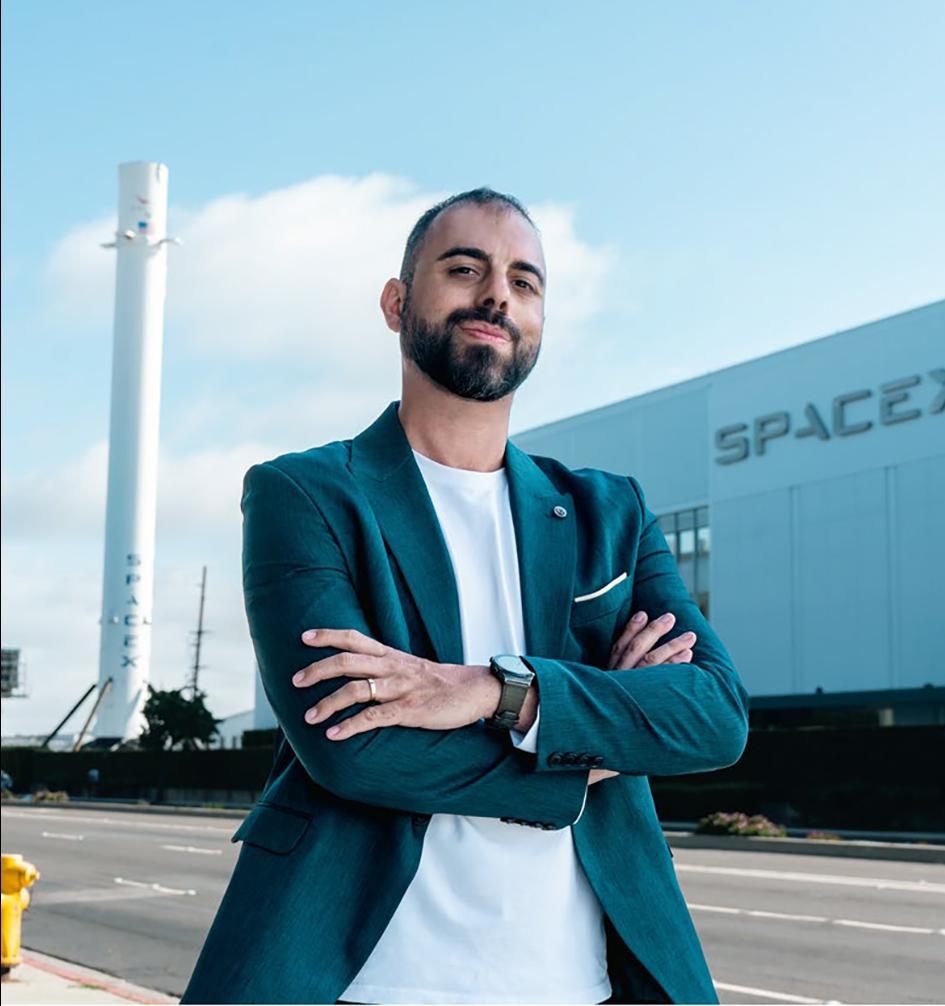
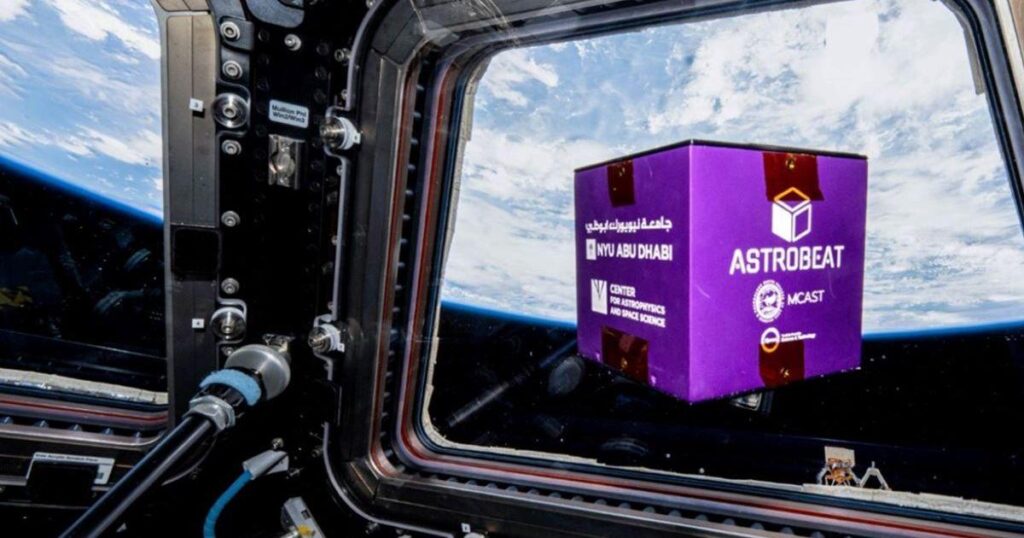
Led by the author at the Malta College of Arts, Science & Technology (MCAST), Astrobeat designed a miniature laboratory. This compact experiment package flew to the International Space Station (ISS) in late 2024 aboard a SpaceX CRS-31 mission.
On the ISS, automated tests pressed different metal samples (like copper and aluminium) together to see how well cold-welding worked in microgravity, mimicking a repair patch being applied to a damaged hull.
After its successful six-week mission, the experiment returned to Earth.
The samples are now undergoing detailed analysis at the South East Technological University (SETU) in Ireland to check the strength of the welds formed in space.
The author also collaborated with Grammy-nominated cellist Tina Guo and renowned producer Steve Mazzaro to create unique space music
But ASTROBEAT wasn’t just about engineering. The author also collaborated with Grammy-nominated cellist Tina Guo and renowned producer Steve Mazzaro, both veteran collaborators with film composer Hans Zimmer, to create unique space music. This earned the author the alias ‘Space Pianist’.
In a stunning blend of art and science, the track Moon Seeds was streamed live from the ISS back to Earth in November 2024, reaching a global audience and highlighting that space is a domain for human creativity as well as exploration.
The success of ASTROBEAT, recognised by NASA and the ISS National Lab as a key experiment, leads the way for safer long-duration space missions and demonstrates the power of international collaboration.
The work brought together other partners including collaborators at NYU Abu Dhabi, SETU, University of Padua and the Skyup Academy. Plans for ASTROBEAT 2 are already underway, aiming to further explore cold-welding and even add a space debris sensor.
ASTROBEAT (SUP-2023-09) is a project partially financed by Xjenza Malta through the Space Upstream Programme and supported by Voyager Space (formerly Nanoracks) via NASA’s US National Lab.
Leonardo Barilaro is a senior lecturer in aerospace engineering at the Malta College of Arts, Science and Technology (MCAST), researching space debris and spacecraft protection while merging his scientific expertise with his passion for music. As a cultural ambassador for space art, he uses piano music to inspire a creative and inclusive connection to the cosmos.
Photo of the week
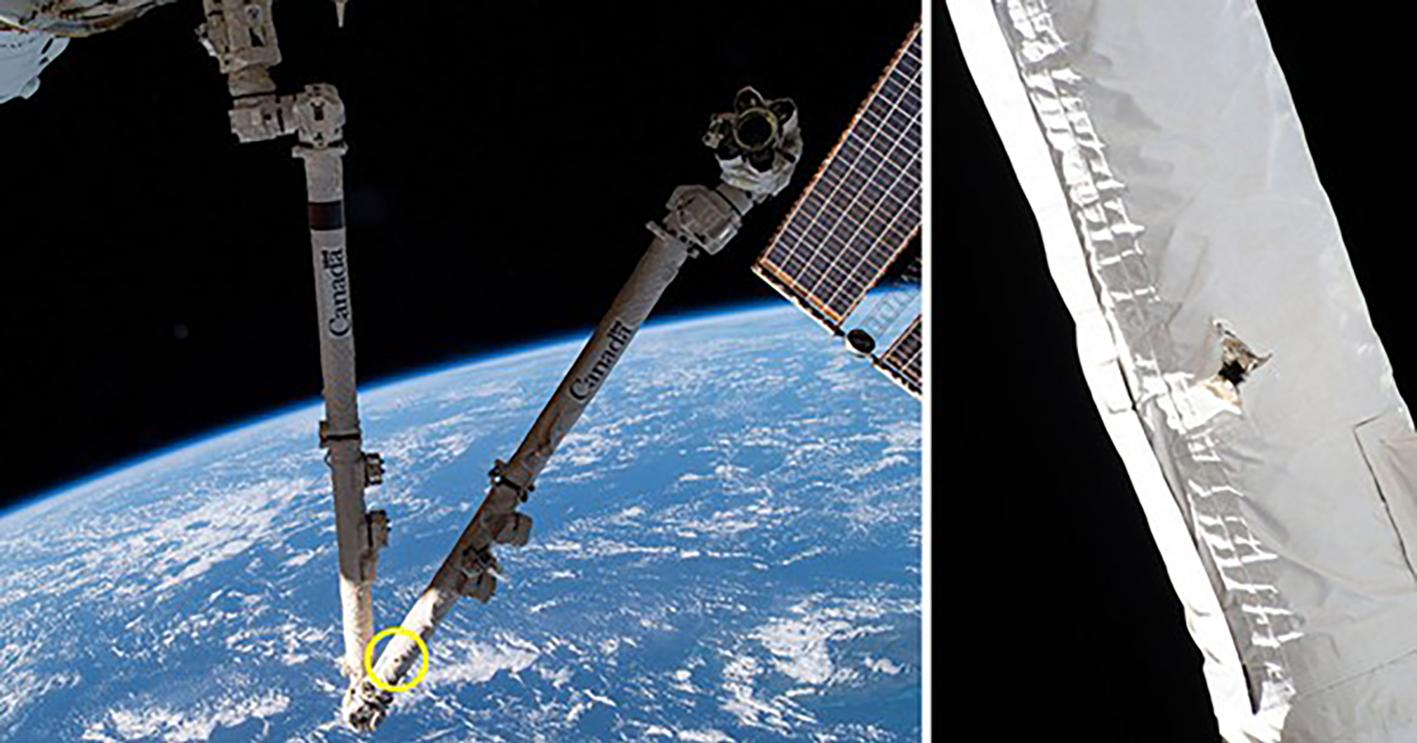 Photo: NASA/Canadian Space Agency
The impact site of a space debris strike on the International Space Station’s Canadarm2 robotic arm.
Sound Bites
• In the 1960s, the US launched hundreds of thousands of metal needles into orbit to enhance radio signals. The experiment failed and the needles clumped into high-speed projectiles. As of 2023, about 44 of these dangerous clusters still circle Earth, occasionally burning up when re-entering the atmosphere.
• The ISS (International Space Station) is about the size of a football field and thus an easy target for space debris. To solve this, it has to move its orbit to make sure it doesn’t get hit. Every once in a while, the ISS gets hit by pieces the size of a paint chip and the crew need to repair the ship for weeks.
For more soundbites, listen to Radio Mocha www.fb.com/RadioMochaMalta/.
DID YOU KNOW?
• Metals react with oxygen to form a very thin oxide layer. On Earth, this keeps them from sticking together. In space, metal surfaces can fuse together without heat or melting. This process, called cold-welding, happens because there’s no air or moisture to keep the atoms apart.
• The first song broadcast in space was Jingle Bells played by Gemini 6 astronauts Tom Stafford and Wally Schirra in 1965 using a harmonica and bells as a Christmas prank. It was also the first live musical performance in space!
• Vanguard 1, launched in 1958, is the oldest human-made satellite still in orbit. Although it stopped communicating in 1964, it continues to orbit Earth.
• The Chinese Long March 5B rocket core, which re-entered Earth’s atmosphere in 2021, was one of the largest uncontrolled pieces of space debris to fall back to Earth, weighing around 25 tons.
For more trivia, see: www.um.edu.mt/think.