
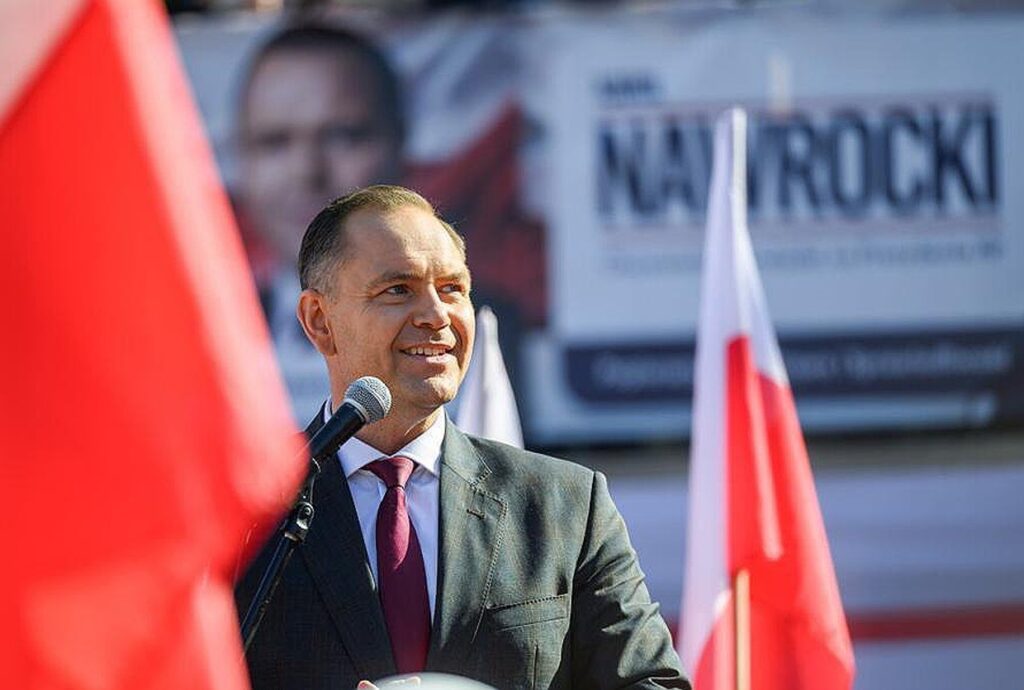
Karol Nawrocki’s election deepens Poland’s conservative turn, threatening abortion rights and testing the EU’s resolve to defend core democratic values.
On June 1st, Poland elected nationalist candidate Karol Nawrocki as its next president, in a closely contested race that saw him narrowly defeat liberal Warsaw Mayor Rafał Trzaskowski with 50.9 percent of the vote to Trzaskowski’s 49.1 percent. Nawrocki, a 42-year-old conservative Catholic historian affiliated with the Law and Justice (PiS) party, is known for his strong patriotic views and open support for U.S. President Donald Trump. He will officially take office on August 6 for a five-year term. Although the Polish presidency holds limited sway over foreign and defense policy, the office wields significant domestic power through its ability to propose and veto legislation. This poses a challenge for Prime Minister Donald Tusk’s centrist government, which lacks the parliamentary majority needed to override a presidential veto.
Nawrocki has sharply diverged from Tusk’s vision of anchoring Poland firmly within the European Union’s mainstream, arguing that such alignment undermines Polish sovereignty and national interest. Instead, he advocates for a more assertive stance towards Germany and strongly opposes further centralization of power in Brussels. He is alsocritical of the EU’s climate agenda, particularly the Green Deal, contending that aggressive emission reduction targets would disproportionately harm small Polish farmers.
Equally defining is Nawrocki’s hardline position on abortion. He has vowed to block any attempt to ease Poland’s already strict abortion laws, aligning himself with the country’s powerful conservative and Catholic factions. His presidency is expected to stall or reverse any liberalizing momentum on reproductive rights that Tusk’s government might pursue. In tandem, Nawrocki has voiced strong resistance to expanding LGBTQ+ rights, reinforcing his commitment to traditional social values.
His foreign policy views align closely with his admiration for Donald Trump. Nawrocki supports ongoing military and humanitarian aid to Ukraine and acknowledges Poland’s critical role as a logistical hub for Western supplies. Yet he remains skeptical about Ukraine’s accession to NATO or the EU while the war with Russia continues, arguing such moves could compromise Polish security.
With Nawrocki heading to the presidency, Poland faces a likely standoff between a liberal government and a deeply conservative head of state, particularly over the country’s place in the EU and the future of abortion rights.
Abortion in Poland: A Legal and Political History
Poland currently enforces some of the strictest abortion laws in Europe, but this was not always the case. Between 1965 and 1988, abortion was legal and widely accessible. This changed dramatically with the fall of state socialism in 1989, as Poland transitioned to democracy. The early post-communist years were marked by fierce debate. While the new political elite, heavily influenced by the Catholic Church, sought to criminalize abortion, public opinion remained largely supportive of reproductive rights.
By 1993, a settlement known as the “abortion compromise” was reached. Abortion was permitted only under three exceptional circumstances: when the pregnancy endangered the life or health of the woman, when there was a high probability of severe and irreversible fetal defect, or when the pregnancy resulted from an unlawful act such as rape. In practice, however, even these exceptions were difficult to access, particularly in cases of rape, where the sluggish pace of Poland’s judicial system often made it impossible to obtain a legal abortion within the 12-week window.
The situation worsened in 2020 when Poland’s Constitutional Tribunal ruled that abortion in cases of fetal defect or incurable illness was unconstitutional. This decision effectively eliminated one of the few legal grounds for termination and was widely seen as a step toward a total ban. The consequences have been dramatic: the deaths of women like Iza in 2021 and Dorota in 2023 from septic shock illustrate how doctors, fearing legal repercussions, often wait until a fetus has no heartbeat before intervening, putting pregnant women’s lives in jeopardy. Despite estimates suggesting that 80,000 to 200,000 illegal abortions occur annually in Poland, many with unknown health consequences, government rhetoric has remained unyielding. For lower-income women, who cannot afford private abortions abroad or in clandestine clinics, the reality is especially dire. The cost of a safe, private abortion often exceeds the average monthly income. Public outrage over the 2020 ruling triggered one of the largest protest movements in Poland’s recent history. In response, the ruling PiS party cracked down on civil society, using police force, legal intimidation, and state-controlled media to silence dissent.
Now, with Karol Nawrocki’s election, activists fear renewed momentum behind further restrictions. His presidency may reinforce the government’s grip on reproductive policy and stifle efforts to expand access to abortion care. For many in Poland’s feminist and pro-choice movements, Nawrocki’s rise signals not just a political shift, but a deepening entrenchment of a state ideology that prioritizes conservative values over women’s rights and bodily autonomy. As these domestic policies harden, they raise urgent questions for Brussels. Could Poland’s new president push the European Union into a direct standoff over reproductive rights?
What Does Nawrocki’s Election Mean for Brussels—and for Abortion Rights in Europe?
The election of Karol Nawrocki signals not only a continuation of Poland’s conservative trajectory but also a possible flashpoint in its already fraught relationship with Brussels. Nawrocki’s presidency threatens to harden the country’s opposition to reforms that align with core EU values, particularly on judicial independence, LGBTQ+ protections, and, crucially, abortion rights. His veto power gives him significant leverage to obstruct any liberalizing initiatives from Donald Tusk’s government, even as Poland tries to reassert itself as a cooperative EU partner. For the European Commission, this sets up a difficult dilemma. One path involves reinstating a freeze on billions of euros in EU funds through the rule-of-law conditionality mechanism, citing Poland’s failure to implement reforms beyond rhetorical commitments. This would reassert Brussels’ commitment to legal and democratic standards, but at the cost of escalating political tensions and potentially harming Polish citizens dependent on those funds. Alternatively, the EU may choose to continue funding Poland in the interest of maintaining goodwill with Tusk’s government, even as Nawrocki blocks key reforms. However, such a move could undermine the Commission’s credibility and embolden other member states to disregard core EU principles, particularly on reproductive rights.
Several scenarios may unfold:
- Increased EU-Poland Confrontation
Nawrocki’s opposition to abortion rights and other liberal reforms could provoke Brussels to apply more aggressive legal and financial pressure, reactivating infringement procedures and potentially setting new precedents for addressing values-based violations. - Stalemate with Strategic Compromise
The EU may tread carefully, continuing financial support while pressing for incremental progress on judicial and social issues. This would buy time, but likely slow any meaningful advance in reproductive rights or civil liberties. - Rights Fragmentation Across the EU
If Nawrocki entrenches restrictions while receiving continued EU support, it could signal to other conservative governments that illiberal policies, especially on abortion and LGBTQ+ rights, will not be penalized. This risks deepening the values divide within the Union.
Ultimately, Nawrocki’s presidency may force the European Union to confront a core question: can it protect fundamental rights within its member states when national leaders actively oppose them? As Poland becomes a test case, the answer will shape not only the future of abortion rights at home, but the EU’s ability to uphold its founding values across the continent.