
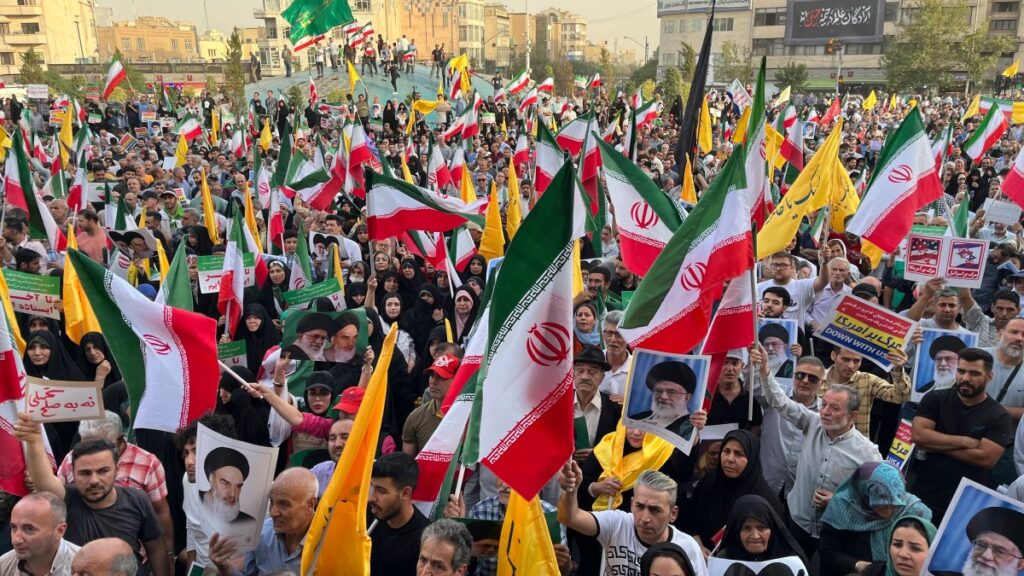
Even before Israel began bombing Iran on June 13, Tehran faced a grave choice: to stand by its “resistance” principles or try to rescue its collapsing economy.
The ceasefire announced on Monday brings closer the point at which that choice will have to be made. Inflation is hovering at about 40 per cent and much of the wealth that remained in the country is fleeing as fast as citizens fled Tehran last week. A normal government would regard itself as in crisis. But the Islamic Republic has never claimed to have a normal government.
Surrendering to American and Israeli demands, abandoning its nuclear aspirations and submitting to intensive inspections could end sanctions and unlock tens of billions of dollars in oil sales, allowing investment to rebuild critical infrastructure. Its traders could return to export markets and be paid in dollars through the conventional Swift system, from which Iran is cut off at present.
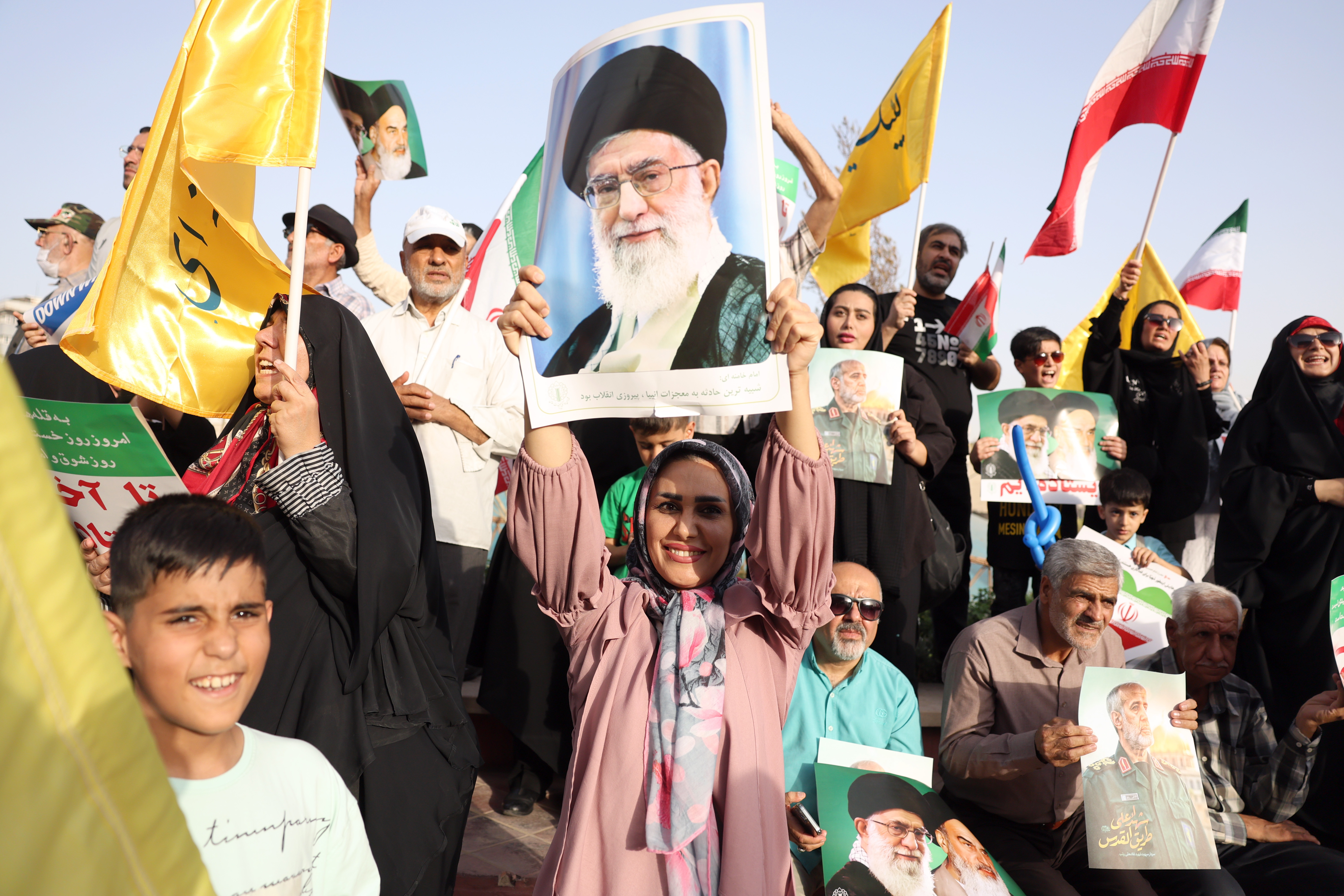
Demonstrators show their support for Ayatollah Ali Khamenei
ABEDIN TAHERKENAREH/EPA
• Israel-Iran war live: Trump says ceasefire in effect and ‘nobody will be hurt’
It would still have one substantial oil market: China, without which it would hardly have survived the seven years since President Trump reimposed sanctions. But other goods, from pistachio nuts to petrochemicals and Persian carpets, could again be delivered to customers in Dubai, the Middle East and beyond who are warier than Beijing of upsetting Washington.
Alternatively, Iran could dig in its heels, insist on its assertion that membership of the nuclear non-proliferation treaty gives it the right to enrich uranium, and tell the United States and its European allies to do their worst.
History suggests the latter option would be a mistake. The massive anti-regime protests of recent years may have on the surface been about issues such as women’s rights, but they have often started in remote provinces where poverty has hit hard and basic government services are breaking down.
Masoud Pezeshkian, Iran’s “reformist” president, was elected last year partly in the hope that he would reverse the anti-western defiance of his predecessor, Ebrahim Raisi, who died in a helicopter crash. He does not have the final say, and the supreme leader, Ayatollah Ali Khamenei, may take the view that he has ridden out crises before and that, anyway, the link between economic performance and regime change is not as clear as it might seem.
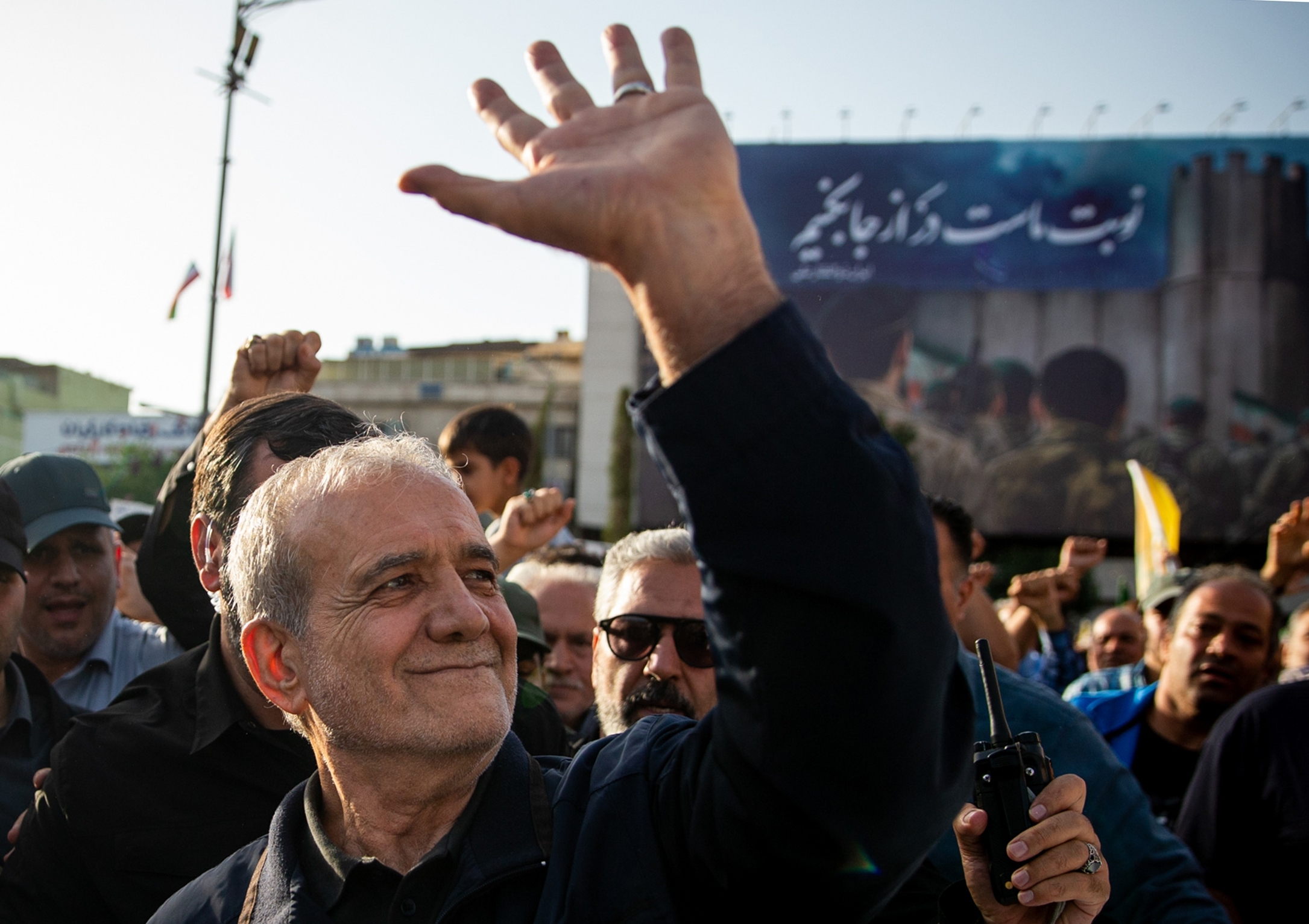
Masoud Pezeshkian, the Iranian president
IRANIAN PRESIDENCY/ANADOLU/GETTY IMAGES
• Iran in secret talks with Russia to bolster nuclear ambition
Revolutions often occur when citizens are feeling richer and more confident in challenging their leaders, rather than when they are impoverished and their first focus is on feeding their children. But Pezeshkian did agree to the negotiations with the Trump team that were interrupted by Israel’s bombing campaign.
“It will take concerted efforts on multiple fronts to raise the economy out of its current misery and generate better financial prospects for the average Iranian citizen,” wrote Bijan Khajehpour, an economic consultant, in a note for the Dutch international relations think tank Clingendael, before the start of the war. “President Pezeshkian has underlined that he is prepared to tackle these root causes by addressing corruption, introducing structural reforms and pursuing an accommodating foreign policy.”
Iran faces two major long-term economic challenges. One is its reintroduction to the international trading order that an end to sanctions could bring about. The other is more complex: dealing with the many inefficiencies created by its unusual combination of free market economics, state-controlled capitalism and Islamic theocracy. It would argue, as do many other developing nations in the “global south”, that China’s model successfully combines markets, the state and tight ideological control.
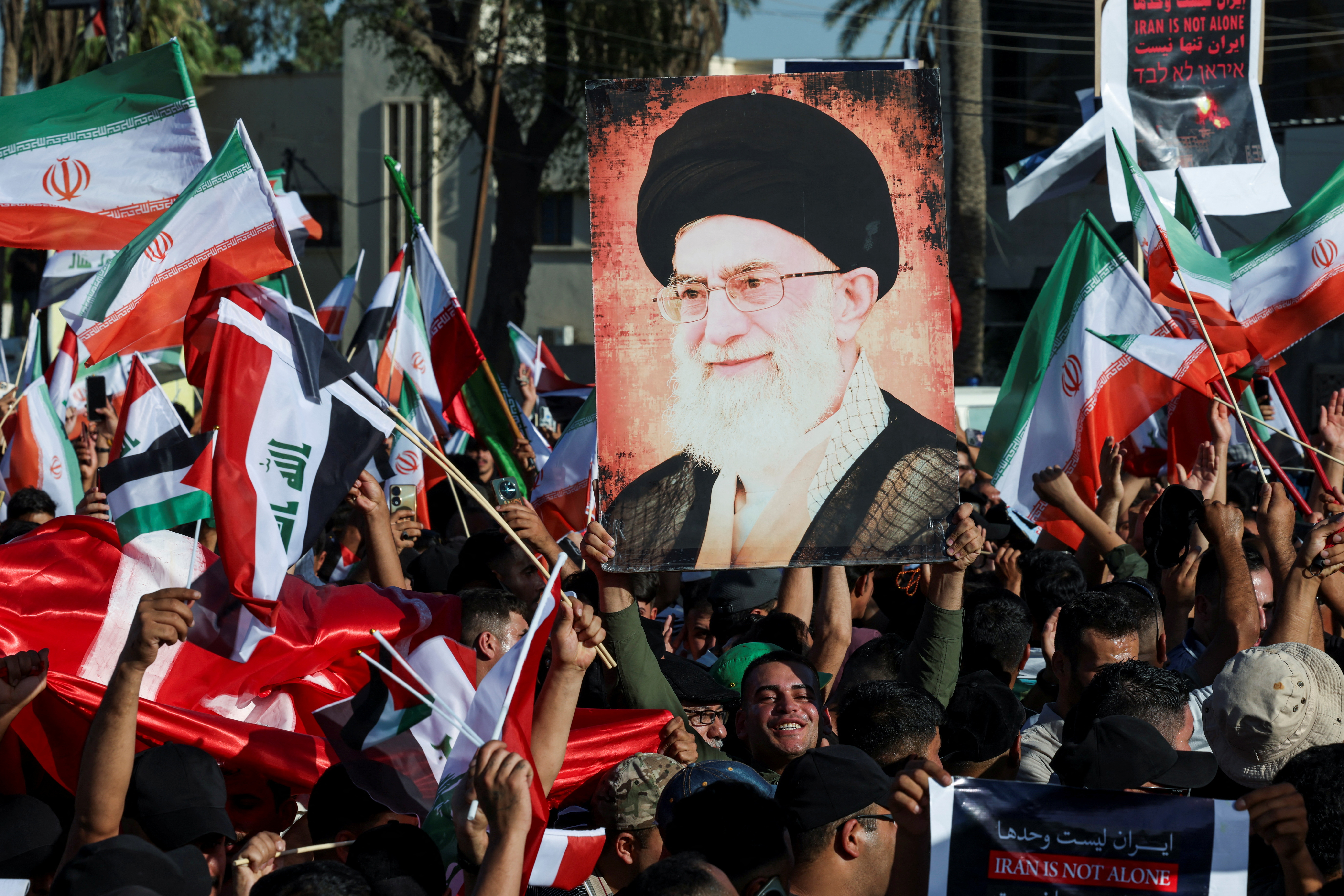
Iraqis held a rally in support of Khamenei in Baghdad on Saturday
AHMED SAAD/REUTERS
• Iran steps up repression amid warnings of terror attacks in UK
The evidence from surrounding economies is mixed. Egypt has pursued China-orientated statism to often disastrous effect. But Iraq, under experimental free market policies after US-led regime change in 2003, has also been a disaster zone, leaving aside the effects of the long civil war. In terms of purchasing power parity — the state of the economy as ordinary consumers feel it — Iraq is well behind Iran, for all Tehran’s woes. Iran’s income per head of population was estimated by the World Bank to be $4,500 in 2023, compared to $5,600 in Iraq. Once “purchasing power” was taken into consideration, Iran outstripped its neighbour.
Those sums are dwarfed by Iran and Iraq’s Gulf neighbours, with their much smaller populations and — in the case of Saudi Arabia — even larger oil reserves. Saudi Arabia’s GDP per head in 2023 was $23,000, while Qatar’s was a staggering $80,000. By contrast, Jordan, which has no oil but receives subsidies from its richer allies, also had a GDP per head of $4,500 in 2023.
Israel, on the other hand, is now an economically advanced country on a par with western Europe. Bolstered by its thriving tech sector, its income per head in 2023 was $53,000. Britain’s was $49,500.
Iran’s economic prospects have risen and fallen with its geopolitics. Though remembered as a time of regal excess and corruption, the last years of the Shah in the 1970s featured rapid growth led by rising oil prices and West-facing modernisation. The economy faltered in the 1980s as the Islamic revolution turned against the West. At the time, there was little alternative for countries seeking partners in growth elsewhere. China had not reached its current levels of development, while Asia and Africa were poor and the Soviet bloc in decline.
Early experiments with reform and new investment in the oil and gas industries by President Khatami in the early 2000s led to another boom, although that faltered as sanctions were introduced to constrain the nuclear programme. GDP surged again after the 2015 nuclear deal, growing by 9 per cent in 2016, but that came to a halt with Trump’s renewed sanctions two years later.
Russia and China have provided lifelines, the latter by buying 90 per cent of Iran’s oil exports, albeit at reduced prices. That helps only superficially. For Iran’s 92 million people, oil is important but only a fraction of the national economy, compared with the decisive role it plays in Gulf rivals such as Saudi Arabia.
Russia’s assistance too, confirmed in a “partnership deal” in January, is double-edged, obscuring the growing technological gap with the West and even Arab Gulf neighbours. “While the Iran-Russia partnership can create a modest economic momentum, it will not address the massive investment and technological needs of Iran’s economy,” Khajehpour said.
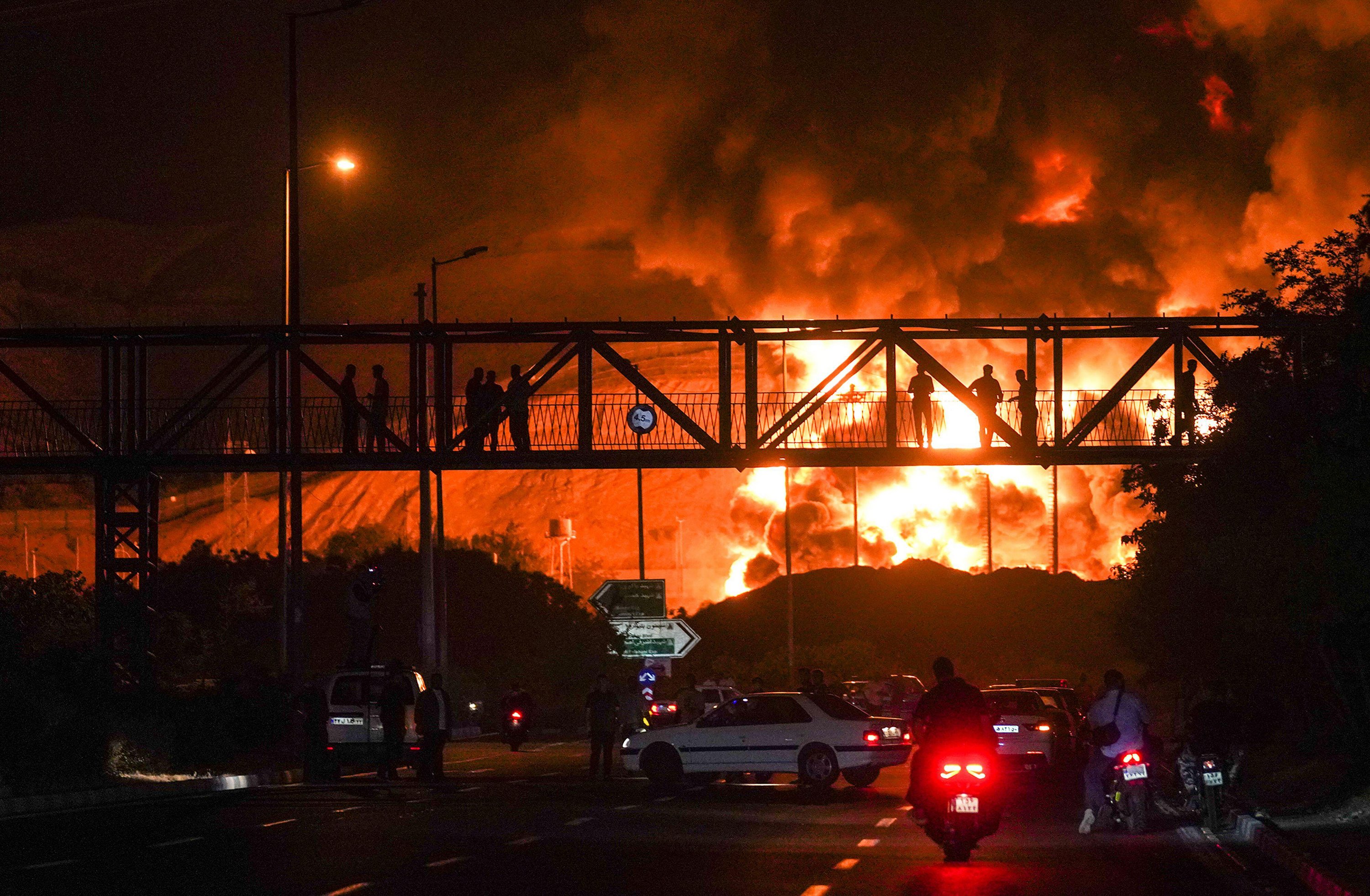
An oil refinery in Tehran was hit in an overnight strike last week
AHMAD HATEFI/ALAMY
Many analysts, including some Iranians, question whether the sort of internal reforms needed are compatible with the existing regime. Companies loyal to the Revolutionary Guard control key sectors, standing as a block to privatisation efforts by reformists. Russia and China have shown ways of turning regime-led sectors into engines of growth and political support. The price is paid in the longer term, through inequality, inefficiency and environmental decay — all matters of secondary concern to a regime focused on its own survival.
One question that will remain irrespective of any agreement over the nuclear programme is Iran’s support for proxy militias across the region. The US State Department has estimated that Iran spent $700 million a year alone on Hezbollah in Lebanon, and hundreds of millions of dollars on Palestinian and other groups.
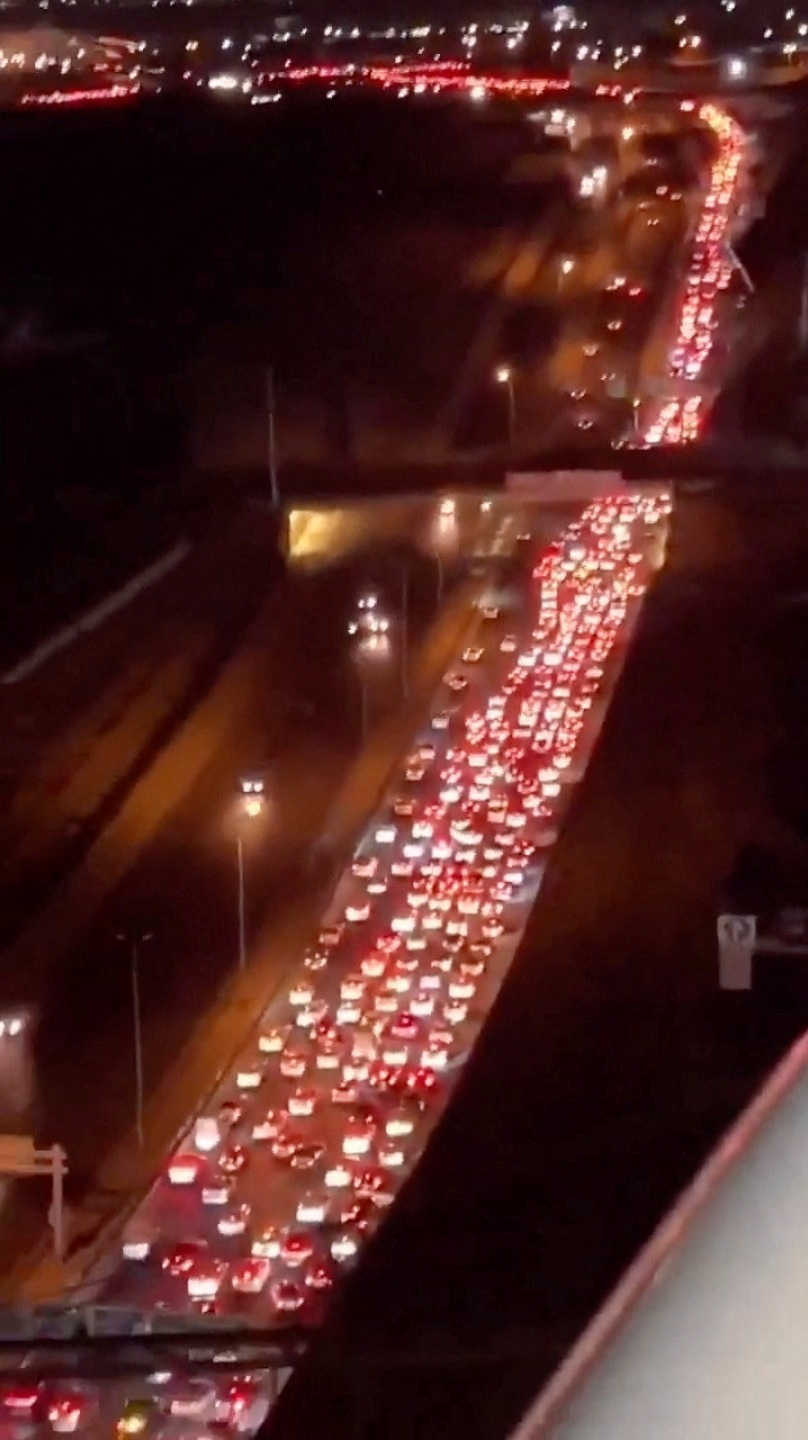
Iranians fled Tehran as Iran and Israel attacked each other
REUTERS
The department also estimated that since 2012, Iran has spent $16 billion on its military support for the former Assad regime in Syria.
That the regime is keen on change was marked even as the Israeli bombing started, with what to outsiders looked like a surprising appointment: the confirmation as economy minister of an American-educated academic, Seyed Ali Madanizadeh. Madanizadeh, who took his PhD at Chicago University, would not have accepted the job if he thought his proposals would not be implemented, according to Esfandyar Batmanghelidj of the Bourse and Bazaar Foundation, a think tank.
Batmanghelidj said: “Economic development has always been extremely important as a means of garnering legitimacy for the Islamic Republic, but it has fallen short of its contractual promise that it would deliver prosperity for the broad swathe of the public. Now there is a reprieve, it may well have the momentum to push forward with that.”