
Summary
– France pushes Rafale jets for Portugal’s air force upgrade.
– Portugal’s aging F-16s struggle with modern NATO demands.
– Rafale’s tech edge targets maritime and air superiority roles.
– The deal could shift Europe’s defense away from U.S. reliance.
– Domestic budget debates may shape Portugal’s final choice.
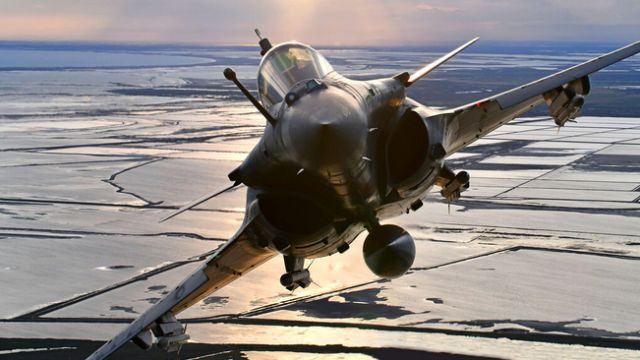
On June 25, 2025, Éric Trappier, the CEO of France’s Dassault Aviation, announced during a French Senate hearing that his company is actively pursuing a deal to sell its Rafale multirole fighter jet to Portugal, a NATO and European Union member looking to modernize its aging air force. Speaking to the French newspaper Journal du Dimanche, Trappier emphasized Portugal’s strategic importance as a potential customer, noting that the country’s membership in both NATO and the EU makes it a logical fit for the Rafale, which is already in service with several allied nations.
The announcement comes amid growing competition in the global fighter jet market, with Sweden’s Saab also engaging Portugal about its Gripen aircraft. This development signals a pivotal moment for Portugal’s defense strategy, as it weighs options to replace its outdated fleet of F-16s amid rising geopolitical tensions and a push for greater European defense cooperation.
The potential sale of Rafale jets to Portugal is more than a commercial transaction. It reflects a broader shift in European defense priorities, with nations seeking to balance operational needs, alliance commitments, and economic considerations. As Portugal evaluates its options, the decision could reshape its military capabilities and influence NATO’s operational dynamics in the Atlantic region.
Portugal’s Air Force: aging fleet, modern threats
Portugal’s air force currently relies on a fleet of approximately 25 Lockheed Martin F-16A/B Fighting Falcons, acquired in the 1990s from the United States and Denmark. These aircraft, while upgraded over the years with improved avionics and weapons systems, are nearing the end of their operational life. The F-16s, designed primarily for air-to-air combat and light strike missions, lack the multirole versatility required for modern warfare scenarios, particularly in maritime operations critical to Portugal’s strategic role as a NATO member with a long Atlantic coastline.
The Portuguese Air Force’s primary responsibilities include defending national airspace, supporting NATO operations, and conducting maritime patrols over the Atlantic, a region increasingly contested due to Russian naval activity. Recent reports from NATO indicate heightened Russian submarine and surface vessel operations in the North Atlantic, underscoring the need for advanced fighter jets capable of long-range maritime strike and surveillance missions. Portugal’s F-16s, equipped with older radar systems like the AN/APG-66 and limited by their range and payload, struggle to meet these demands effectively.
The need for modernization has been a topic of discussion within Portugal’s defense establishment for years. The country’s strategic position, with responsibility for policing the Atlantic approaches to Europe, requires aircraft that can integrate seamlessly with NATO’s command-and-control systems while offering advanced sensors and weapons for diverse missions. This backdrop sets the stage for Portugal’s consideration of next-generation fighters like the Rafale.
Historical context: Portugal’s defense procurement legacy
Portugal’s approach to military procurement has historically leaned heavily on American platforms, particularly the F-16, which has been the backbone of its air force since the 1990s. The country acquired 20 F-16A/B aircraft from the U.S. in 1994 under the Peace Atlantis I program, followed by 25 additional used F-16s from Denmark in 1999. These acquisitions reflected Portugal’s alignment with U.S. defense systems, a common trend among NATO members during the post-Cold War era when American hardware dominated the alliance’s arsenals.
Unlike some European allies, Portugal has not participated significantly in joint European defense projects. For example, it opted out of the Eurofighter Typhoon program, a collaborative effort involving the United Kingdom, Germany, Italy, and Spain. Similarly, Portugal has not been involved in the Future Combat Air System [FCAS], a next-generation fighter initiative led by France, Germany, and Spain. This reluctance to join European programs may stem from budgetary constraints and a preference for cost-effective, proven platforms over speculative, high-cost development projects.
Frencho-Portuguese defense ties have been limited, with no major aircraft procurement deals recorded in recent decades. However, Portugal has collaborated with France in NATO and EU missions, including joint exercises and peacekeeping operations. A potential Rafale deal would mark a significant departure from Portugal’s reliance on U.S. systems, signaling a shift toward European defense solutions. Such a move could be seen as a break from tradition, aligning Portugal with nations like Greece and Croatia, which have recently opted for the Rafale.
Rafale: A multirole powerhouse
The Dassault Rafale, a 4.5-generation twin-engine, canard delta-wing fighter, is designed to excel in a wide range of missions, from air superiority to precision ground strikes and maritime operations. Introduced into French service in 2001, the Rafale has evolved through multiple standards, with the latest F4 configuration incorporating advanced technologies to keep it competitive against newer platforms.
At the heart of the Rafale’s capabilities is the Thales RBE2 Active Electronically Scanned Array [AESA] radar, which provides superior target detection and tracking over long ranges, even in contested environments. The radar’s ability to simultaneously track multiple targets and guide precision munitions makes it ideal for complex missions. The Rafale’s SPECTRA electronic warfare suite, developed by Thales and MBDA, offers advanced jamming and countermeasures, enhancing survivability against modern air defenses. The aircraft can carry a diverse array of weapons, including the Meteor beyond-visual-range air-to-air missile, the SCALP long-range cruise missile, and the AM39 Exocet anti-ship missile, making it particularly suited for Portugal’s maritime-focused defense needs.
The Rafale’s operational record speaks to its versatility. In 2011, Rafale jets played a key role in NATO’s Operation Unified Protector in Libya, conducting airstrikes and reconnaissance missions with high success rates. Between 2015 and 2018, French Rafales deployed in Iraq and Syria under Operation Chammal, delivering precision strikes against ISIS targets while operating in coordination with U.S. and allied forces. These missions demonstrated the Rafale’s ability to integrate with NATO systems and perform in high-intensity conflicts.
Compared to competitors like the Saab Gripen E/F, the Rafale offers a heavier payload and greater range, critical for Portugal’s Atlantic operations. The Gripen, a single-engine fighter, is lighter and less expensive to operate but lacks the Rafale’s multirole flexibility and advanced sensor suite. Against the Lockheed Martin F-35, a fifth-generation stealth fighter, the Rafale trades stealth for versatility and lower lifecycle costs. While the F-35’s stealth capabilities provide an edge in contested airspace, the Rafale’s proven combat performance and NATO interoperability make it a compelling alternative for nations prioritizing operational flexibility over cutting-edge stealth.
Geopolitical context: A strategic pivot for Europe
The pursuit of a Rafale deal with Portugal comes at a time of shifting geopolitical dynamics within NATO and the EU. France has long advocated for greater European defense autonomy, a stance championed by President Emmanuel Macron. At the Paris Air Show on June 20, 2025, Macron pitched the Rafale as a symbol of European sovereignty, emphasizing its independence from U.S. technology. This message resonates as some NATO members question the reliability of U.S. commitments amid domestic political uncertainties in Washington.
For Portugal, choosing the Rafale could signal a subtle shift away from dependence on American platforms like the F-16 and F-35. Posts on social media platform X in March 2025 suggested that Portugal was reconsidering its interest in the F-35 due to concerns about U.S. foreign policy unpredictability. While these posts are not conclusive, they reflect a sentiment among some observers that European nations are exploring alternatives to American hardware. A Rafale deal could position Portugal within a growing bloc of European Rafale operators, including France, Greece, and Croatia, fostering closer defense ties and operational synergy.
France’s strategic ambitions extend beyond mere exports. By promoting the Rafale, France seeks to build a network of allied air forces in Europe, potentially creating a “defense axis” stretching from Lisbon to Paris to Athens. This vision aligns with France’s broader goal of counterbalancing U.S. influence within NATO while strengthening EU defense cooperation. A Rafale deal could also include political and industrial incentives, such as collaboration in cybersecurity or joint training programs, enhancing Portugal’s role in European security frameworks.
The potential U.S. reaction to a Portuguese pivot toward Rafale is worth considering. Washington has heavily promoted the F-35 across Europe, with 14 nations, including the UK, Netherlands, and Italy, already operating or ordering the jet. A Portuguese decision to bypass the F-35 could be interpreted as a setback for U.S. defense exports and a signal of growing European assertiveness. However, given Portugal’s small fleet size, the impact on NATO’s broader standardization efforts would likely be limited.
Portugal’s domestic debate: budgets and politics
In Portugal, the prospect of acquiring advanced fighter jets like the Rafale has sparked discussions within political and military circles. The country’s defense budget, approximately 1.5% of GDP in 2024, falls below NATO’s 2% target, raising questions about its ability to fund a high-cost acquisition. The Rafale’s unit cost, estimated at $80-100 million depending on configuration, combined with maintenance and training expenses, represents a significant investment for a nation with competing domestic priorities.
Public sentiment toward defense spending is mixed. Some Portuguese lawmakers argue that modernizing the air force is essential to meet NATO commitments and address regional security challenges. Others, particularly in opposition parties, question the affordability of new jets when social services and infrastructure demand funding. The debate is complicated by the lack of a clear consensus on whether to prioritize European or American platforms, with some advocating for continued alignment with U.S. systems for interoperability.
The Portuguese government has not publicly confirmed negotiations with Dassault, but Trappier’s statement suggests active discussions. The decision-making process will likely hinge on balancing operational needs with economic realities, as well as navigating domestic political pressures.
The competitive landscape: Rafale vs. rivals
The global fighter jet market is fiercely competitive, with Dassault’s Rafale facing off against Saab’s Gripen, the Eurofighter Typhoon, and Lockheed Martin’s F-35. The Gripen E/F, a lightweight single-engine fighter, offers low operating costs and advanced avionics, including the Leonardo Raven ES-05 AESA radar and compatibility with Meteor missiles. Its smaller size and lower price point make it attractive for smaller air forces, but its limited payload and range may be drawbacks for Portugal’s maritime mission requirements.
The Eurofighter Typhoon, a collaborative European platform, is another contender. Recent reports indicate that Eurofighter is planning to double Typhoon production to meet demand, with Portugal emerging as a prospective customer. The Typhoon’s strengths include its agility and air-to-air capabilities, but its focus on air superiority over multirole versatility may not fully align with Portugal’s needs.
The F-35, with its stealth and advanced sensor fusion, remains a benchmark for fifth-generation fighters. However, its high acquisition and maintenance costs, estimated at $428 million per jet over its lifecycle, pose challenges for budget-conscious nations like Portugal. The Rafale’s ability to perform carrier operations, nuclear missions, and precision strikes without relying on U.S.-controlled software gives it an edge for nations seeking strategic autonomy.
Technological evolution: Rafale’s future-proofing
Dassault is not resting on its laurels with the Rafale. The company is rolling out the F4 standard, which includes upgrades to the RBE2 radar, enhanced SPECTRA countermeasures, and integration with new weapons like the Mica NG air-to-air missile. These improvements ensure the Rafale remains competitive against emerging threats, such as hypersonic missiles and advanced air defenses.
Looking ahead, Dassault is exploring integration with unmanned systems and network-centric warfare capabilities, aligning with trends in modern air combat. The Rafale F5, planned as a stopgap until the FCAS enters service around 2045, will incorporate artificial intelligence and enhanced data-sharing for joint operations. For Portugal, these upgrades mean the Rafale could remain relevant for decades, supporting NATO’s evolving requirements.
However, questions remain about the Rafale’s ability to counter future threats like sixth-generation fighters or advanced stealth platforms. While the Rafale lacks the F-35’s low-observable design, its robust electronic warfare suite and multirole capabilities provide a balanced approach for nations not facing peer-level adversaries.
Industrial cooperation: economic incentives for Portugal
A key aspect of any Rafale deal would likely involve industrial partnerships, a hallmark of Dassault’s export strategy. In recent deals with India, Egypt, and Croatia, Dassault has offered significant local involvement, from maintenance contracts to component production. For example, in India, Dassault partnered with Tata Advanced Systems to manufacture Rafale fuselages, a move announced in June 2025 that will see production begin in Hyderabad by 2028.
For Portugal, industrial cooperation could include contracts for local firms to handle maintenance, repair, and overhaul (MRO) services, creating jobs and boosting the defense sector. Such arrangements would help offset the high cost of the Rafale and align with Portugal’s economic goals. Dassault’s willingness to tailor its offers to include technology transfers could make the Rafale more attractive than competitors like the Gripen, which also emphasizes industrial offsets but operates on a smaller scale.
The bigger picture
The potential sale of Rafale jets to Portugal represents a confluence of military, geopolitical, and economic factors. For Portugal, the decision is about more than replacing aging F-16s; it’s about positioning its air force to meet modern threats while navigating budget constraints and domestic politics. For France, securing Portugal as a Rafale customer would strengthen its influence in NATO and advance its vision of a more autonomous European defense framework.
The Rafale’s proven combat record, advanced technology, and interoperability with NATO systems make it a strong contender, but the decision will hinge on Portugal’s strategic priorities. As Portugal weighs its options, the outcome will reverberate beyond its borders, shaping the future of European airpower.
***
Follow us everywhere and at any time. BulgarianMilitary.com has responsive design and you can open the page from any computer, mobile devices or web browsers. For more up-to-date news, follow our Google News, YouTube, Reddit, LinkedIn, and Twitter pages. Our standards: Manifesto & ethical principles.