
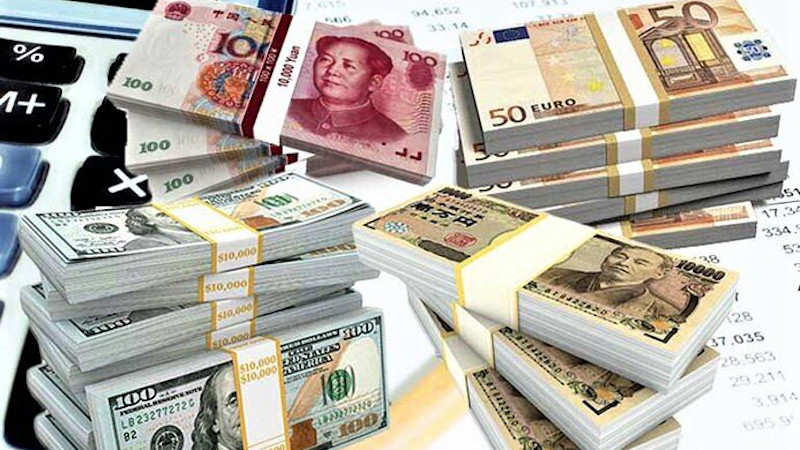
The world economy of 2025 stands at a critical juncture because of policy-created uncertainties, together with structural problems that endanger growth stability. This paper demonstrates how a prolonged period of underperformance and expanding economic gaps will occur because multilateral cooperation needs restoration alongside structural reforms and fiscal prudence.
The current economic situation can be understood through an analysis of slowing expansion rates, together with protectionist policies disrupting global trade and monetary policy discrepancies, and fundamental demographic and fiscal challenges.
Economic expansion has reached its weakest level since the 2008 recession, and the forecast for 2025 predicts only 2.3–2.9 percent growth, which represents a significant decline from previous predictions. A worldwide economic decline became evident when seventy percent of countries reduced their growth projections uniformly across developed and developing markets. The United States economy faces a projected 1.5 percent growth rate that stands at half the 2024 level because increased tariffs at 29 percent on important imports have raised business expenses while cutting profits and shifting investments.
The projected GDP growth rate in Europe stands at one percent because export declines to key trading partners coincide with stagnant domestic market conditions. The Chinese economy faces a projected 4.4 percent decline because of a fragile property sector and external market challenges, while India continues to perform strongly at 6 percent growth due to domestic consumption. The decade’s average growth rate stands at its lowest since the 1960s, which demonstrates the severity of the economic decline.
The main reason for this situation is the return of trade policy as a destabilizing force. The introduction of unilateral trade tariffs along with retaliatory responses has separated global supply chains and created long-term corporate planning uncertainty. The World Bank projects that resolving current trade disputes would boost total output by 0.2 percentage points in the near term because fragmented trade policies impose significant economic losses. The inflationary impact from tariffs differs significantly between nations because countries that raised their duties see their consumer price indexes reach 3–3.5 percent in mid-2025, yet export-dependent nations experience deflationary trends because of weakening foreign market demand. The inflation divide between countries has caused a split in monetary policy strategies because the Federal Reserve chose to wait until 2026 before considering rate cuts, but the European Central Bank and several emerging market central banks started new rounds of monetary easing because of declining output.
The global economy faces continuing structural challenges that surpass the current trade cycle tensions. The average public debt in advanced economies surpasses 90 percent of GDP, thus limiting governments’ ability to stimulate growth through spending without endangering long-term debt stability. The German fiscal situation faces unprecedented post-reunification deficits, which force government officials to maintain social and defense spending against market requirements for fiscal consolidation. Developing nations face severe financial problems because debt crises prevent them from funding vital public services. The workforce participation rates decrease because of aging populations in the OECD member countries, while pension costs rise simultaneously with declining fertility rates in multiple emerging markets that fail to offset the baby boom exit. According to the International Monetary Fund, the silver economy’ strategy that increases older worker employment can partially replace aging population expenses, but current skill training and gender inclusion policies need stronger development.
Since the global financial crisis, investment rates have stagnated, which has reduced the capacity to use productivity gains to counterbalance demographic challenges. The projected 2.9 percent per capita income growth in developing countries for 2025 falls short of pre-pandemic levels by 1.1 percentage points, which threatens to delay United Nations Sustainable Development Goal achievements. The possibility of a ‘development-free decade’ exists as long as obstacles to growth are eliminated. Economic pressures worsen due to continuous geopolitical instability, which includes Ukraine and Middle East conflicts, and ongoing electoral cycles in major economies that cause market instability. The current market expectations for a smooth economic transition seem optimistic compared to actual data, which could lead to unexpected market changes.
The situation demands a three-part approach for effective management. The restoration of multilateral engagement stands as the first priority because it helps to rebuild trust through World Trade Organization dispute settlement reform and OECD and International Monetary Fund dialogue. The three essential measures for structural adjustment include phased retirement programs for lengthened working lives and the integration of migrant workers to address skills deficits, and solutions to ongoing gender inequality to boost potential output. The parallel implementation of public investments in digital infrastructure and green technology will drive productivity while preparing economies for future technological advancements. The preservation of fiscal prudence requires equal attention to equity since progressive tax reform will boost revenue while safeguarding essential social and health programs, which protect fiscal capabilities and lessen adjustment-related human impacts.
The 2025 economic forecast shows dim prospects, yet historical evidence shows that economic crises lead to fundamental cooperative shifts. Through policy fracture remedies and demographic adaptation, and fiscally responsible measures, the global economy will achieve better cohesion while building resilience. The outcome of inaction will create lasting stagnation and increasing inequality, whereas effective joint efforts could launch an age of mutual success.
The opinions expressed in this article are the author’s own.
References
- World Bank. (2025). Global Economic Prospects, January 2025. Washington, DC: World Bank. doi:10.1596/978-1-4648-2147-9. This report offers a comprehensive overview of global economic trends, highlighting the impact of trade tensions and policy uncertainties on growth projections.
- International Monetary Fund. (2025). World Economic Outlook, April 2025: A Critical Juncture amid Heightened Uncertainty. Washington, DC: IMF. The IMF’s outlook examines the slowdown in global growth, emphasizing the need for calibrated policies to address inflation and reinvigorate medium-term growth.
- Organisation for Economic Co-operation and Development. (2025). OECD Economic Outlook, Volume 2025 Issue 1. Paris: OECD Publishing. This publication analyzes the effects of increased trade barriers and policy uncertainty on global GDP growth, projecting a moderation in growth rates for 2025 and 2026.