
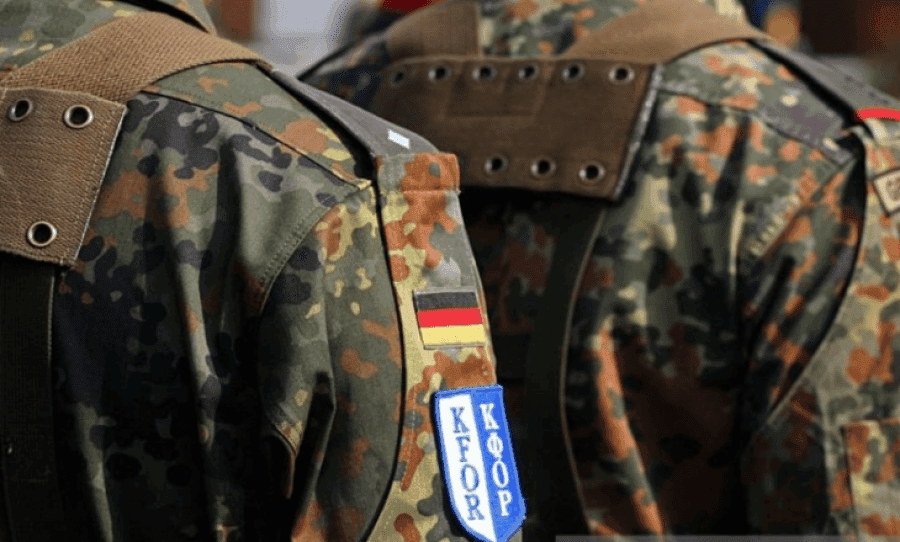
Do you know how much the KFOR military mission in Kosovo costs Germany?

Express newspaper
27/06/2025 7:02
In a half-hour debate, German MPs from different parties presented arguments for and against extending the Bundeswehr’s mandate in Kosovo.
Germany is not leaving Kosovo – at least not this year. On Thursday, June 26, the Bundestag in Berlin decided that the Bundeswehr’s mission as part of the international KFOR force will continue for another 12 months. With 391 votes in favor, 189 against and only two abstentions, the extension of the mandate was approved.
What did the deputies in the Bundestag say?
“The future of the Western Balkans should not be reduced to security issues alone,” said conservative MP Johannes Volkmann (CDU), speaking in parliament for the first time. Volkmann, the nephew of the famous German Chancellor Helmut Kohl, who led the historic reunification of Germany in 1990, called for a bolder approach to Kosovo: “How can the younger generations in Kosovo feel when the promise of EU integration made in Thessaloniki in 2003 has not yet been fulfilled?” He called on the EU to finally fully recognize Kosovo and admit it to the Council of Europe.
Stefan Kräuter, a representative of the far-right AfD, the largest opposition party in the Bundestag, rejected the entire logic of the mission in Kosovo. “This is not our conflict. This mission has not brought anything concrete (..) With that money we could feed starving children in Yemen or Sudan.”
Another critical voice came from the Left, where MP Gökay Akbulut called the KFOR mission a “frozen military solution without perspective.” “Kosovo is still one of the poorest countries in Europe. We don’t need more troops, but schools, hospitals and jobs.”
From the center of the political spectrum, the SPD and the Greens defended the decision to extend the mandate:

“Our soldiers help build a democratic and multiethnic society,” said Minister Nancy Faeser (SPD), while Niklas Wagner (Greens) called KFOR an “anchor of stability” and warned: “If the US withdraws, Europe must be ready to take responsibility – otherwise the vacuum will be filled by authoritarian actors.”
What role do German soldiers play within KFOR?
Up to 400 German soldiers will be able to be deployed again in Kosovo. Their task? To contribute to maintaining security, public order and efforts to build a stable, democratic and multiethnic state. Germany also clearly expresses its support for the transformation of the Kosovo Security Force into a modern and democratically controlled structure – in preparation for integration into NATO and the EU.
After the end of the war in 1999, Germany was one of the largest contributors to the KFOR mission, with up to 6 soldiers deployed in Kosovo. The presence was maintained at high levels until 000, when, following interethnic unrest, it was reinforced again with 2004 additional troops.
From 2011, a gradual reduction began, dropping to less than 1 soldiers and closing the military base in Prizren in 000.
At the end of 2022, Germany had only about 80 soldiers on the ground. But with rising tensions in northern Kosovo and the departure of the Austrian contingent, Berlin reacted: an additional company was sent in April 2024, and today the Bundestag has mandated up to 400 troops – a symbolic return to attention to security in the region. The military mission in Kosovo costs Germany 38.9 million euros.