
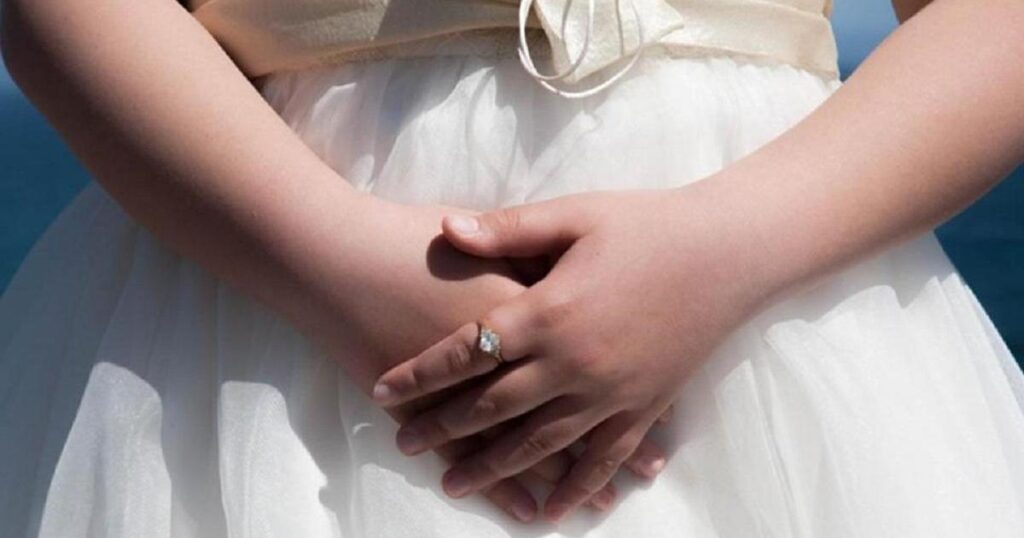
16 and 17-year-olds will no longer be allowed to marry, even with the consent of their parents or guardians, under new legislation being proposed by the government.
Junior Minister Rebecca Buttigieg presented the bill in Parliament on Monday during the second reading of the Various Laws Relating to Forced Marriages (Amendment) Bill.
Under current law, individuals must be at least 18 to marry. However, 16- and 17-year-olds may still marry if they obtain the consent of their parents or are authorised by the courts.
The proposed bill would abolish this exception entirely.
“The age of marriage will remain 18, but we are removing the potential for people 16 or 17 years old being able to get married with the consent of their parents or custodians,” Buttigieg said.
She added that the amendment will apply across religious, civil and cultural marriages.
Buttigieg said the law in its present form is vulnerable to abuse and could lead to long-term harm.
“And (it could) have devastating effects on the child’s growth… These amendments are essential.”
The junior minister explained that the exception was originally introduced in cases where a girl became pregnant before marriage, allowing her to wed despite being underage.
“Getting pregnant at a young age out of marriage was treated as if it were the biggest scandal the world had ever seen,” she said.
Difference between teen voting and marriage
Buttigieg argued that such social pressures no longer apply, and the stigma of getting pregnant before marriage has faded away.
Addressing one of the counterarguments to the amendment, that 16-year-olds can vote or even serve as mayors, she drew a sharp distinction.
“You can’t compare the decision of someone voting as opposed to the decision of being with someone for the rest of your life.”
Opposition MP Graziella Attard Previ said the Nationalist Party is in agreement with the government on the need for reform.
She warned of the dangers minors face when forced into marriage, including social isolation, financial dependence, and increased vulnerability to abuse and domestic violence.
“We can’t just amend them (the law), but we also need to make sure they are enforced,” she said, calling for strict penalties for those who break the law.
PN MP Justin Schembri added that most cases of underage marriage in Malta do not involve Maltese children. However, he stressed that it is still Parliament’s responsibility to “represent and protect all children living in Malta.”
Concerns of minors being sold into marriage
PL MP Edward Zammit Lewis also intervened in the debate, noting that Malta is home to several cultural communities that may have different perspectives on the age of consent and marriage.
He also stressed that it is important to distinguish between arranged marriages, which may involve family input but mutual consent, and forced marriages.
Government Whip Naomi Cachia raised concerns over minors being sold into marriage.
She referenced a 2023 case where a girl was sold in Malta for €5,000 and forced to marry an older man against her will. She noted that even though this is a rarity, one case was more than enough to try to put a stop to it.
The Minister for Children’s Rights recalled that, historically, Canon Law allowed girls to marry at 14 and boys at 16, based on the belief that women matured earlier.
“This was in the past,” he stressed.
He noted that Malta’s Marriage Act in 1975 introduced civil marriage, which aligned the legal framework more closely with modern standards. And that now once again it must be amended to further align itself with society of today.
He said the aim of the proposed amendment is to ensure that “consent is only given by the person themselves and that the person is of age”.
Last year, according to information tabled in parliament, over a decade, 13 minors were married in Malta, and their marriage was registered.
In 2019, the United Nations Committee on the Rights of the Child recommended that Malta amend its legislation to fully prohibit marriage under the age of 18.
In 2022, Women’s Rights Foundation founder Lara Dimitrijevic said teachers had told the foundation that some “foreign girls “, even as young as 12, disappeared from their classrooms, only to turn up weeks later saying they had married an older man.