
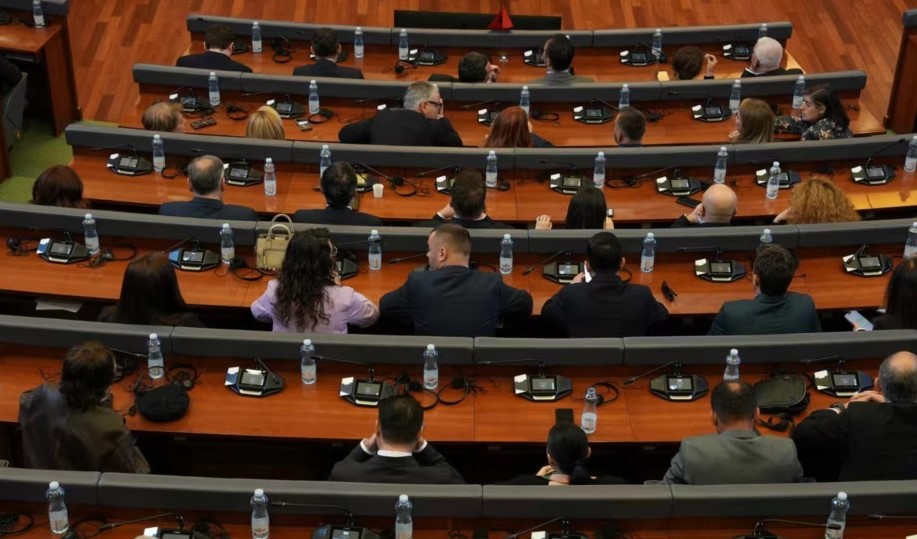
Members of Kosovo’s Assembly have failed for the 40th consecutive time to constitute the new parliamentary composition following the February 9 elections. July 1 marked the third failed attempt since a Constitutional Court ruling, with no progress made in the process, while the legal deadline for constitution expires on July 26.
The main opposition parties — including the Democratic Party of Kosovo (PDK), the Democratic League of Kosovo (LDK), the Alliance for the Future of Kosovo (AAK), the Social Democratic Initiative (NISMA), and the Serbian List — have refused since May 1 to nominate members for the commission that would oversee the secret ballot vote for the new speaker of parliament. They argue that the shift from open to secret voting is unconstitutional, referencing a Constitutional Court judgment.
On the other hand, the Self-Determination Movement (LVV), which won the election, supports the secret voting method. LVV leader Albin Kurti has invited the leaders of other political parties for meetings, but no agreement has been reached to overcome the deadlock. Kurti has offered compromises, but the opposition has dismissed the talks as a “farce,” accusing him of lacking flexibility.
In an effort to find a solution, President Vjosa Osmani announced on June 30 new consultations with party leaders and urged compliance with the Constitutional Court’s ruling. If necessary, according to her media advisor Bekim Kupina, Osmani will once again turn to the Court for further clarification.
The Self-Determination Movement holds the exclusive right to nominate the candidate for Speaker of the Assembly and has so far nominated Albulena Haxhiu. However, her candidacy has been opposed by PDK and AAK, who consider her a divisive figure. Haxhiu has signaled that she will withdraw her candidacy if she fails to secure 61 votes in the secret ballot.
To constitute the Assembly, the election of the Speaker and five deputy speakers is required. Only after this step can the deadlines for forming a new government officially begin.