
Thursday, July 3, 2025

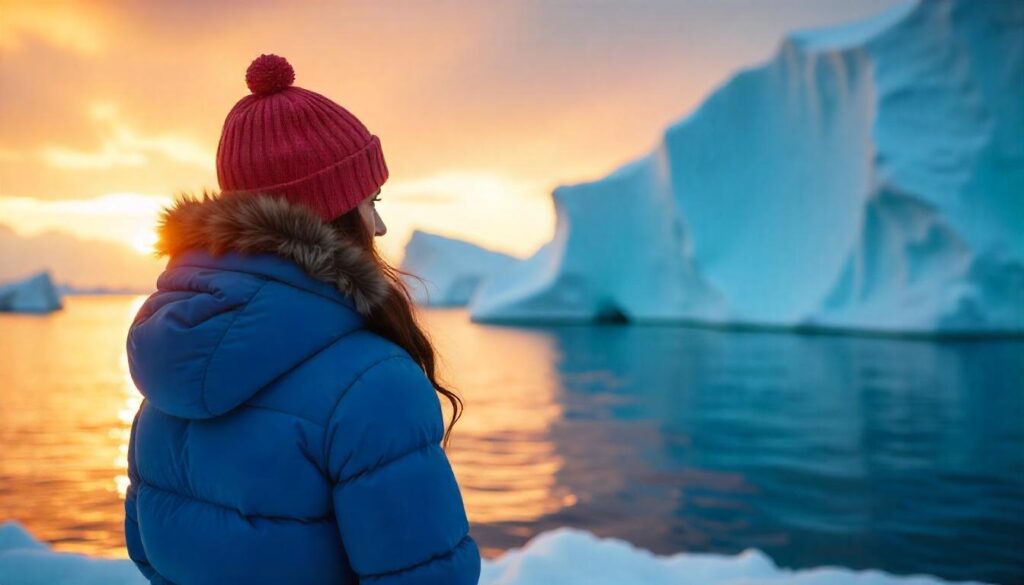
The heatwave gripping Europe and the Middle East—including Italy, Greece, Spain, Turkey, France, UAE, Saudi Arabia, and Iran—may be fueling a dramatic shift in global travel patterns, as tourists increasingly turn to Antarctica in search of climate relief and untouched landscapes. With temperatures in many of these countries pushing past forty to fifty degrees Celsius, traditional summer destinations are becoming too hot to handle, driving travelers to consider more unconventional, cooler escapes. This trend is reflected in Antarctica’s surging visitor numbers, which reached nearly 125,000 in the 2023–2024 season—more than fifteen times the count from three decades ago. While many factors contribute to Antarctica’s rising popularity, including luxury expedition cruises and once-in-a-lifetime experiences, the timing of this surge alongside worsening climate conditions in Europe and the Middle East is raising the question: are extreme heatwaves now quietly reshaping where the world travels to escape?
Heatwaves Push Europe and the Middle East to the Boiling Point
Across Europe and the Middle East, an unforgiving summer has tightened its grip, sending temperatures soaring and travelers scrambling for cooler alternatives. In Italy, extreme heat alerts have become routine, with cities like Rome, Florence, and Naples enduring highs above forty degrees Celsius for consecutive days. Greece has faced a blistering combination of heat and wildfires, with Athens recording some of the highest temperatures in decades, leading to widespread health warnings and even temporary closures of iconic tourist sites like the Acropolis.
In Spain, heatwaves have scorched Andalusia, Catalonia, and Valencia, disrupting transportation, canceling outdoor events, and straining local energy grids. Tourists in France, particularly in the southern regions like Marseille and Nice, have reported relentless heat that made even shaded strolls unbearable. Meanwhile, Turkey has experienced punishing conditions in major cities including Istanbul and Antalya, with inland areas facing heat indexes well beyond safe limits.
The Middle East has fared no better. In the United Arab Emirates, residents and visitors alike have struggled under record-breaking temperatures. Dubai and Abu Dhabi have seen midday highs routinely exceed forty-eight degrees Celsius, with extreme humidity pushing heat indexes closer to the mid-fifties. In Saudi Arabia, cities such as Riyadh and Mecca have seen scorching conditions stretch across weeks, prompting government advisories and increasing the burden on healthcare systems.
Meanwhile, in Iran, entire provinces have faced suffocating heat. Cities like Ahvaz and Bandar Abbas have recorded some of the highest real-feel temperatures on Earth this year. In some regions, authorities declared emergency closures of schools and public offices to reduce exposure.
Together, these regions are witnessing some of the most severe and prolonged heat events on record. The convergence of climate-driven extremes has left millions in Europe and the Middle East rethinking summer routines. For wealthier travelers and adventure-seekers, the solution has taken an unexpected turn: a journey to Antarctica.
What was once seen as an elite expedition or scientific frontier is now becoming a climate refuge—an icy escape for those who can no longer tolerate the broiling summers of the Northern Hemisphere. Tour companies have reported an increase in interest from residents of Mediterranean countries and Gulf states, marking a dramatic shift in seasonal travel demand. For these travelers, Antarctica offers more than just stunning glaciers and wildlife—it offers relief.
Tourists Fleeing the Heat for Antarctica’s Deep Freeze
Italy, Greece, Spain, Turkey, and France have all faced relentless waves of heat this year, with parts of southern Europe hitting temperatures well above forty degrees Celsius. In the Middle East, cities across the UAE, Saudi Arabia, and Iran have seen mercury levels approach or exceed fifty degrees, pushing public infrastructure to its limits and prompting warnings from health officials. In some places, authorities even urged residents to stay indoors or limit outdoor movement.
With the Northern Hemisphere becoming increasingly inhospitable during peak summer, Antarctica has gained appeal not just for its pristine beauty but for its promise of cold. Tourism figures back this shift. According to recent data, nearly one hundred twenty-five thousand visitors traveled to Antarctica during the 2023–2024 season, a staggering jump from fewer than eight thousand per year just three decades ago. And the trend is showing no signs of slowing. Models now predict tourist numbers could soar to two hundred eighty-five thousand by 2033–2034, with some scenarios projecting as high as four hundred fifty thousand if no controls are imposed.
Cruises Drive the Boom While Carbon Concerns Linger
Most visitors to Antarctica arrive via cruise ships, particularly along the Antarctic Peninsula—the most accessible point from South America. Smaller numbers venture deeper to the Ross Sea or interior zones. These ships offer adventure-packed itineraries: icy landscapes, penguin colonies, and the thrill of visiting the Earth’s final frontier. But this increase in cruise-based tourism isn’t without its trade-offs.
Cruise ships contribute significantly to carbon emissions. Each Antarctic tourist aboard a ship generates between 3.2 to 4.1 tonnes of carbon dioxide, even before counting their international flights to reach the port. That’s roughly equivalent to the total annual emissions of an average person. Operators have begun adapting by introducing hybrid-powered ships, cleaner fuels, and offset programs. Still, the climate impact remains an ongoing concern—particularly because Antarctica itself is warming rapidly. Glaciers and sea ice in the Peninsula region are retreating, wildlife is being affected, and fragile ecosystems are becoming more vulnerable to even small disturbances.
Physical Footprint Adds Pressure to Fragile Ecosystems
It’s not just the air pollution that’s raising alarms. About two-thirds of Antarctic tourists set foot on the continent. When they do, they risk compacting soils, trampling delicate mosses and lichens, disturbing nesting birds, and inadvertently introducing invasive species. Even ships that don’t dock contribute to noise, water, and seabed pollution through anchoring practices.
These growing risks have caught the attention of international regulators. For the past two weeks, representatives from the Antarctic Treaty System and members of the International Association of Antarctica Tour Operators (IAATO) have been meeting in Italy. Their focus? How to manage the ballooning number of visitors in a place with no central government, no permanent residents, and no legal system designed to handle mass tourism.
Can Economics Be the Brake Antarctica Needs?
One of the key ideas being discussed is using economics to slow things down. Among the proposals: introducing a tourist tax on all Antarctica visitors, similar to Bhutan’s sustainable travel model. Bhutan charges visitors US$100 per night, funneling the revenue into conservation and infrastructure. A similar tax in Antarctica could help fund environmental monitoring and scientific research. But experts caution that such a fee might not deter wealthier travelers seeking “bucket list” adventures.
Another option under review is a cap-and-trade system, which would place a strict limit on the number of tourist permits available each year. Operators or even countries could then buy and sell permits, making them both scarce and valuable. This method has worked in other ecologically sensitive destinations, like Lord Howe Island in Australia, though trading isn’t allowed there. The challenge in Antarctica is determining how many visitors the environment can actually tolerate—a figure that remains scientifically uncertain.
Additionally, green certification schemes are being explored, which would reward tour operators for following low-impact and carbon-reduction practices. However, for such programs to work, robust monitoring and enforcement mechanisms must be in place to prevent greenwashing.
The heatwave sweeping through Europe and the Middle East—including Italy, Greece, Spain, Turkey, France, UAE, Saudi Arabia, and Iran—may be fueling Antarctica’s tourism boom as travelers increasingly seek refuge from extreme temperatures in one of the planet’s last remaining cold and untouched destinations.
Doing Nothing Is No Longer an Option
At present, there are few binding rules controlling the scale or scope of tourism in Antarctica. The Antarctic Treaty System, while groundbreaking, often moves too slowly to keep pace with the rapid changes facing the region. IAATO, on the other hand, has limited authority. It can guide best practices but can’t enforce limits.
That’s why a hybrid approach—combining taxes, caps, and environmental certification—is gaining support among researchers and environmental advocates. The goal isn’t to halt tourism but to make it sustainable. After all, tourism helps fund scientific research, raises awareness about climate change, and fosters a global sense of stewardship for Antarctica’s untouched landscapes.
But if left unmanaged, this boom could lead to irreversible harm. As the world heats up and travelers look southward for refuge, Antarctica’s allure will only grow stronger. The real question now isn’t whether the heatwave is driving demand—it clearly is—but whether the systems in place are strong enough to handle it.
Because loving Antarctica too much might just destroy the very thing that makes it magical.
«Enjoyed this post? Never miss out on future posts by following us»
Tags: Europe, france, greece, iran, Italy, Middle East, saudi arabia, spain, Tourism news, travel industry, Travel News, Turkey, UAE
