
Sunday, July 6, 2025

North Koreans are setting their eye on the colossal spectacle of the Mega Wonsan-Kalma Beach Resort, a place shimmering with new possibilities for recreation and grand visions of a major tourism development. Meanwhile, waves crash along the pristine shorelines, as curious crowds flock to glimpse this dazzling creation. The words “mega” and “development” hang heavy in the air, sparking whispers of secrets waiting to unfold.
In every corner of this beach resort, excitement simmers, hinting at hidden chapters in North Korea’s future. Locals dream of carefree days and a life touched by leisure, while officials pin hopes on tourism as a lifeline for economic revival.
Yet questions linger. Could this bold step be North Korea’s opening to the world—or merely a spectacle crafted for show? The Wonsan-Kalma Beach Resort stands ready, daring us to peer deeper. Thrills, mysteries, and untold ambitions swirl beneath the sunlit surface.
A Shimmering New Beachfront Vision
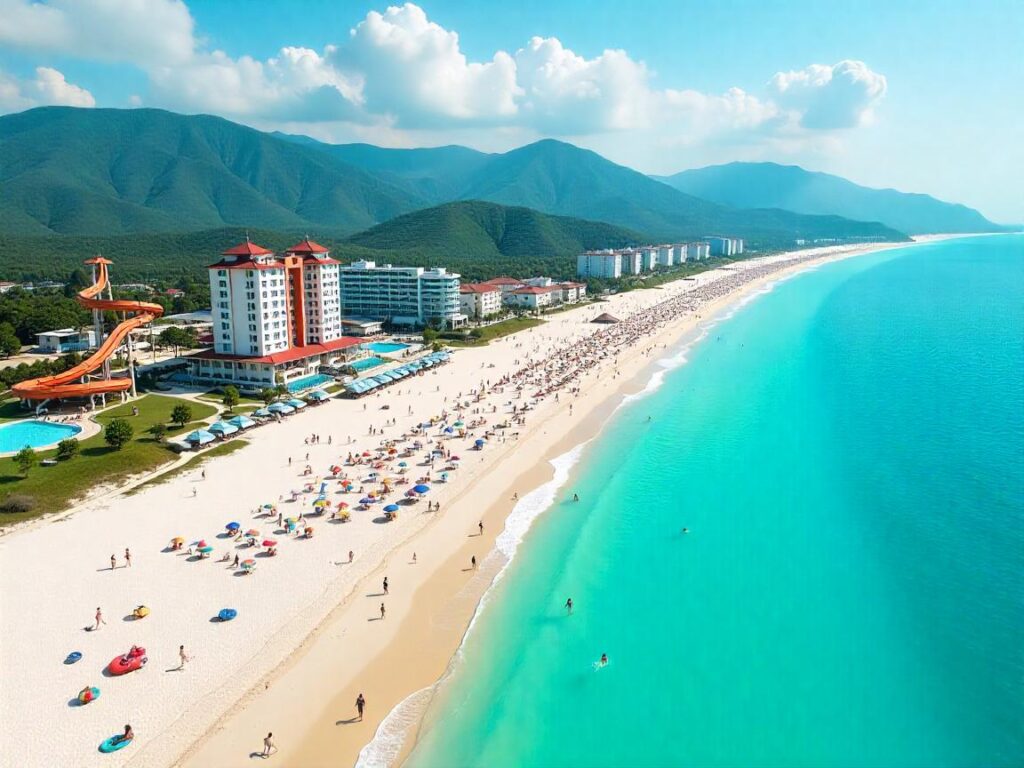
Sun glistens off bright waves lapping the shores of North Korea’s east coast. Towering hotel blocks stand watch over turquoise waters. Water slides snake into blue pools. And thousands of citizens flock to a brand-new complex that Pyongyang insists is the symbol of a brighter economic future.
North Korea’s new Wonsan-Kalma Coastal Tourist Zone has officially swung open its gates. The sprawling seaside development, nestled along Kangwon Province’s scenic shoreline, is now welcoming local visitors in large numbers. The regime claims this resort alone can host nearly 20,000 guests at any given time.
However, this coastal spectacle raises critical questions for the global travel industry. Is North Korea genuinely ready to pivot into the lucrative tourism market? Or will this ambitious mega-resort remain a showpiece with little real-world financial payoff?
Global Industry Watches the Hermit Kingdom
Meanwhile, the world watches closely. The international travel sector, forever hunting fresh destinations, can’t help but wonder whether this ultra-secretive country could one day emerge as Asia’s next curiosity-fueled hotspot.
For now, however, foreign tourists are still almost entirely locked out. North Korea’s borders remain tightly sealed, even as much of the global tourism sector claws back business after years of pandemic-driven disruptions.
Still, Pyongyang appears determined. Its vision is clear: use tourism to pump foreign currency into the economy. With the Wonsan-Kalma complex, North Korea has signaled a serious bid to transform its tourism infrastructure, luring not just locals but eventually foreign visitors hungry for the forbidden and the unknown.
A High-Stakes Gamble for Economic Revival
The stakes are high. Tourism accounted for billions of dollars across Asia before COVID-19 upended travel flows. Countries like Vietnam, Cambodia, and Thailand saw surging arrivals, helping balance national budgets and fund development. North Korea’s leadership undoubtedly covets even a fraction of that economic bounty.
In particular, the Wonsan-Kalma zone represents a broader strategic pivot. Kim Jong Un, determined to showcase progress under his rule, has invested years into the project. North Korean state media showcases beaches lined with sunbathers, sprawling promenades, and clusters of modern buildings. Pools gleam under the summer sun, and families splash in the surf. It’s a vision of leisure, prosperity, and national pride.
However, many analysts remain skeptical. For all the bright visuals, North Korea faces towering barriers to unlocking serious tourism revenue. Ongoing sanctions, deep distrust from Western governments, and Pyongyang’s strict information controls are powerful deterrents for international travelers.
Russian Tourists Test the Waters
Moreover, North Korea has yet to announce a concrete timeline for reopening to mass tourism. The regime continues to prioritize tight border controls, partly out of lingering pandemic caution, but also due to longstanding fears about foreign influence.
Still, not all hope is lost for tourism insiders tracking Asia’s shifting patterns. A flicker of movement is on the horizon. North Korean authorities have confirmed the first group of Russian tourists is slated to visit Wonsan-Kalma in early July. They’ll embark on an eight-day trip, marking the first significant inbound tourism from a foreign market since COVID-19 effectively closed North Korea’s doors in early 2020.
This Russian group could serve as a cautious test case. Russia’s close relationship with North Korea, coupled with mutual political interests, makes Russian travelers low-risk from Pyongyang’s perspective. Meanwhile, it could offer valuable lessons for how the country might eventually host visitors from China, Southeast Asia, or—potentially, though less likely—Western markets.
A Potential Goldmine—Or Global Risk?
For global tour operators and travel agencies, the allure is undeniable. A tourism opening in North Korea would instantly create one of the world’s most exotic, high-interest destinations. Cultural curiosity alone could drive significant visitor volumes, even if the country never becomes a mass-tourism hub like Thailand or Bali.
However, risk looms large. Insurance liabilities, political unpredictability, and human rights concerns are formidable obstacles. Tour operators face tough questions: How do you responsibly sell North Korea as a destination without enabling propaganda narratives? How do you protect travelers in a country known for harsh legal penalties and near-total surveillance?
Aviation and Hospitality Eye Future Opportunities
Meanwhile, for airline route planners, a potential tourism opening could trigger strategic reevaluations. Carriers across East Asia have historically eyed North Korean routes as tantalizing, albeit high-risk, market expansions. Wonsan’s proximity to regional hubs like Beijing, Vladivostok, and Seoul makes it a logical target for short-haul flights—if conditions ever permit.
Likewise, regional airports could see opportunity. Airports in China’s northeastern provinces or Russia’s Far East might position themselves as transit gateways to a newly opened North Korea. Such flows would inject fresh revenue into aviation networks still recovering from pandemic-era downturns.
For hotels, meanwhile, North Korea’s potential remains a giant question mark. Major global hotel brands would likely hesitate to enter the market due to political complications and reputational risk. Yet smaller Asian hospitality chains or niche operators could test the waters, aiming to capture premium segments drawn to the novelty of North Korean travel.
An Emotional Shift—and Lingering Doubts
Tourism authorities across Asia are also tracking developments closely. Should North Korea reopen more fully, regional bodies like the ASEAN Tourism Forum or Asia-Pacific Travel Association may need to address cross-border policies, traveler safety protocols, and marketing guidelines to ensure responsible travel.
Furthermore, the emotional element cannot be ignored. For decades, North Korea has loomed in the global imagination as mysterious, reclusive, and often dangerous. Now, images of children splashing in the sea, colorful parasols dotting white sands, and modern resorts glimmering in the sun offer a starkly different narrative. It’s a glimpse into a country eager to rebrand itself—at least on its own terms.
Still, the travel industry remains cautious. The desire for new destinations must balance with ethical considerations and hard-headed business realities. Investors and tour operators will watch Wonsan-Kalma’s first foreign visitors carefully, eager to see whether this massive resort signals a genuine shift—or remains simply another showpiece for internal propaganda.
For now, North Korea has fired its opening salvo in a potential tourism transformation. Whether the world answers that call remains an open question.
«Enjoyed this post? Never miss out on future posts by following us»
Tags: ASEAN, asia-pacific, Beijing, china, east asia, Kangwon Province, north korea, Russia, southeast asia, Vladivostok, Wonsan
