
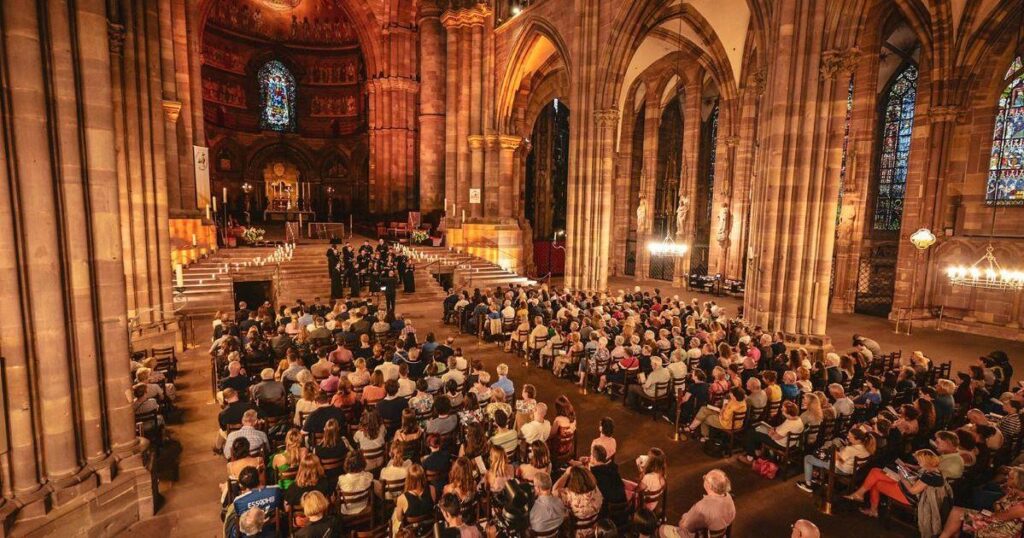
Language is never just sound: it carries place, memory and identity. Perhaps there is no better way to describe Malta’s cultural programme for the 2025 presidency of the Council of Europe than as an act of speaking – not loudly, but clearly – in our own tongue. And that voice has begun to echo in Strasbourg.
It began with a concert at the Palais Universitaire, where poetry clashed playfully with pop, and memory found rhythm. It was joyful, but also reflective – a living score of Maltese identity.
From the irreverent swagger of marċi and makjetti to the soulfulness of Oliver Friggieri’s verse and the urgency of pop music, it was Malta: layered, defiant, tender and in Maltese. The cast was formidable: Ira Losco, Claire Tonna, Daniel Cauchi and Jamie Cardona backed by the Big Band Brothers. Distinct sounds with singular styles.
Then Teatru Anon deservingly stepped onto the international stage for the first time with Daqsxejn ta’ Requiem lil Leli – a poetic lament by Immanuel Mifsud scored by Kris Spiteri.
Performed with French surtitles, it reminded us that death too can be a kind of bridge. And Europe, lately, is carrying too much of it.
We also wrote a theme song for the presidency – One by One – a title that speaks for itself. Composed by Spiteri, the song struck a chord across borders, becoming both a refrain and a reminder of what the council stands for: that every story matters, and every voice deserves to be heard, and every body counts.
From music to cinema: Frames of Malta, the first curated Maltese film week in Strasbourg, opened at the beautiful Le Cosmos Cinema. We’re marking 100 years of cinema in Malta – not 100 years of Maltese film, but a century of how we’ve watched, remembered and imagined.
We honoured Cecil Satariano’s work and opened with the lovely Giuseppi, restored by project director Veronica Galea for the National Archives – a reminder that Malta’s cinematic instinct existed long before it had a home. I cried watching it.
Alongside this, we screened five contemporary films in Maltese, yet speaking in many cinematic tongues: satire, social realism, political history, introspection.
That same week, Malta hosted a bilateral meeting with Eurimages, attended by our minister for culture, PBS and ACM – a quiet but meaningful shift in cultural policy. We’re no longer asking Europe to shoot on our shores. We’re asking them to tell stories with us.
What stayed with me wasn’t just the quality of the work: it was the people, the way they “met”. The day after the opening, I heard Cardona teasing Mifsud – suggesting he watch Love Island on the train since reading makes him nauseous while travelling. It didn’t matter. We laughed. That mattered. We were happy it went so well.
In all our differences, we felt something close to “national” – whatever that might mean, or however each of us chooses to carry it. At the Cosmos Cinema, we debated film with Carlos Debattista, Pierre Ellul and Antonella Axisa – a writer, a producer and an actress, each from a different path, each sure of their craft. Later, we talked about film and about what film is when no one’s watching.
Different crafts, different cadences – but each deserved to be there. There was a calm meritocracy in the air – a shared sense of joy and respect, like we had all just come in from the same road, though many of us had not walked it together. There was no posturing. No one trying to outdo the other. Just people doing their work well and knowing it. It felt rare, and good.
Malta – small and stubborn – has always known how to carry its voice across open water
And this is just the beginning. Over the next five months, we will move from the silences of Satariano’s film to the soaring polyphony of KorMalta, who performed a Renaissance-to-Malta sacred programme in Strasbourg Cathedral, including works by Palestrina, Carlo Diacono and Ruben Zahra.
In September, children and families will gather for a weekend of literature and storytelling, culminating in the live performance of Miti Miti, Teatru Malta’s multivocal journey through Mediterranean myth at the Théâtre National de Strasbourg.
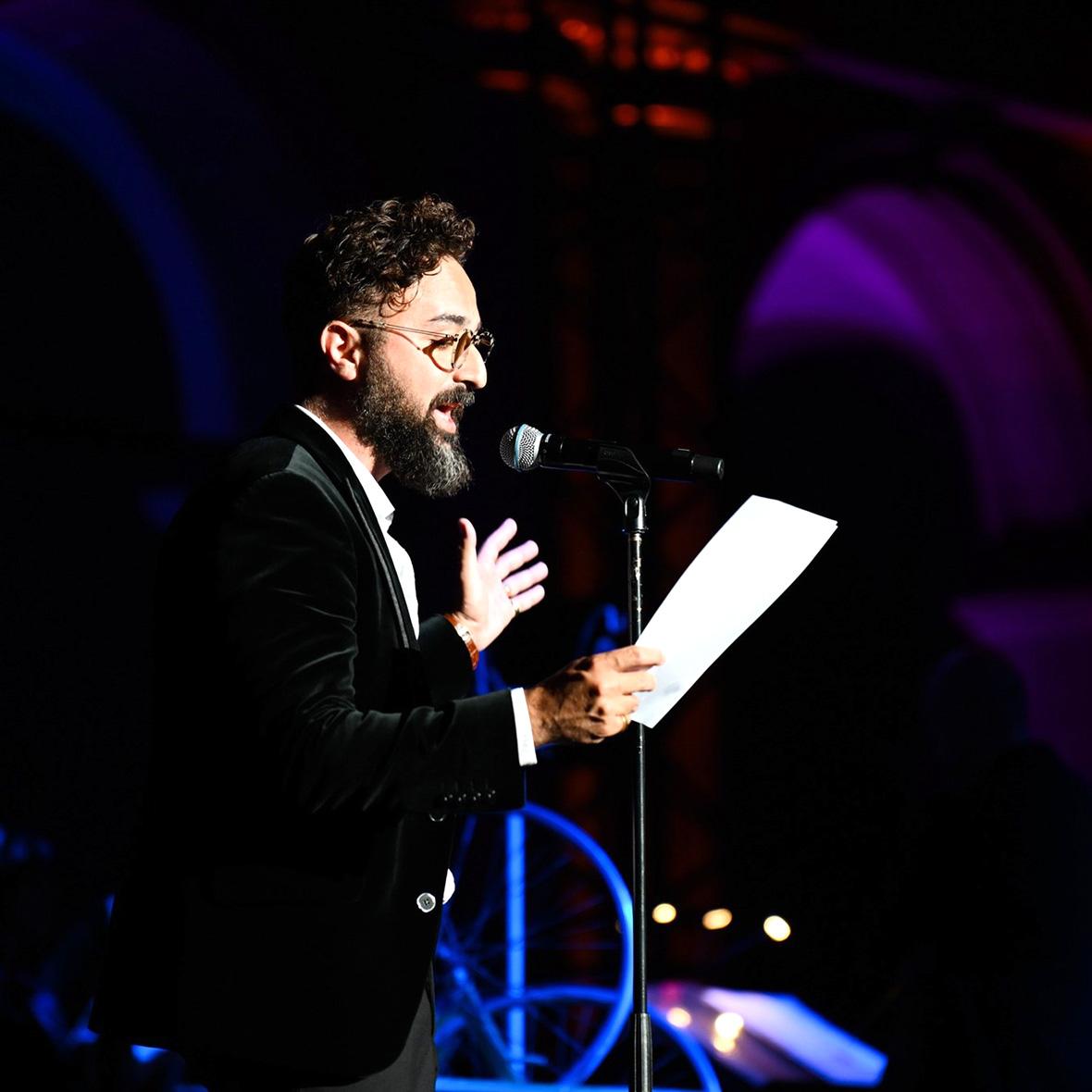 Artistic director Sean Buhagiar
James Dimech, one of Malta’s most singular fashion artists, will install a delicate world of paper inside the Strasbourg Library, while ŻfinMalta will present Mortal Heroes – a contemporary dance work exploring the mythologies of struggle and transformation.
Joseph Calleja will headline a singular concert at the Opéra National du Rhin, marking 75 years of the European Convention on Human Rights. In the same spirit, a commemorative event titled Women and War will honour the resilience of Maltese and women during through food, stories and documentary film.
And of course, we’ll celebrate Malta’s festa tradition – now UNESCO-listed – with a night of music, food and joy at Pavillon Joséphine.
And somewhere in all this, a horse will arrive. Not just any horse, but ŻIEME – Austin Camilleri’s haunting three-legged sculpture. It will appear quietly in Place Broglie, the symbolic civic square of Strasbourg. It will not pose or gallop. It will limp. It will hesitate. It will provoke. More on that soon, and other ancillary events.
Malta’s cultural programme will continue to unfold across Strasbourg – and I hope this programme helps pave the way for even more Maltese stories abroad. More of our finest artists on European stages. More of our films finding new audiences. More of our voice carried further. May this be not a peak, but a path.
None of this would be possible without the commitment of Ambassador Francesca Camilleri Vettiger and the entire team at the permanent representation of Malta to the Council of Europe, within the office of the deputy prime minister and the ministry for foreign affairs and tourism.
Their belief in the power of culture has been unwavering – and their trust essential. To every artist, technician, curator and cultural partner – thank you. You’re helping Malta not only show up in Europe but speak with heart.
Malta – small and stubborn – has always known how to carry its voice across open water. Today, our cultural voice is stronger and more confident; we must persist. One by one.
Sean Buhagiar is artistic director for the cultural programme of the Malta presidency of the Council of Europe, 2025.