
At a time when business resilience is increasingly defined by energy reliability and sustainability, corporate real estate (CRE) executives are placing a strategic focus on one factor that was once an afterthought in site selection: the power grid.
Energy availability, pricing, and grid readiness are no longer just utility considerations — they are core elements in location decision-making. Whether it’s a data center requiring multi-megawatt capacity, a manufacturing plant seeking clean energy options, or a logistics hub aiming for operational continuity, access to stable, scalable, and affordable power has become a critical success driver.
Today, companies are scrutinizing power infrastructure with the same rigor once reserved for labor markets or incentive packages. For CRE leaders navigating expansion or relocation, understanding the energy landscape has become essential.
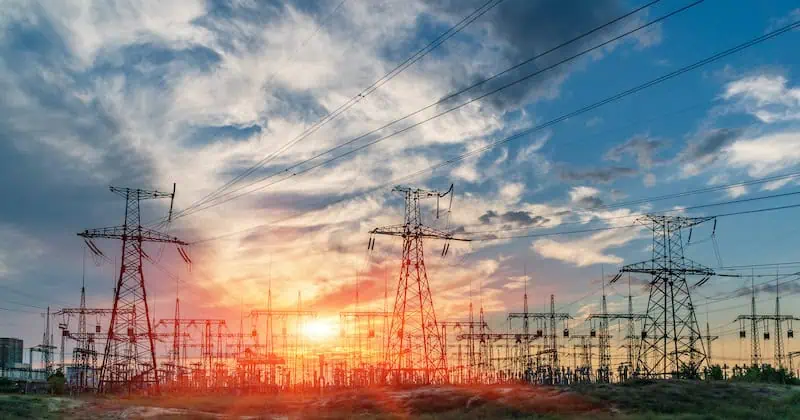 (Photo: Adobe Stock / yelantsevv)From Operating Cost To Strategic Risk Variable
Historically, power costs were treated as a line item in operating budgets. Today, they’re a business continuity risk and a brand consideration rolled into one. Why?
Because the stakes have changed:
- Extreme weather and grid failures have revealed vulnerabilities in power infrastructure.
- Corporate sustainability mandates now demand renewable energy sourcing and emissions transparency.
- Power-intensive sectors like AI, cloud computing, and advanced manufacturing require scalable megawatt capacity — now, not later.
- State and local policy variance makes energy costs highly uneven across U.S. regions.
As a result, CRE teams are collaborating with energy consultants and infrastructure engineers earlier in the site selection process to model power availability, resilience, and pricing projections over time.
Power Grid Capacity And Scalability: The Hidden Constraint
One of the most underestimated variables in corporate site selection is grid capacity and readiness for growth. While a site may check all the boxes in terms of location, zoning, and access — it may not have the power infrastructure to support a major corporate facility.
CRE executives should consider:
- Current substation capacity and upgrade timelines
- Transmission line proximity and congestion points
- Interconnection queue wait times, which can exceed 24–36 months in some regions
- Load growth forecasts for the utility district
- Public-private investment plans to expand capacity
Markets with limited substation access, long utility permitting delays, or strained grids are falling out of favor — regardless of tax advantages or real estate costs.
Energy Pricing: Why Location Can Make Or Break Operating Margins
Power pricing can vary drastically depending on location, rate structures, and regulatory environments. A facility in one state might pay 7 cents per kilowatt-hour, while a similar facility in another state could pay twice that.
CRE leaders must examine:
- State and utility-level commercial and industrial rate structures
- Time-of-use and peak demand charges
- Renewable energy premiums and offsets
- Volatility risk from deregulated vs. regulated energy markets
Texas, for instance, offers competitive industrial rates but comes with exposure to power grid volatility. Conversely, states like Washington or Oregon offer lower rates and strong hydroelectric access but may lack site-ready megawatt capacity.
Energy modeling should be integrated into total cost of occupancy (TCO) calculations, especially for facilities where power accounts for 20% or more of operational expenses.
Renewables And ESG: Powering The Corporate Brand
With ESG (environmental, social and governance) performance now tied to investor confidence and brand equity, the source of energy matters as much as the cost.
Companies are increasingly prioritizing locations that can support:
- Direct renewable energy procurement
- Green tariffs or utility-scale solar/wind programs
- Access to carbon-free energy credits
- Energy storage and microgrid integration
 (Photo: Adobe Stock / xiaoliangge)
Data center operators, in particular, are actively seeking sites with access to clean energy grids — or where private power purchase agreements (PPAs) are feasible. Similarly, manufacturers with sustainability goals are evaluating regions not only for compliance, but for public alignment with their brand commitments.
Case Example: Northern Nevada’s Energy Edge
Tesla’s Gigafactory outside Reno, Nevada, is often cited as a case study in location strategy based on power alignment. The decision wasn’t just about proximity to California or incentives — it was about tapping into Nevada’s expanding renewable energy infrastructure, open land for solar, and utility cooperation through NV Energy.
The state’s blend of affordable land, flexible regulatory climate, and access to renewable energy has since attracted a cluster of battery and EV suppliers — demonstrating how energy strategy creates economic clustering.
CRE Considerations: Questions To Ask Early In The Process
To ensure that energy factors are fully vetted, CRE executives should integrate the following checkpoints into their location due diligence:
- What is the available grid capacity at the site and substation level?
- What are the average and peak commercial/industrial rates in the utility zone?
- Are renewable energy programs or green tariffs available from local providers?
- What is the utility’s track record for reliability and response?
- How long is the interconnection queue, and what upgrades are planned?
- What state or regional energy policies may affect future pricing or access?
Answering these questions may require engagement with engineering consultants, utility liaisons, and economic development teams — but the return on diligence is a site that can power your business forward.
The Energy-Informed Location Strategy
As CRE professionals navigate location decisions in 2025 and beyond, the imperative is clear: build for power resiliency.
This means shortlisting locations not only for availability today, but for energy scalability tomorrow. It means balancing cost, reliability, ESG alignment, and infrastructure timelines to support rapid deployment and long-term success.
Most importantly, it means recognizing that in the digital and industrial economies alike, power is not a commodity — it’s a competitive advantage.
Final Thought
From AI training centers to EV battery plants, from cloud campuses to chip foundries, the message is consistent: if the grid can’t handle your load, the location won’t work — no matter how favorable the real estate deal.
For CRE leaders making high-stakes decisions, energy is no longer a back-end consideration. It’s a boardroom priority, and one that demands expertise, foresight, and precision planning.
LocationAdvisor.com is an online resource for finding professionals to assist companies in all phases of choosing a location for their business to grow and expand. The EDO Marketplace connects economic and community development organizations to the products and services they need to fulfill their mission. Through category searches, online reviews and a matching process this platform helps EDOs find the best services for their organization.
Click here to read more from Location Advisor on Business Facilities.