
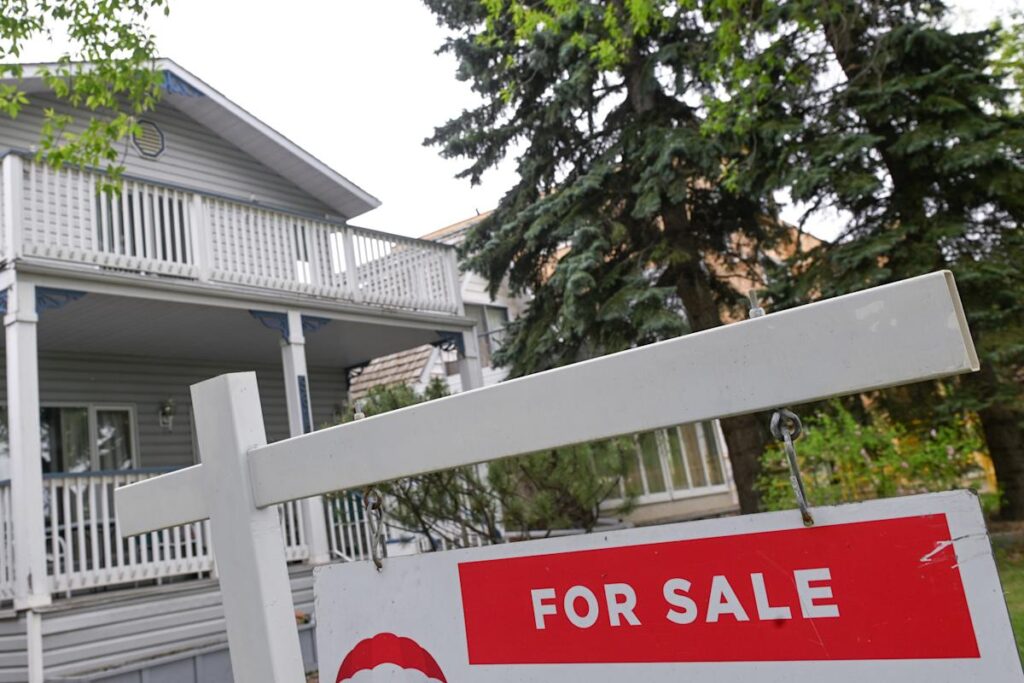

The price premium to buy a house over a condo in most major cities sits far above the national average — and some local markets have seen their price gaps whipsaw in the last five years. (Photo by Artur Widak/NurPhoto via Getty Images) · NurPhoto via Getty Images
A Canadian family looking to move up the property ladder from a condo to a house will face a financial challenge, but the scale of that challenge varies from daunting to almost implausible, depending on the city.
Data from the Canadian Real Estate Association (CREA) show that the price gap between a benchmark condo and a benchmark single-family home in Montreal is around $242,000, while in Vancouver, the gap is around five times higher — a stunning $1,239,400. The condo-house price gaps in these and other major cities in Canada aren’t static. The past five years have shown considerable volatility, with the gaps widening in some cities and remaining relatively stable in others.
Canada’s housing affordability crisis remains a central fixation of the public and governments, in spite of various factors bringing the market down from its pandemic peak in 2022. The cost of buying an average home in most markets is still generally out of reach, but in some cities, the cost of growing into a larger home may be a more important story.
Paying more to move up the property ladder in itself is not surprising — things like extra bedrooms, a backyard, a basement or a garage necessarily cost more. The average premium for a Canadian single-family home over a condo since January 2005 is around 52 per cent, according to the CREA data — which is to say that on average in Canada in the past 20 years, whatever it costs to buy a condo, it costs half that amount again to buy a house.
In May 2025 (the most recent CREA data available), that national premium was 55 per cent, not far off the average. But the dollar value of that gap has followed the upward trajectory of home prices, rising from around $86,000 in 2005 to just under $280,000 now. Moreover, the price premium in most major cities sits far above the national average — and some local markets have seen their price gaps whipsaw in the last five years in the shadow of the pandemic, swinging interest rates and various economic concerns.
In Toronto, the condo-house gap has shrunk by $203,000 since February 2022, when the housing market hit its peak (though prices remain higher than nearly any other city). In Calgary, where the economy has been stronger and lower home prices in general have fuelled a population boom, the gap has grown by around $50,000 in that span.
In both cities, however, as well as in Vancouver, Victoria and Edmonton, the price premium remains at over 100 per cent — meaning buying a house would cost more than double buying a condo.
Vancouver’s market is the most challenging by nearly every measure, and it has been for decades. Since 2005, the price premium to jump from a condo to a house has never been below 130 per cent. Even more staggering is the scale of the gap today. From February 2020 to March 2022, the gap grew by nearly half a million dollars, peaking at $1.32 million. Though it has since come down slightly, as of May 2025, it would take more than $1.2 million to jump from a typical condo to a typical single-family home in the city. That’s more than the outright cost of a similar home in nearly any other city.
Story Continues