
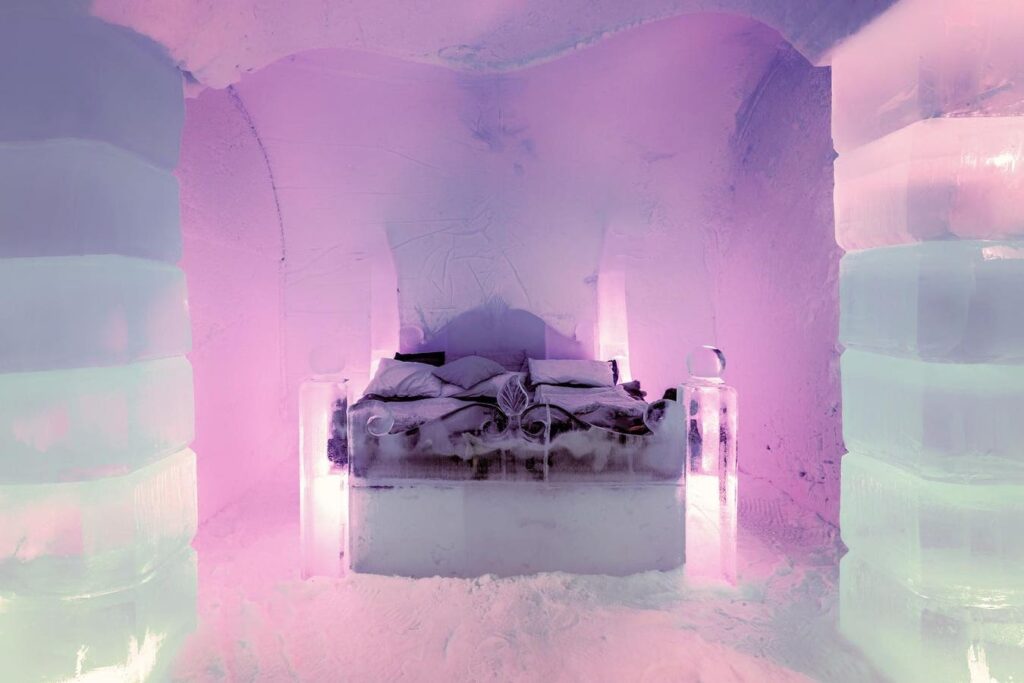
The honeymoon suite at Sorrisniva Ice Hotel near Alta, Norway.
getty
The first thing that hits you in one of Norway’s ice hotels is the silence. A soft, icy hush that settles over everything, broken only by the crunch of your insulated boots on snow-packed floors.
Then, you marvel at the intricate ice sculptures glowing under LED lights, including Arctic wildlife and a Viking ship. There’s even a life-sized polar bear to greet guests at the front desk.
At the ice bar, you sip a tart Arctic berry cocktail served in a glass made of ice, while you chat to other guests wrapped in thermal capes like medieval nobles. There’s laughter, wonder and the clicking of smartphones trying to capture it all.
Then, bedtime. You zip yourself into a high-tech sleeping bag rated for extreme conditions and lie down on a bed carved from solid ice. Only a reindeer pelt separates you from the cold slab below. The novelty wears off quickly.
The air is crisp inside your nose. Your breath clouds in front of your face. Suddenly the fantasy is very real: you’re spending the night in subzero temperatures. Will you sleep, or will you shiver through until dawn?
How Norway’s Ice Hotels Work
Ice hotels aren’t like regular hotels in design or routine. You don’t simply check in mid-afternoon, head to your room, and unwind. An overnight stay is more of a guided experience, and the schedule is part of the charm.
Chilled drinks await guests at Sorrisniva Igloo Hotel in Norway.
David Nikel
Guests typically arrive in the afternoon, check into a nearby warm cabin or main lodge, and take part in optional activities like snowmobiling, husky sledding, or northern lights chasing, depending on the location.
Then, there’s a hearty dinner, often featuring local Arctic ingredients such as reindeer, king crab and cloudberries. Only later do you begin your journey into the ice.
There is usually a guided tour of the hotel to admire the design, learn how it was made, and get oriented. The final step is what could be described as a safety briefing. Staff explain how to dress, how to use the sleeping bag properly, and how the overnight logistics work, including where to find heated restrooms and showers, usually in the main service building.
Yes, that means if you need the restroom in the middle of the night, you’ll have to leave the ice hotel and visit the main building. It might only be a minute’s walk, but it’s enough to make you rethink that after-dinner coffee.
Guests at Sorrisniva receive a drink served in an ice glass.
David Nikel
Although the rooms are made entirely of ice and snow, you do not store luggage there or spend much time relaxing inside. The ice suite is essentially a sleeping chamber. Guests leave their belongings in a heated area, change into the right gear, and enter the cold room only when they are ready to sleep.
Inside, the temperature stays around 19°F to 25°F, regardless of the weather outside. Everything from the bed to the walls to the artwork is sculpted from snow and ice, often with impressive artistic detail.
You are given a thermal sleeping bag and extra layers if needed, but once you zip up and settle onto a mattress covered with reindeer hides, it is just you, the crisp air, and the complete stillness of your frozen room.
Popular Ice Hotels In Norway
Located just a few miles from the Russian border, Kirkenes Snowhotel is a true anomaly. It stays open 365 days a year, offering visitors a winter experience even in the height of summer.
This is made possible by a purpose-built, refrigerated structure that maintains a constant indoor temperature even at the height of summer.
Its location makes it especially convenient. Kirkenes serves as a turnaround port for Norway’s famous coastal voyage, meaning guests on northbound or southbound sailings can add on a night at the ice hotel, while roundtrip passengers often drop by for a daytime visit.
Sorrisniva Igloo Hotel hosts weddings at its ice hotel chapel.
David Nikel
Near the ‘northern lights town’ of Alta, Sorrisniva offers a more seasonal take on the ice hotel experience. Known as the world’s northernmost ice hotel, Sorrisniva Igloo Hotel is constructed anew every winter on the banks of the Alta River.
The build takes around five weeks and uses snow and ice harvested locally. The hotel usually opens before Christmas and welcomes guests through early April.
Inside, visitors will find around 30 rooms, including themed suites, a dramatic ice bar, a snow chapel, and a gallery of frozen art.
Ice Hotels Beyond Norway
Visiting somewhere else on your Scandinavian adventure? No problem! While Norway’s ice hotels are impressive, you’ll also find unforgettable experiences elsewhere in the region.
Sweden’s original Icehotel in Jukkasjärvi, near Kiruna, is perhaps the most famous, with art suites created by international ice sculptors and a permanent ice bar open year-round.
In Finland, several resorts offer glass igloos for Northern Lights viewing alongside ice bars and hotels.
MORE FROM FORBESForbesThis Winter Cruise Offered So Much More Than Just Northern LightsBy David NikelForbesWhy You Should Plan A Northern Lights Trip To Scandinavia In 2025By David NikelForbesNorway Proposes 3% Tourist Tax As Visitor Numbers SoarBy David Nikel