
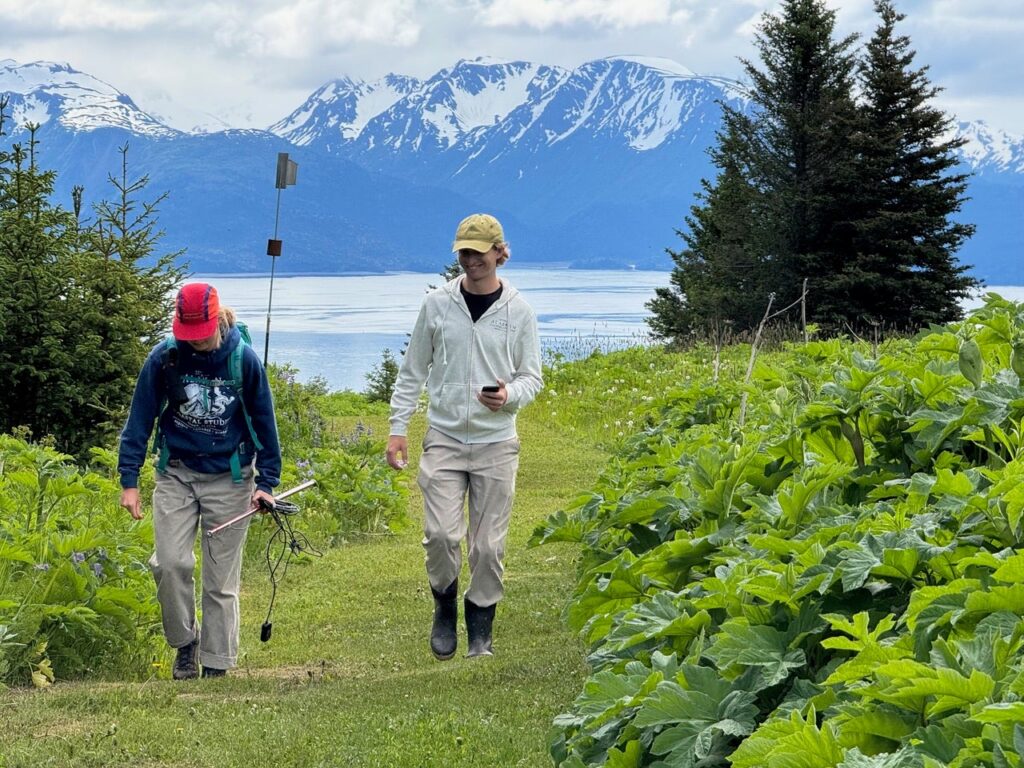
Working for the tribal government’s ecosystem conservation team, he helped with seal disentanglement, research on birds and reindeer, and environmental monitoring. For the latter, he checked on water quality, washed up birds and marine mammals, and kept an eye out for invasive species.
The following fall, Sukstorf found himself in another remote corner of the Earth. He studied abroad in Madagascar, where his program focused on biodiversity and natural resource management, taught mainly in French.
At the end of the program, Sukstorf spent three weeks living in a tent in a rainforest conducting an independent research project on chameleons. He and two others hiked nine hours a day searching for the hard-to-spot reptile, some as tiny as his fingernail.
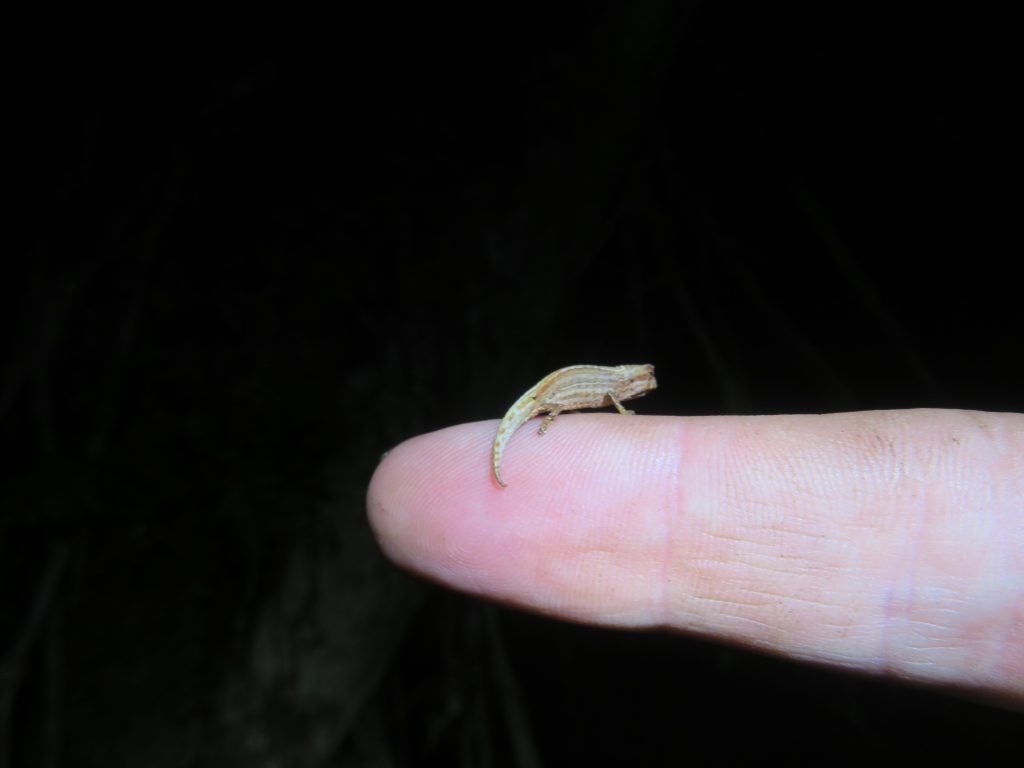 One of the smaller chameleons from the genus Brookesia found in Madagascar perches on Sukstorf’s finger. Photo courtesy of Sukstorf.
Amid giant cockroaches, leeches and scorpions, Sukstorf looked for changes in different species of chameleons as the altitude shifted. While studying divergent traits in one species found across a variety of altitudes, he found what turned out to be a recently discovered species not yet published in guidebooks.
“I was beaten to the punchline a little bit, but it was still cool that my scientific design worked to notice this,” he said.
Sukstorf was eager to continue his environmental work, and this summer, returned to Alaska to intern for the Center for Alaska Coastal Studies, a nonprofit that offers environmental education programs and conserves and monitors more than 800 acres of a wildlife habitat in Homer, Alaska.
A Classroom in the Great Outdoors
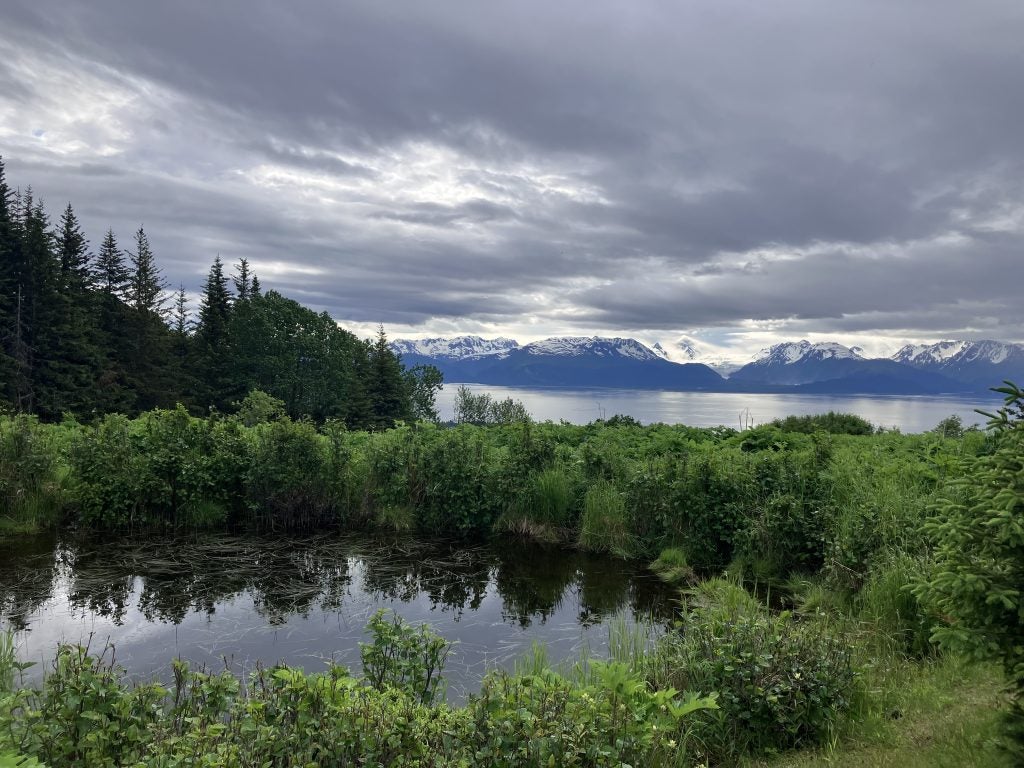
In this new classroom, Sukstorf has learned every plant in the forests and meadows where he leads tours. He also monitors the life cycles of plants, trees and birds, studying how climate change impacts the area.
“One global trend we’re seeing is that things are happening earlier in the season as winters get shorter and more mild,” he said. “That can cause some ecological mismatches where, for example, migrating birds might have normally arrived in Homer at the same time as a bunch of bugs were having their larva. The birds might get here at the same time, but the larva might come out two weeks earlier.”
Sukstorf has found his environmental classes at Georgetown have prepared him well, teaching him about terminology, how to conduct research and monitor the environment, and about the history of Alaska and its environment.
Sukstorf knows he can learn a lot from a textbook. But nature presents its own learning.
“Getting to know nature, getting to see all the different interactions — the part of the willow grove that moose are grazing on, the part that the snow hares are grazing on and how in certain years some populations are out of balance — is its own kind of learning opportunity too.”
Sukstorf will end his internship in August and return to Georgetown for his senior year. As he prepares to graduate, he knows one thing for sure.
“I know I don’t want to get a desk job,” he said. “I know I want to work outside.”
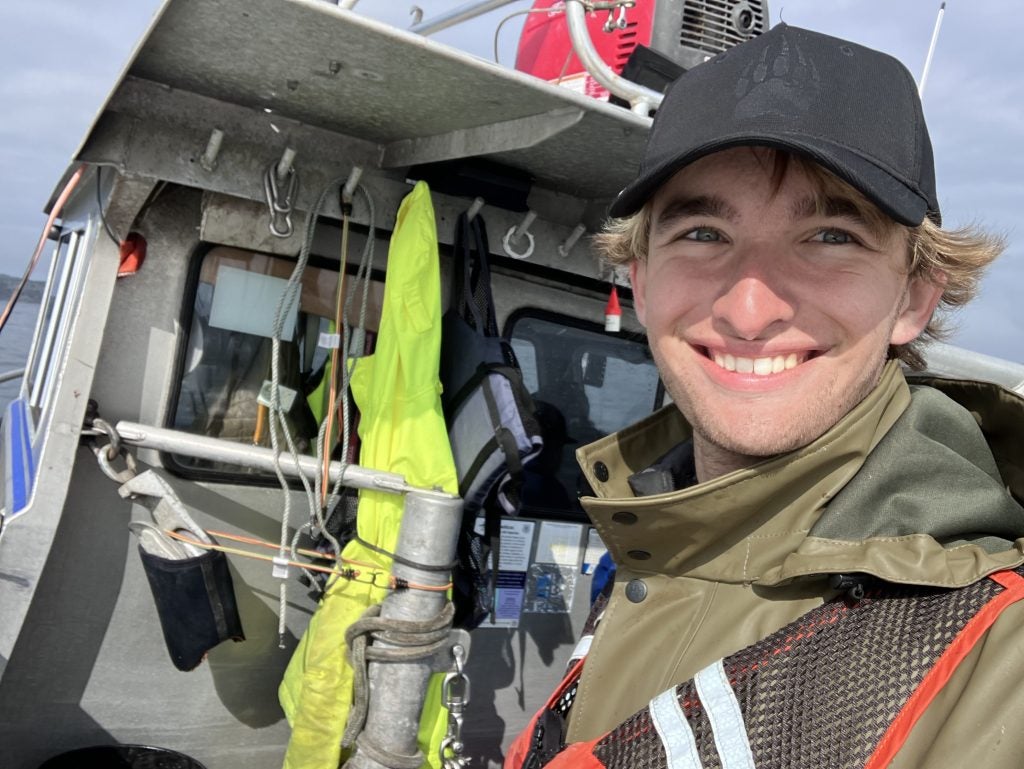 Sukstorf aboard a halibut fishing boat to collect samples for mercury testing in Alaska. Photo courtesy of Sukstorf.