
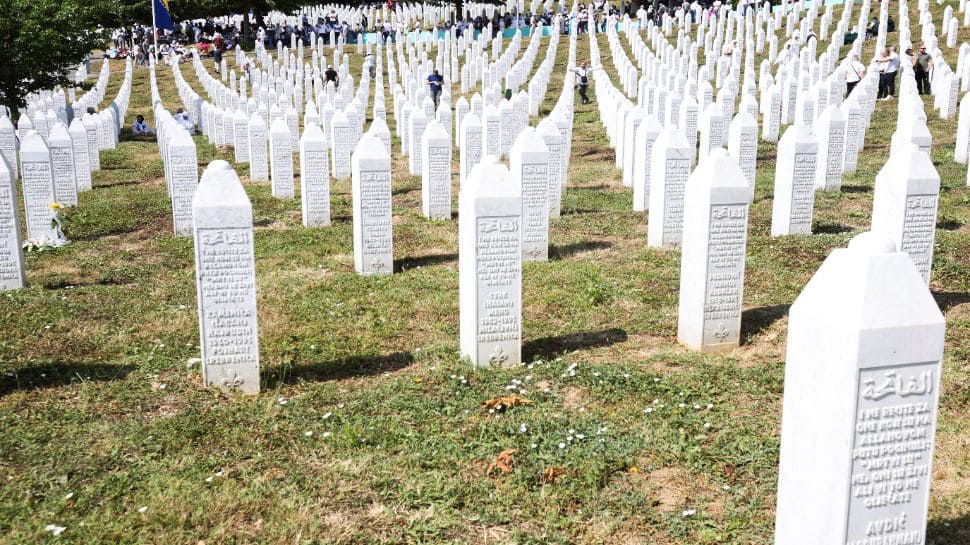
Srebrenica genocide: They were just teenagers. One loved geography. Another still had pears in his hands when the shooting started. A third searched the forest for a shoelace to stop a boy from bleeding to death.
Thirty years ago, they ran. Through woods crackling with gunfire. Over bodies that still moved. Away from a town whose name the world would only come to whisper in shame – Srebrenica (in Bosnia and Herzegovina).
This was not a war. This was a hunt.
They ran from the narrow valleys of eastern Bosnia to the charred hills of Kamenica. They ran when the United Nations told them they were safe. They ran when the world looked away. They ran when their fathers were shot, when their brothers disappeared and when their childhood homes burned behind them.
Nedzad Avdic was 17 when the shelling began. He once studied geography for fun. Now he studied it for survival. He walked east to west with the trees, followed the moss and tracked the stars until there were none.
On July 11, 1995, he disappeared into a crowd of thousands in the woods near Susnjari. His father vanished minutes later. He never saw him again.
Hajrudin Mesic fled with two brothers. One was shot in both arms. The other, Safet, was executed. His body was never found.
Hajrudin kept moving, even after his shoes shredded to threads. He picked wild pears for strength and held them in his bleeding hands. They saved no one. But they reminded him he was still human.
Emir Bektic drank from a mud-stained creek just before he and his father were ambushed. He woke up hours later under a tree, alone. His father was gone. So were the others. He does not remember how he survived the massacre, just that he did. That and the taste of sand in his mouth.
They walked day and night. They dodged bullets and landmines and saw children being executed for asking for help. Some were told to clap before dying. Some rode trucks filled with screams and urine. Some chewed through rope to free strangers. They buried nothing. They carried everything.
They were supposed to die. But they did not.
The world would later call it genocide – 8,000 Bosniak men and boys murdered by Bosnian Serb forces over a few July days in 1995. Their bodies dumped in mass graves. Women and girls raped. Thousands displaced, destroyed and forgotten.
But not by these men.
Today, they carry memories. They carry voices. They have written books. They have testified in The Hague. They have buried fathers, brothers, cousins and neighbours. They have returned to Srebrenica. To Sarajevo. To the schools where they now teach.
They are not here to tell stories. They are here to warn the world what forgetting looks like.