
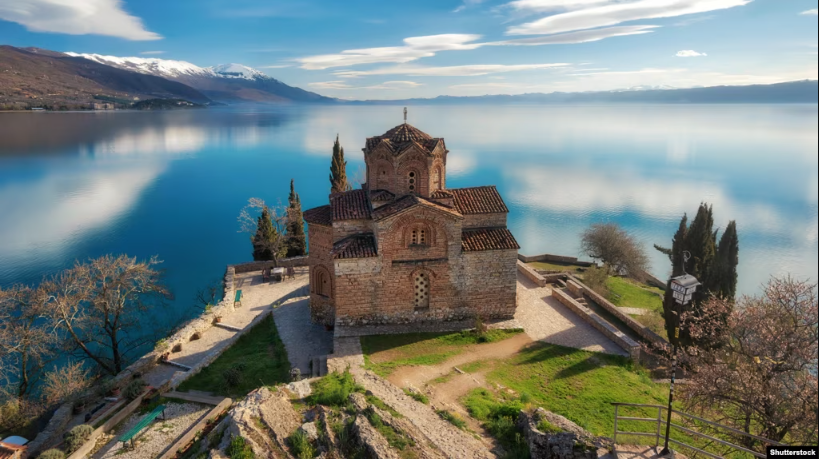
UNESCO gives North Macedonia another chance for Ohrid
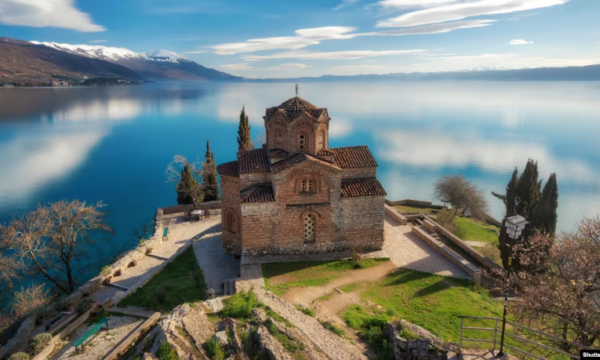

Express newspaper
13/07/2025 16:46
The UNESCO World Heritage Committee, at its 47th session in Paris, adopted an amendment proposed by Macedonian representatives, which requested the postponement of the inclusion of the Ohrid region on the List of World Heritage Sites in Danger.
With this, the Macedonian authorities received new conditions – to submit a report on the measures taken for protection by February 1, 2026.
The amendment was submitted by the Macedonian delegation, which requested the withdrawal of the Draft Decision that clearly proposes registering the region as endangered.
The Committee discussed for the third time the status of Ohrid, in circumstances where 39 civil society organizations from North Macedonia and Albania requested that it be registered on the List of World Heritage Sites in Danger, on the grounds that this would pave the way for a rehabilitation process, under the continuous supervision of the United Nations Educational, Scientific and Cultural Organization – UNESCO.
After the vote, their representatives said they are “disgusted by the decision,” but that they will continue to fight for the protection of the Ohrid region.
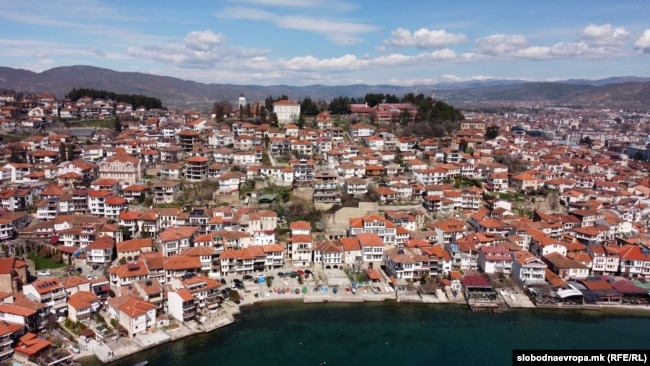 City of Ohrid
Despite three expert missions and warnings for two decades, they point out that the Committee still did not approve the recommendation to include Ohrid on the List of World Heritage Sites in Danger.
Civil society organizations believe that this rewards institutional negligence and undermines the very principles of the UNESCO convention.
“We believe that the Committee’s decision betrayed the principles on which it was formed and actively undermined the very essence of the World Heritage Convention,” civil society organizations said in a statement.
Following the decision, they called for North Macedonia and Albania to use this opportunity responsibly, “immediately halting all destructive projects” and “showing true commitment to preserving the unique values of the region.”
What would placing Ohrid on the List of World Heritage Sites in Danger mean?
If the Committee were to place Ohrid on the List of World Heritage Sites in Danger, North Macedonia and Albania would be obliged to create a special plan of corrective measures to restore Ohrid to the “desired state of conservation,” Iskra Stojkovska, from the organization Front 21/42, which is among those demanding that Ohrid be placed on that list, tells Radio Free Europe.
“This would mean that the state would have to adopt a set of precise corrective measures, which would lead from the current state to the desired state of values. This would put the state under much greater pressure from UNESCO, but it would also gain access to additional funds,” says Stojkovska.
In addition, the Ministers of Environmental Protection and Culture would have to approve a special ban on carrying out various activities in the protected area.
This is also provided for by the Law on the Management of World Natural and Cultural Heritage.
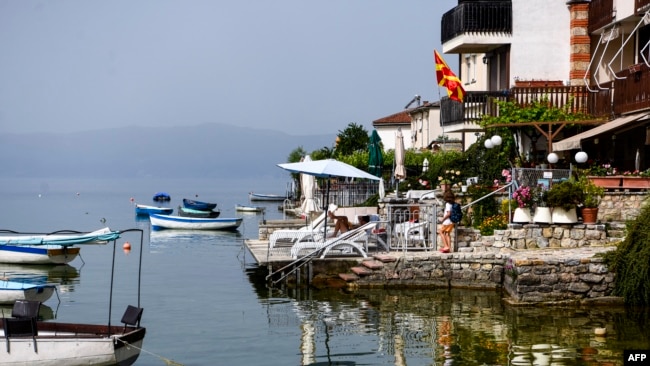 Lake Ohrid
The 47th session of the World Heritage Committee began on July 6 at UNESCO headquarters in Paris, where discussions continue on whether several world heritage sites, including the Ohrid region, should be included in the List of World Heritage Sites in Danger.
In the document, UNESCO demanded that North Macedonia immediately strengthen the protection of the Studençishte Marsh, stop all current and planned construction activities in its vicinity, including the “Gorica” hotel complex, and review the draft law on declaring the marsh a natural park.
The goal is said to be to harmonize the law with the standards of the International Union for Conservation of Nature (IUCN) and with the findings of the UNESCO monitoring mission by 2024.
Instead of defense, silence and mutual accusations
But, despite what is stated in the Draft Decision, the Macedonian Government announced that it will ask representatives of Macedonian institutions participating in the UNESCO meeting to propose an amendment to withdraw the proposal.
In the days leading up to the vote, the parties traded accusations: the Government accused the previous Government of systematic negligence, while the opposition claimed that the current Government had not taken any substantial measures.
And, according to civil society organizations, local and central authorities have for years allowed uncontrolled construction and ignored UNESCO recommendations.
“We have been working in Ohrid for 11 years and there is no difference between local and central government, no difference in which party governs at which level… The quarrels between them about who is to blame only show that they have not moved a millimeter,” says Stojkovska.
Seventeen organizations from North Macedonia, 13 from Albania, and a European network of 15 organizations requested through a letter from the Committee that the Ohrid region be placed on the List of World Heritage Sites in Danger.
Macedonian organizations include: Eco Logic, Transparency International – Macedonia, Ohrid SOS, and the Societas Civilis Institute for Democracy.
From Albania are, among others, the H2O Foundation and Aktiv Mobiliti.
Organizations from the Czech Republic, Croatia, Serbia, and Bulgaria also demand the protection of Ohrid.
They say that due to the failure to implement all previous plans and projects for protection and due to “destruction”, Ohrid is losing its authenticity.
“We urge the World Heritage Committee, at its 47th session in Paris, to protect and preserve the Ohrid region for all future generations by adopting the Draft Decision for its inclusion on the List of World Heritage Sites in Danger,” their joint statement reads.
They recall that the first alarms about the excessive urbanization and degradation of Ohrid were sent to UNESCO as early as 1998 and add that, despite recommendations from expert missions in 2017, 2020 and 2024, almost nothing substantial has been undertaken.
Infrastructure projects that further endanger the region continue, such as the A2 highway and the Corridor 8 railway.
The requirements for strategic environmental assessment and heritage impact assessment have also not been implemented.
UNESCO experts have confirmed three times that Ohrid meets the criteria for inclusion on the List of World Heritage Sites in Danger, but the Committee is giving new deadlines to North Macedonia and Albania, according to civil society organizations.
They warn that this “time for reform” is being misused for new harmful projects and further degradation.
World-renowned, ruined at home
The Ohrid region was declared a world heritage site in 1979, while in 2019 this status was extended to the Albanian part of the lake, due to its natural values.
Lake Ohrid is one of the oldest and deepest lakes in Europe.
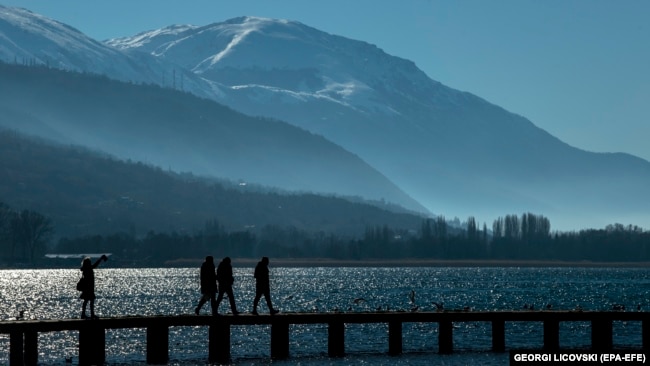 Lake Ohrid
World Heritage status significantly increases global visibility – which brings increased tourism and economic benefits for local residents, such as new jobs or small business development.
It also brings other benefits – from legal and institutional protection to access to international technical and financial assistance.
But the Ohrid region is de facto in danger and this must be acknowledged, says Stojkovska.
“Ohrid is destroyed by corruption and crime – we ourselves are destroying it,” she concludes. /REL