
Volante
Elyse Glickman takes in northern Italy’s natural and cultural gems, beginning in Milano, and working her way through Lakes Como and Garda, to Verona and Lake Maggiore
Photographed by the author
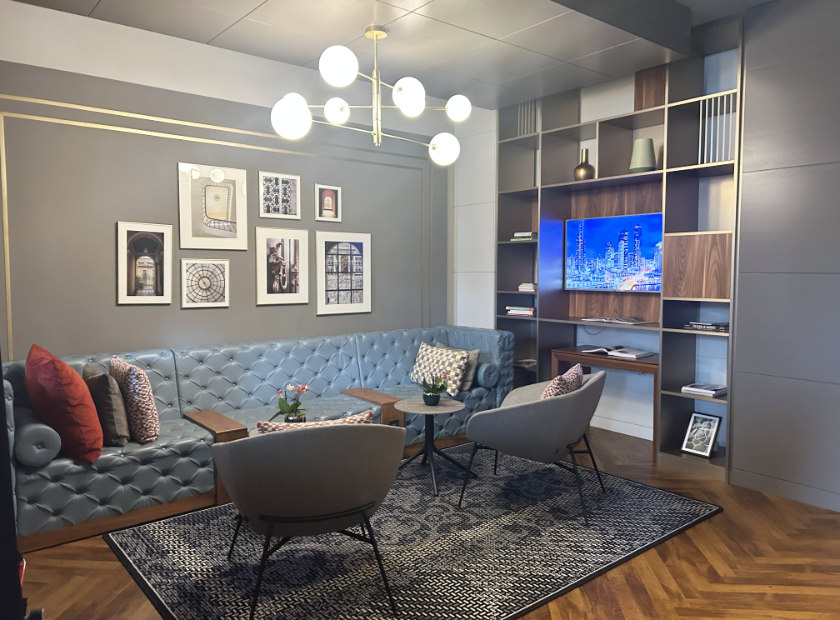
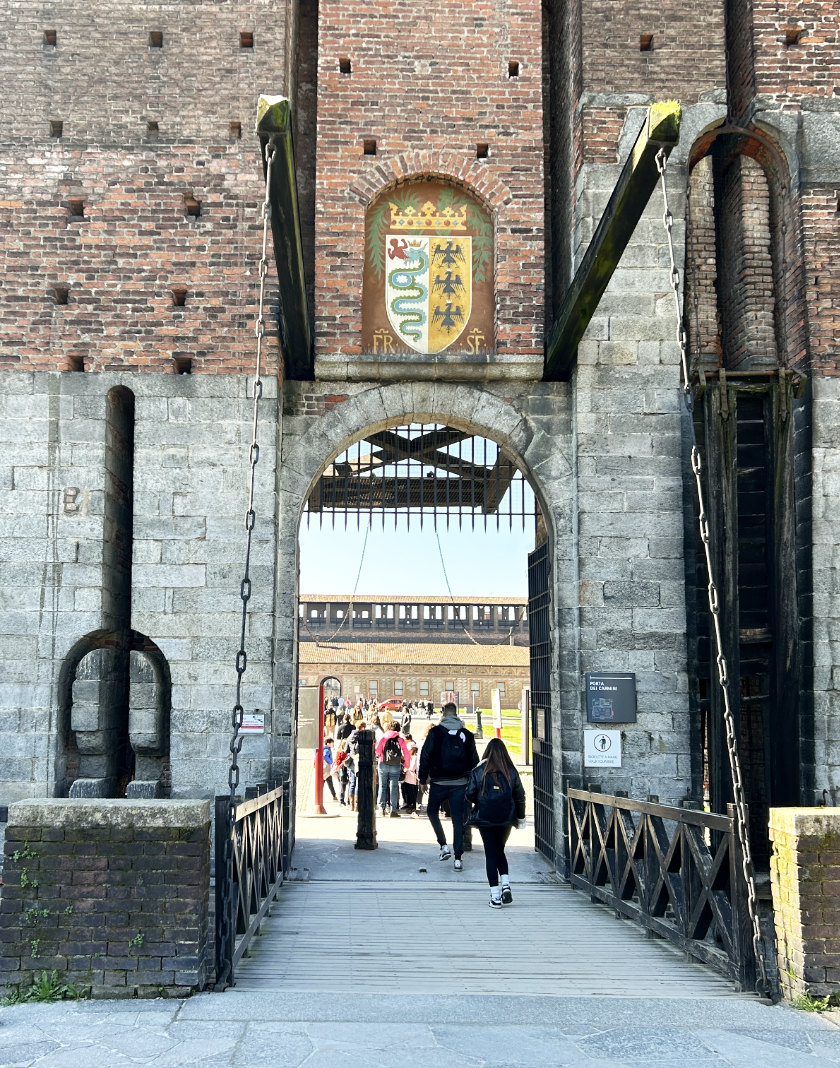
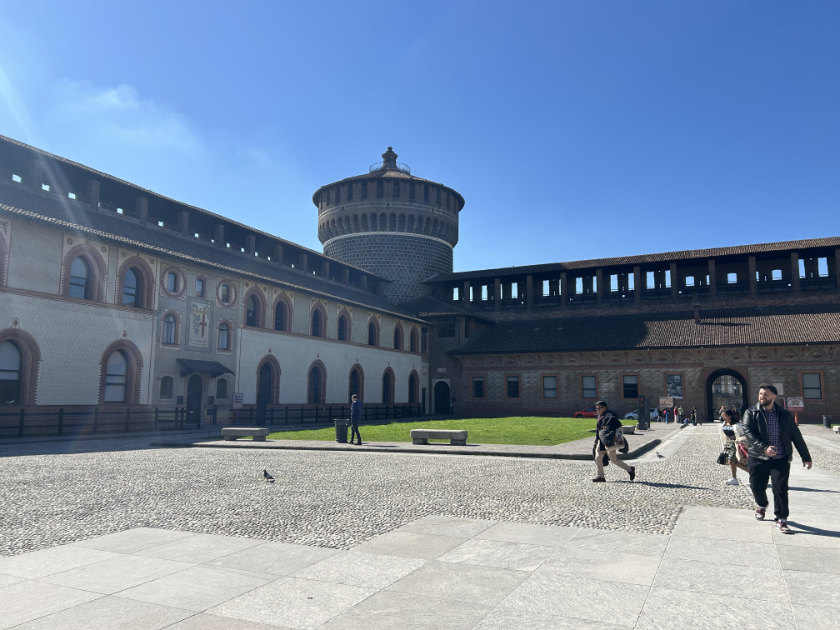
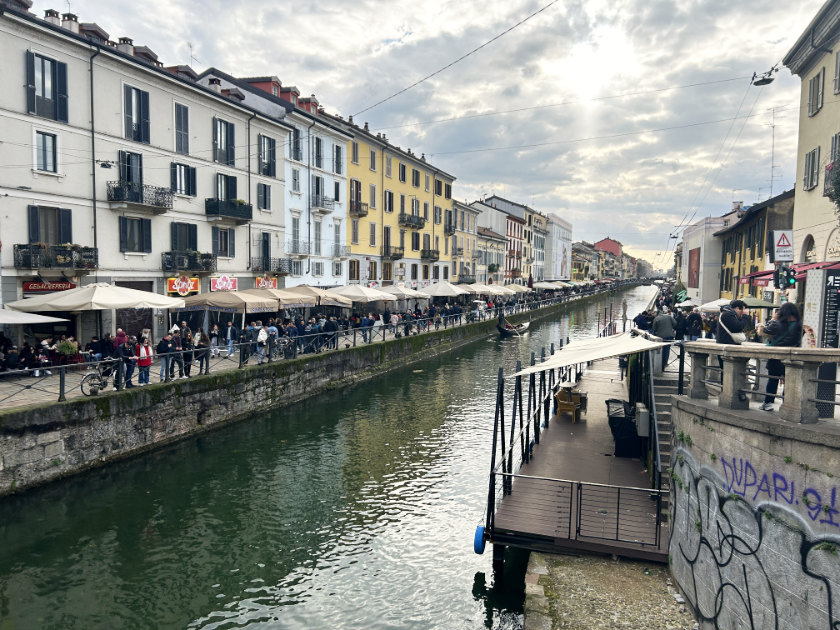
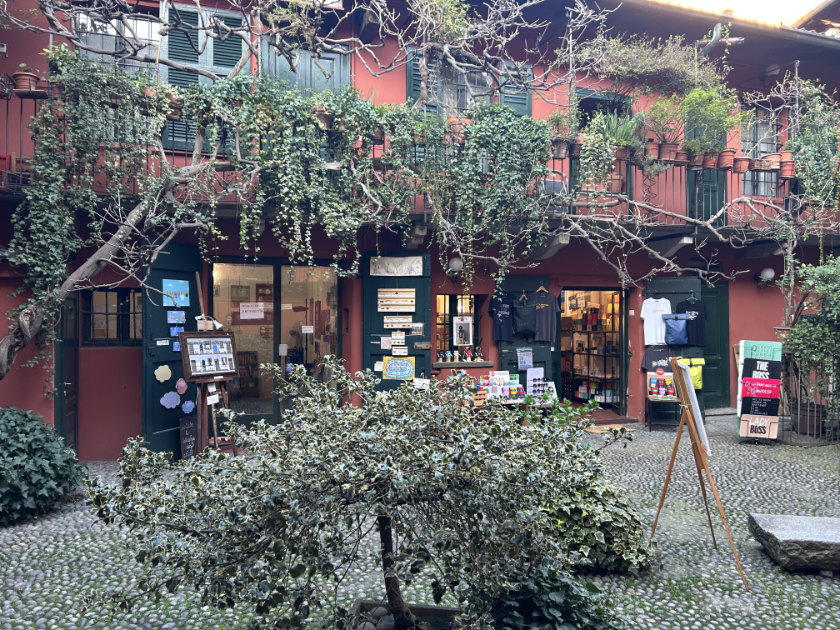
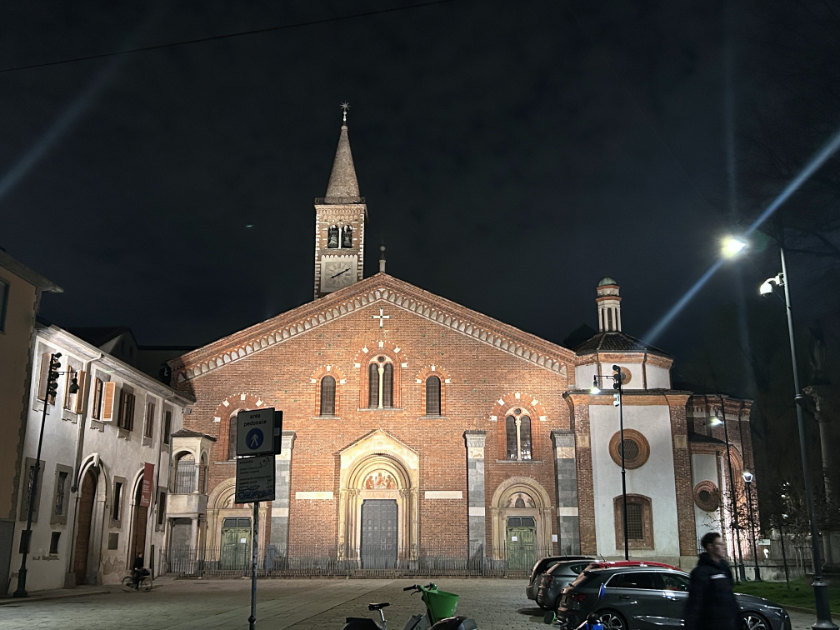
Above, from top: Inside the Milano Touring’s lobby. The del Carmini gate at the Sforzi Castle. Inside Castello Sforzi. Navigli, where you find the Milanese locals. Shopping in Navigli. San Simpliciano Church.
Northern Italy has long been associated with innovative design, exquisite architecture, aspirational lifestyle, and the lucky people who enjoy its tactile and spiritual riches year-round. Geography continues to shape the many cultures within the region and their definition of la dolce vita, the good life. Hills and mountain ranges are connected through Lake Como, Lake Garda, Lake Maggiore, other smaller lakes, and scenic roads that kiss the Swiss and Austrian borders. Islands tucked away into these lakes hold pocket-sized villages, exquisite mansions, and villas upcycled into specialty museums.
Milano is the logical starting point for an exploration of northern Italy, and a great base camp is the NH Collection Milano Touring in the fashionable Brera neighbourhood. The almost century-old hotel continues to reflect the city’s intertwined identities as a fashion and interior design hub, business capital, culinary destination, and cultural hub. The Indro Montanelli Public Gardens and Sforzi Castle’s many museums are an easy walk from the front door, and the main route is studded with inspiring home design galleries with mouth-watering furnishings and accents.
The hotel is designed to feel like one’s Italian pied-à-terre, beginning with the pastel and jewel-toned chairs, sofas, tables, artwork, and accessories that give the lobby a residential feel. The larger space is broken down into intimate enclaves with their own vibe and mood. Because they are designed for spontaneous meet-ups with a friend or a quiet moment to enjoy the surroundings with a cappuccino or cocktail in hand, it’s easy to feel you’ve experienced a slice of Milanese residential life.
Its 279 rooms and suites are outfitted in rich pastel pinks, beiges, and bold greens and offset with large windows overlooking Milano’s most significant landmarks or the skyline of the financial district. VIP rooms are appointed with parquet flooring, wallpaper with garden-inspired imagery, a minibar fridge, coffee and tea-making facilities, and a generous marble-appointed bathroom. The homely feeling on VIP floors extends to the area just outside the lifts, stocked with chilled bottled water and, starting at 5 p.m., cookies, soft drinks, and other snacks.
Camelia’s Yard, on the opposite end of the lobby from check-in, beckons with a gorgeous breakfast buffet awash with fresh-baked treats, fresh juices, and hot staples. At dusk, adjoining Milano Social Bistrò’s cocktail bar offers a stylish aperitivo hour with classic cocktails and original recipes perfectly in tune with the garden setting.
The property is a safe distance from the perennially busy Duomo and Galleria Vittorio Emanuele. However, nearby metro lines, trams, and bus stops are steps from the front door, allowing effortless transport to other parts of town. A quick change at Duomo to Tram 3 whisks you past the chain stores and restaurants to Navigli—the real heartbeat of the city—where locals are more likely to shop and dine.
Top-rated gelato shops abound, with Gelateria Latteneve leading the pack through its emphasis on non-traditional and unexpected flavours. Among the many leather handbag shops, Laboratorio Mariucci is my personal favourite for its selection, range of colours, quality, price, and friendly owners. While its bags can be purchased online, buying one or two at the shop delivers a satisfying “only in Milano” experience for handbag enthusiasts. Fashionistas seeking out a statement basic or investment piece will also find emerging designers that have not yet hit the mainstream, as well as an excellent branch of Humana (the European equivalent to Goodwill) and higher-end vintage stores with curated collections.
Anybody looking for quality restaurants and specialty food shops will find that looking beyond the crowded Duomo city centre is one’s best bet. However, if time is limited, book Eating Europe’s Navigli food tour. While the stops on the three-hour excursion vary with the guide and the season, you are guaranteed delicious bites, interesting business backstories, a healthy dose of history, non-tourist-trap restaurant recommendations, and further incentive to return to the ever-evolving boho-chic neighbourhood.
continued below
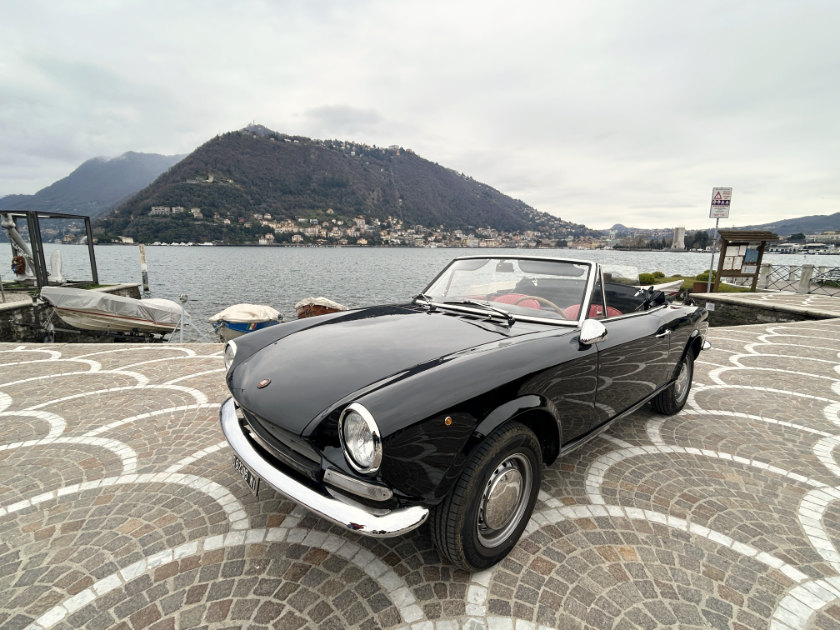
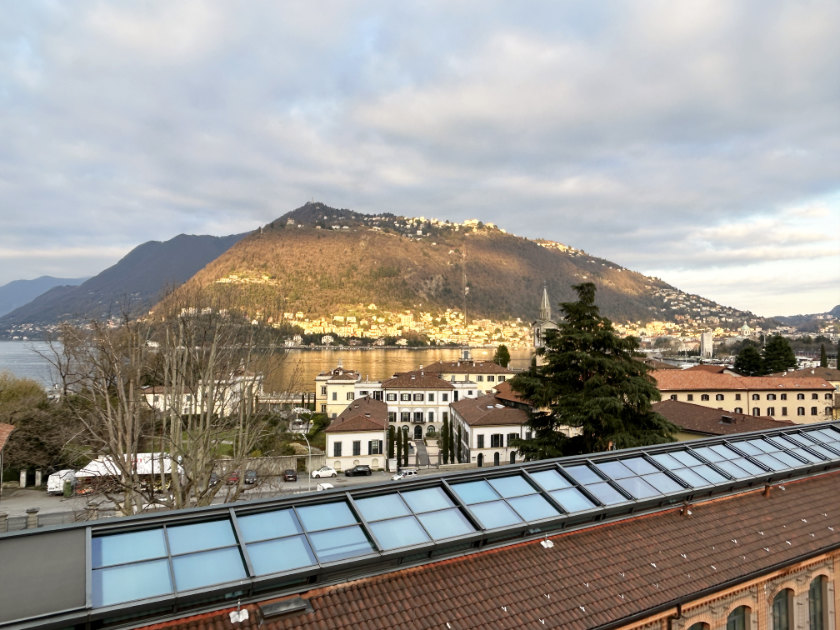
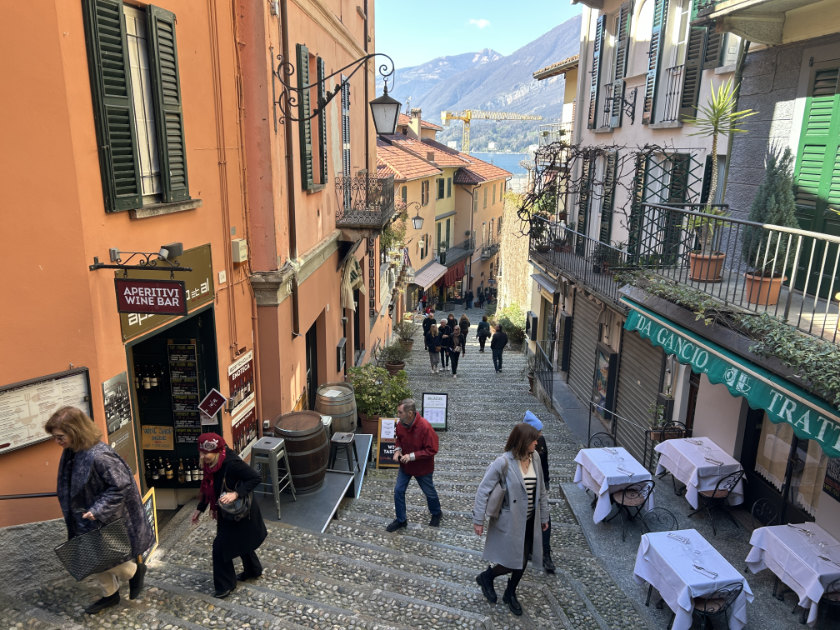
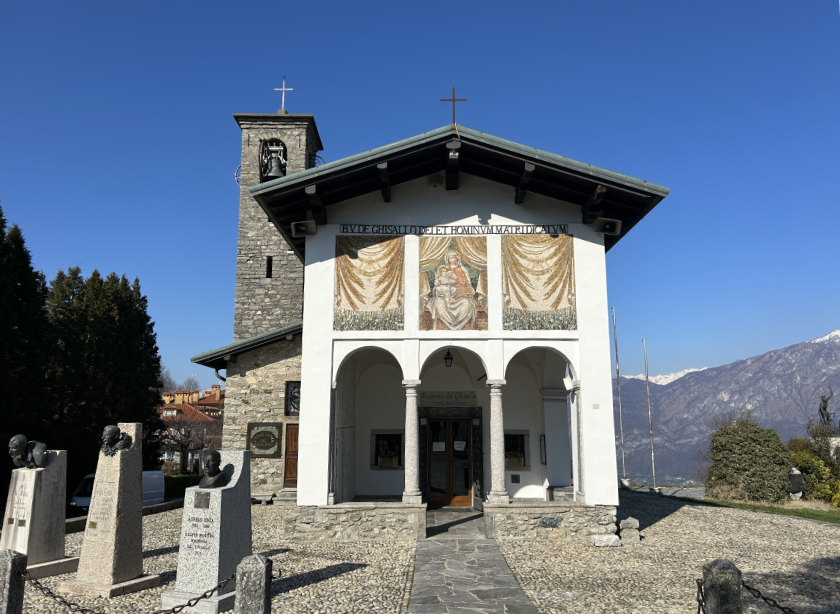
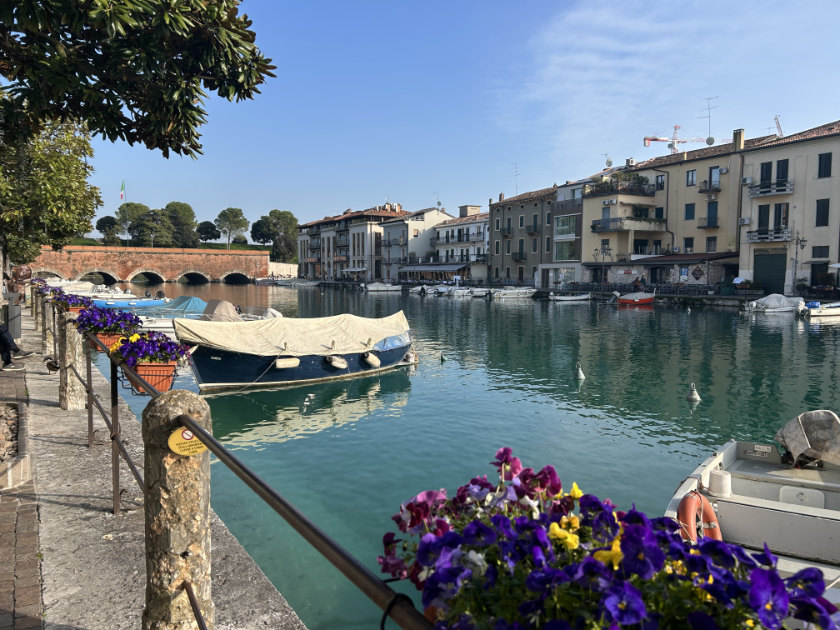
Above, from top: A well maintained Fiat 124 Sport Spider in Como. Como’s city view. Walkabout in Bellagio. Santuario della Madonna del Ghisallo, Garda.
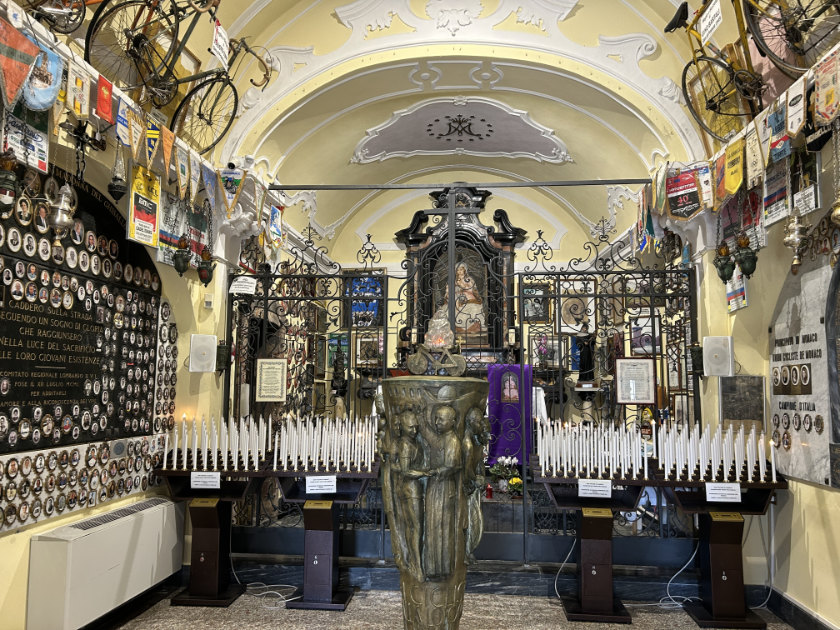
Inside Madonna del Ghisallo Church, dedicated to cycling history.
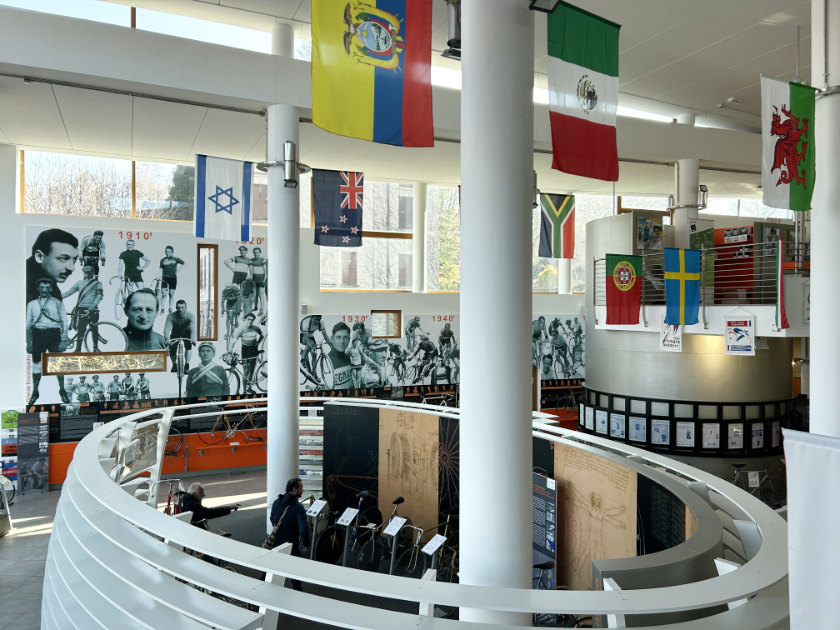
Ciclocollection, museo di biciclette, Garda. Peschiera del Garda.
While five-star luxury hotels abound or are poised to open on secluded hilltops and hidden enclaves around Lake Como, Hilton Lake Como bundles together modern luxury, superb service, and a convenient location that is a short hop from the Como S. Giovanni station on foot or by cab and a picturesque 25-minute walk into Como’s city centre. The pathway overlooks Lake Como and passes through manicured gardens and trees. Notable attractions along the path include Villa Olmo (built around 1780, now a city government building), the Volta Museum, Sinigaglia Stadium, Aero Club Como (a century-old seaplane flight school), and the marina—an embarkation point for boat tours and prime people watching.
Under the direction of Monica Limonta, the architect and owner of the hotel, fellow architect and cousin Dario Cazzaniga, and firm Nessi & Majocchi, the former silk factory now serves as a gateway for the Italian Lakes region. Interiors are shaped by Lombardia’s historic associations with the fashion and textile industries. One hundred and seventy large, airy rooms are appointed with dark wood flooring, floor-to-ceiling windows, and a colour palette of pearly grey velvets, lilacs, green, teal blue, goldenrod, and other silk-inspired shades. They flow into the public areas of the building. The rooftop, with glass-enclosed Terrazza 241 as the focal point, is the social hub of the property and is surrounded by panoramic views of the area. Breakfast inside Satin far excels the typical Hilton breakfast with fresh ingredients and creative execution.
As one would expect, Como Old Town abounds with pricey fashion boutiques (mostly aimed at those with more traditional tastes), cafés, art galleries, and souvenir shops. However, the Duomo di Como cannot be missed, thanks to its nine 16th-century tapestries and paintings by Gaudenzio Ferrari and Bernardino Luini (a contemporary of Leonardo da Vinci) on display. At Bottega Comacini, one of the newer restaurants, chef Danilo Vella has generated a buzz with his addictive botteghino, fresh-baked milk bread rolls stuffed with different sauces or fillings such as alla norma, polpo (octopus) and olive, al ragu, Bologna and pistachio, pepperoni, and Canadian lobster with cheese, chives, and grapefruit.
Two of Lake Como’s most splurge-worthy, Crotto dei Platani in Brienno and Salice Blu in Bellagio, go beyond inspired cuisine to be full-on Como lifestyle experiences. In addition to lunch and dinner menus, they offer cooking classes, food tours, farm-to-table sessions, themed dinners, and larger-than-life owners exuding warmth beyond the confines of the kitchen. While one can never go wrong with a Lake Como boat tour with views of historic and celebrity-owned homes, Villa del Balbianello, only accessible by boat, provides a feast for the other senses. The former home of Italian explorer Guido Monzino is packed with furnishings, artwork, and expedition gear that help tell the story of his short but amazing life between extensive expeditions and gracious entertaining.
The centre of Bellagio and many of the other towns scattered on and near the banks of the lakes have a similar mix of shops selling silk clothing and accessories, leather goods, conventional souvenirs, and sportswear for men and women. Quelli della Pelle, one of the best boutique finds in Bellaggio, specializes almost exclusively in “investment” leather belts and accessories for men and women, ranging from elegant top-grain basics to fashion-forward embossed and studded models.
Lake Garda is as sporty and outdoorsy as Lake Como is sophisticated, evidenced by the high concentration of racing yachts in the marinas, challenging hike and bike paths, and hotels such as Garda Bike Hotel, across the road from Peschiera del Garda’s stylish village centre running along a canal. Along the roads leading to and from Peschiera del Garda, one can be inspired by the Ciclocollection and the Madonna del Ghisallo Church, dedicated to cycling history and rare bicycles. Some roads cut through a small corner of Trentino-Alto Adige, where Azienda Agricola Madonna delle Vittorie serves a full-on farm-to-fork experience as well as spectacular views. It contains the Marzadro Distillery—the cornerstone of the farm established in 1949—and a winery, vineyards, olive oil production facility, and the church it gets its name from.
continued below
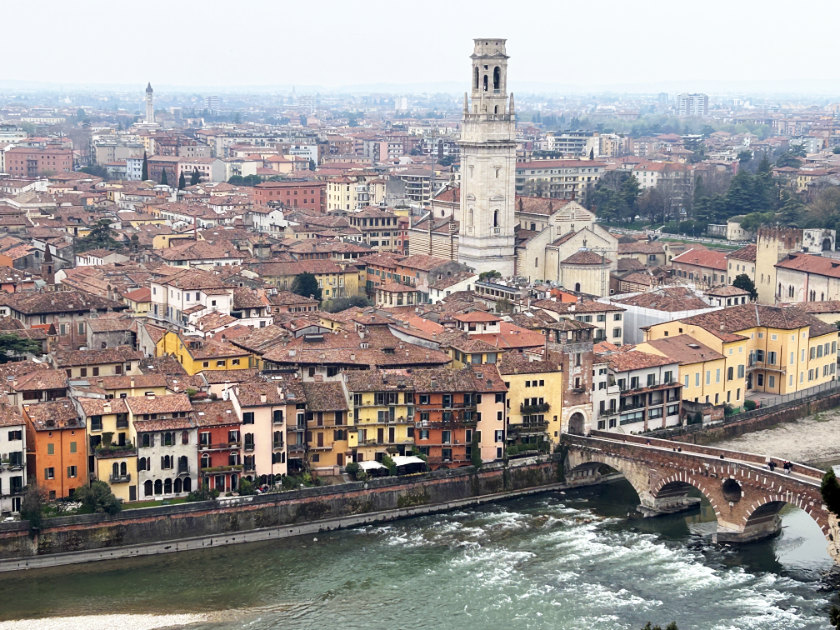
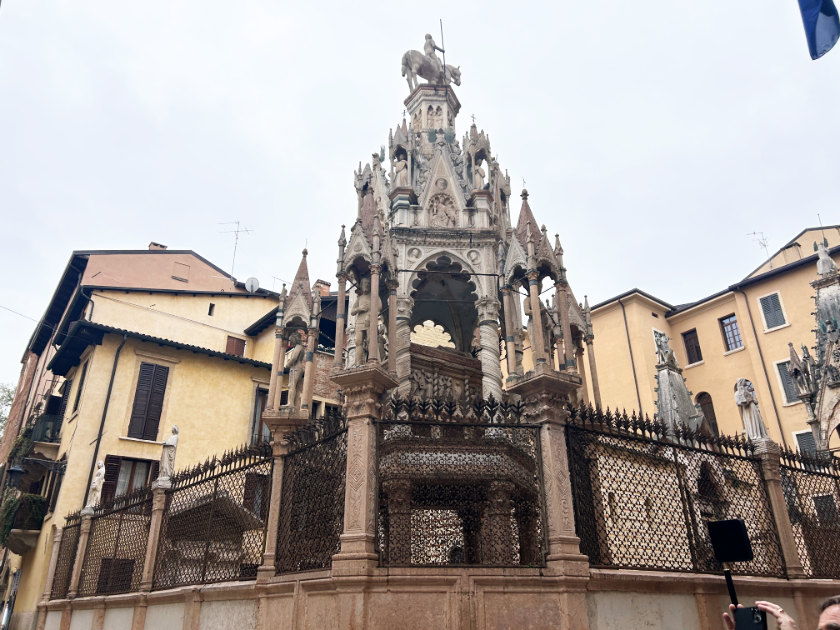
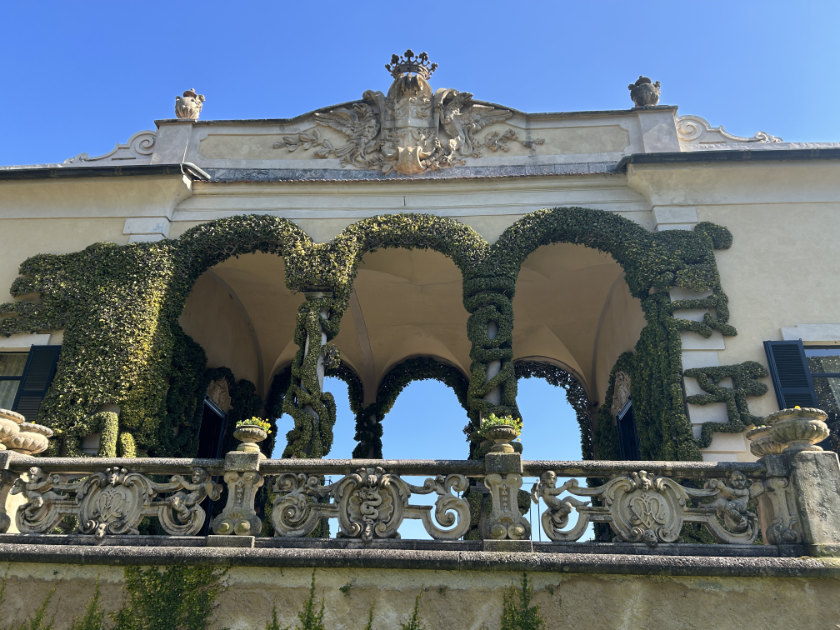
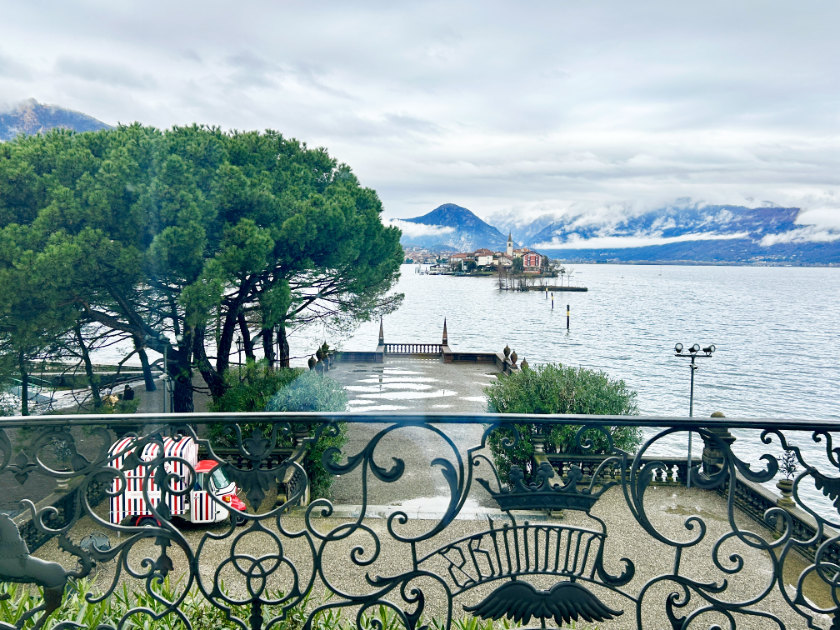
Above, from top: Verona. Arca di Cangrande I. Juliet’s Balcony. Lake Maggiore.
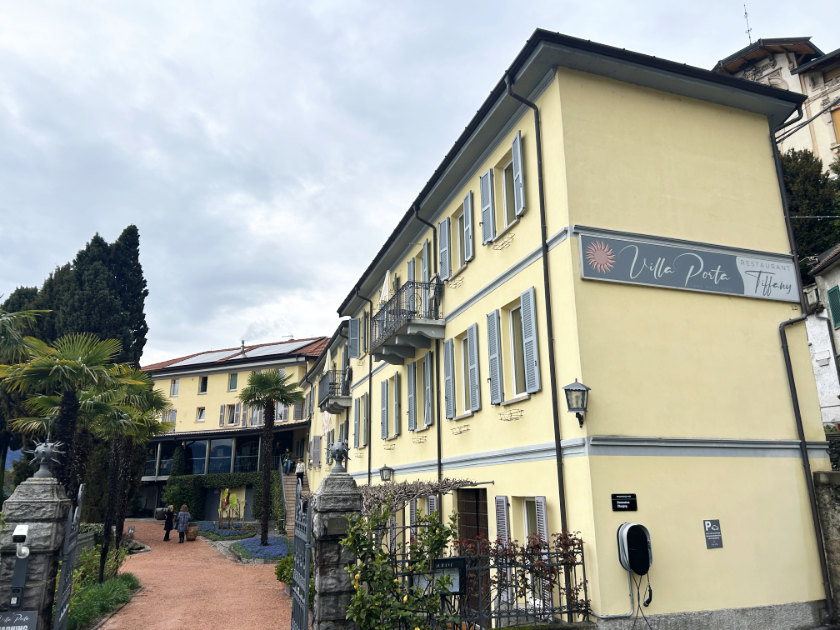
The Relais Villa Porta.
Food and fashion culture shift again when one crosses over into Veneto. Verona’s architecture and waterways are just as dramatic and elegant as Venezia. It is comparatively calmer, however, with significantly fewer tourists (with the exception of Juliet’s Balcony). Streets are easier to navigate, as is the Piazza delle Erbe market square, with its mix of street foods, fresh produce, and souvenirs. Many favourite Italian fashion brands can be found along the main streets leading up to Piazza delle Erbe. The narrower streets, meanwhile, are treasure-lined with upmarket consignment and vintage shops stocking curated merchandise. Near Arco di Gavi, a gateway to the city centre, there are two excellent gelato shops without long lines, a nicely merchandised Humana shop and Pelletteria Veneta, which like Milano’s Laboratorio Mariucci, features small batch handbags crafted in supple leather or eco-friendly materials with modern-yet-timeless silhouettes and colours.
Trattoria Arco di Gavi is an old-school neighbourhood restaurant serving hearty, classic risottos, roasted meats, and salads. Alla Borsa, in adjacent Valeggio sul Mincio, is built into a former financial and commercial area with historic charm. Second-generation owner Nadia Pasquali acknowledges that many of its regular guests are in the market for its tortellini pasta with a variety of fillings, which it has been producing since 1959. The menu continues her family’s story with a section of a dozen tortellini varieties with different fillings, sauces, and finishes.
Lake Maggiore is a verdant and romantic area appealing to travellers looking for a “quiet luxury” experience rooted in nature. Piedmontese Ticino Park, Lombard Ticino Park, Val Grande National Park, and Campo dei Fiori Regional Park, and MAB (Man and Biosphere) Reserve Ticino Val Grande Verbano are among the area’s home-grown highlights. The villages of Luino, Stresa, and others skirting the lake have a lived-in charm. Luino’s waterfront is an embarkation point for boat tour companies offering transportation to and from Isola Pescatori and Isola Bella (whose focal point is the captivating Palazzo Borromeo and gardens, and the Sanctuary of Santa Caterina del Sasso).
The 30-room Relais Villa Porta, tucked into a residential Lake Maggiore enclave, overlooks the Gulf of Colmegna. In 1820, it was built as a hunting lodge, and by the end of the century, it was transformed into an inn by Leopoldo Casnedi. The surrounding parkland was further enhanced with rare plants collected by Pietro Porta, its second owner and botanist, and regular guests during his run. More recently, management incorporated a 10,000 m² park surrounding the main villa, a 19th-century Liberty-style greenhouse, and an original Villa Porta mosaic. Breakfast features house-baked pastries, savoury items, and flawless espresso drinks served in the Tiffany space, which flows outdoors when the weather permits. The bar is known by locals for its curated wine list dedicated to northern Italian wines, a locally distilled gin crafted exclusively for the hotel, and aperitivo cocktails that put it to good use. •
Elyse Glickman is US west coast editor of Lucire and the co-creator of Lucire Rouge.
Related articles hand-picked by our editors
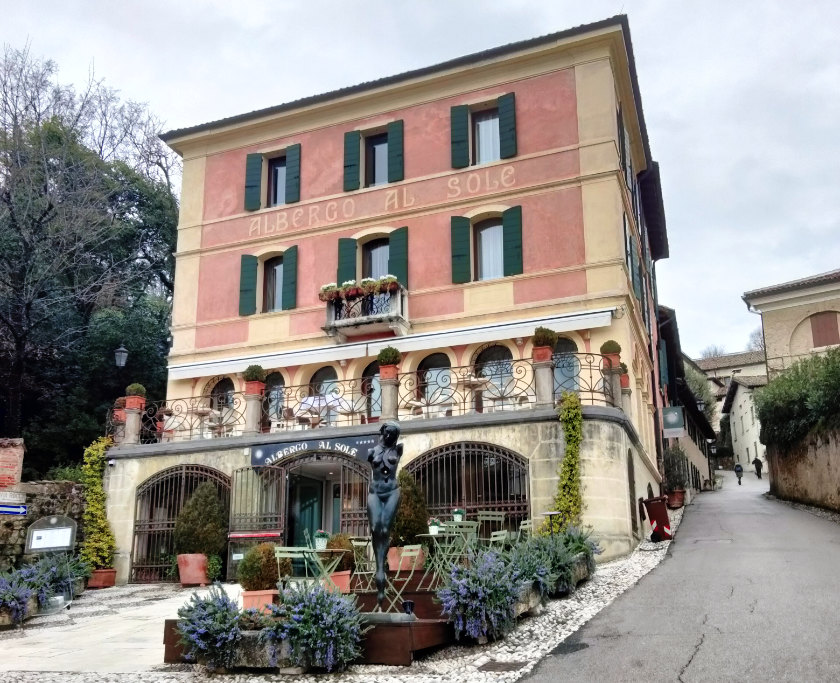
Foothills getaway in Asolo
Stanley Moss says heading up the hill to Asolo from Venezia reveals a more soothing, calm location, away from city noise and, at the Albergo al Sole, finds a haven at the top of the village
Photographed by Paula Sweet
Baglioni chronicles
Stanley Moss visits five Italian centres—Firenze, Roma, Milano, Venezia, Punta Ala—bringing a unique insight to each one, with a Baglioni property his home after each adventure
Photographed by Paula Sweet and Donatella Simonetti
Letter from Vicenza
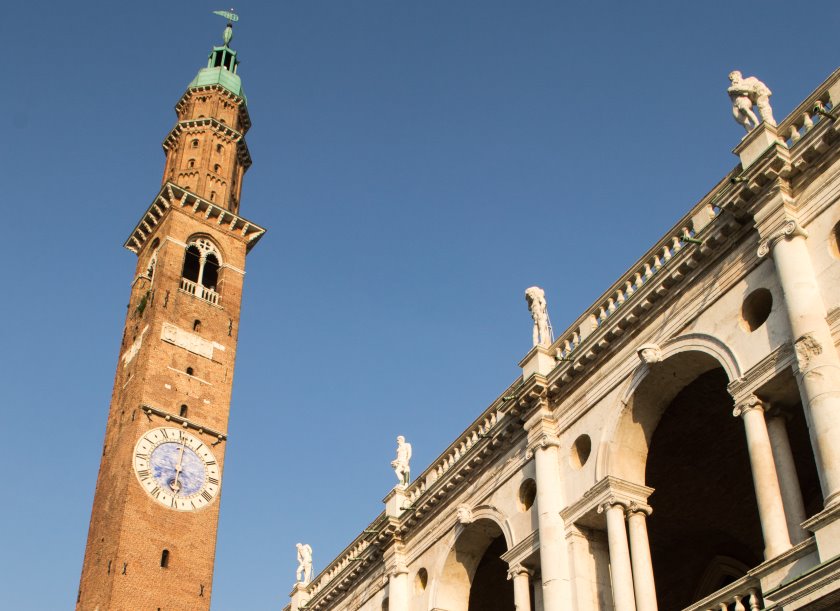
Stanley Moss, who calls Vicenza home, strolls around a town that is blissfully left alone by tourists, thriving on its authenticity and fashionable touches
Principal photography by Paula Sweet
Additional images courtesy Adolfo Courrier
Cento Rasoi photographed by the author