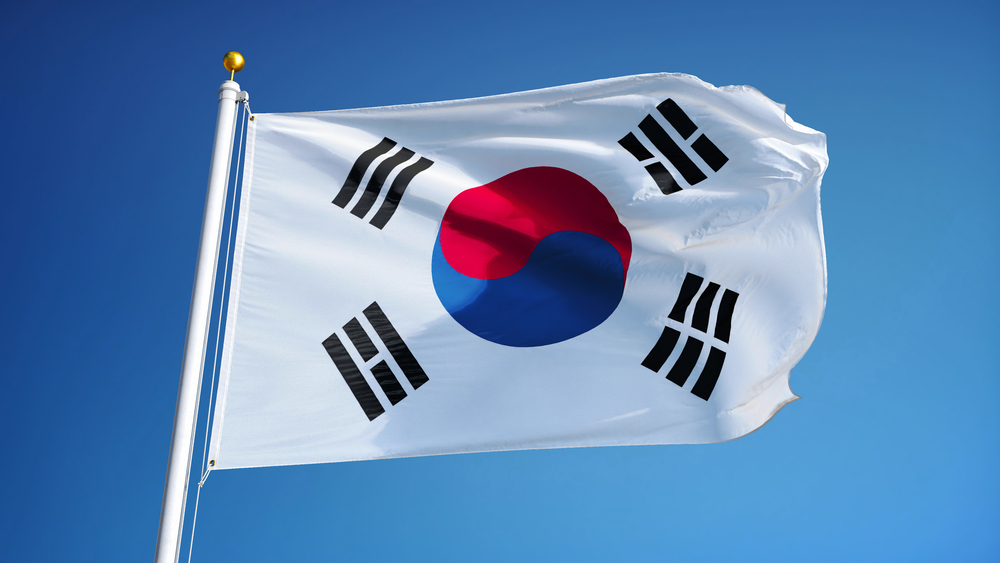
On 3 June 2025, South Korea’s presidential elections saw Lee Jae-myung from the Democratic Party claim victory, which resulted in him being sworn in the following day. He secured around 49.6% of the votes, defeating Kim Moon-soo of the People Power Party, who conceded after trailing not far behind, securing 41.2% of the votes. Voter turnout was notably high at nearly 80%, marking the highest outcome since 1997. The election followed a period of significant political turmoil: former President Yoon Suk-yeol had declared martial law in December 2024, accusing the opposition of pro-North Korean activities. However, the National Assembly unanimously overturned the martial law, prompting Yoon to revoke it the next day. On 14 December 2024, Yoon was suspended from office by a majority vote in the assembly, including members of his party, and his impeachment was unanimously confirmed on 4 April 2025. Lee has now taken office amid a highly polarised and unstable political climate in South Korea.
In June 2025, President Lee pledged to “mend the scars of division and conflict” by promising to lead the nation towards peace and prosperity; he also vowed to re-establish dialogue with North Korea to ease military tensions and foster cooperation on the peninsula. The president has outlined some key objectives, as part of his winning speech: restoring democracy and accountability after the martial law episode, revitalising the economy and improving living standards, and protecting citizens’ safety. He also addressed the pressing economic challenges posed by rising global protectionism, including steep tariffs on South Korean exports under US President Donald Trump’s administration, and promised to support middle- and low-income households struggling with the cost of living. Moreover, the president reported that the government is also focused on expanding offshore wind and phasing out coal, with an aim to raise renewables’ share to 40% by 2035. The country’s current target is a 40% emissions reduction by 2030 below 2018 levels (32% without forestry and overseas cuts). The latest energy plan, ‘Basic Plan for Long-Term Electricity Supply and Demand’, which was announced in February 2025, seeks to quadruple clean energy capacity from 30GW in 2023 to 121.9GW by 2038. The Energy Transition Forum’s proposal calls for renewables to reach 30% of the energy mix by 2030 and 60% by 2040, potentially creating one million green jobs.
In line with the tariff talk, in June 2025, the US and the South Korean government reaffirmed their commitment towards reaching a comprehensive tariff deal by early July 2025, ahead of the expiration of a temporary US tariff suspension. Negotiations are focused on issues such as tariffs, nontariff barriers, economic security, and investment cooperation, with South Korea pushing for exemptions from steep US tariffs, especially on cars, alongside signalling the nation would allow the US greater access to its agricultural markets. Primarily, South Korea is seeking to avoid unfair US tariffs on key sectors that are integral to its industrial activity. Both sides aim to find mutually beneficial solutions and avoid the reimposition of a 25% tariff after 8 July. The US imposed a 25% duty on South Korea in April 2025, as part of Trump’s ‘reciprocal’ global tariffs, which was temporarily reduced to a baseline of 10% for 90 days until 8 July.
-
3 December 2024: President Yoon declares martial law, citing threats to national stability. This sparks widespread protests and a constitutional crisis.
-
Later in December: South Korea’s National Assembly quickly overturns this martial law and votes to impeach Yoon.
-
4 April: The Constitutional Court of Korea unanimously upholds Yoon’s impeachment, officially removing him from office and triggering a snap presidential election.
-
18 April: The government proposed a supplementary budget of Won12.2tn ($9.1bn) amid the tariff turmoil.
-
1 May: South Korea’s parliament approved a Won13.8tn supplementary budget to bolster the economy amid weak domestic demand and escalating risks from US tariffs, and announced a second supplementary budget after the snap election.
-
25 May: South Korean presidential frontrunner Lee suggests the need to extend tariff talks beyond the initial July deadline, citing the upcoming 3 June snap election and the importance of a mutually beneficial deal.
-
3 June: Early presidential elections are held. Lee of the Democratic Party wins with 49.42% of the vote, defeating Kim of the People Power Party.
-
4 June: Lee begins his single five-year term immediately, forgoing the usual transition period. Meanwhile, President Trump doubled US tariffs on imported steel and aluminium from 25% to 50%.
-
6 June: President Lee and President Trump agree in their first phone call to work swiftly towards a tariff deal and to promote working-level negotiations.
-
19 June: The South Korean government announced its second supplementary budget for 2025, totalling Won30.5tn.
-
24 June: South Korea’s trade minister Yeo Han-koo meets US counterparts in Washington, reiterating calls for tariff exemptions and reaffirming both sides’ commitment to reach a deal by early July.
On 4 June, President Trump doubled US tariffs on imported steel and aluminium from 25% to 50%. According to the Korean Statistical Information System, the total value of exports, in US dollar terms, fell by 2.1% year-on-year in the first three months of 2025, decreasing from Won219.3tn in January-March 2024 to Won214.6tn in January-March 2025. Trade with the US is likely to impact the South Korean construction industry’s output in the short term. As a result, in May 2025, South Korea’s Ministry of Economy and Finance revealed a “slowdown in exports” for the first time, reflecting concerns over an exacerbating global trade environment fuelled by US tariffs on steel, cars, and other imports. The manufacturing sector also suffered its sharpest job decline in over six years, losing 124,000 positions in May 2025. In a setback to the industry, in April 2025, a South Korean car manufacturer, Kia Corp, lowered its sales target from 1.6 million electric vehicle units to 1.26 million by 2030, citing macroeconomic challenges and growing geopolitical risks.
To address this, the South Korean government in June 2025, announced its second supplementary budget for 2025, totalling Won30.5tn, which includes a Won10.3tn downward revision of expected tax revenue, reflecting lower tax income projections and is anticipated to gain approval by July 2025. Of the total, Won20.2tn was allocated for new spending to boost domestic consumption and support low-income households and small businesses. The government also allocated Won400bn to write off long-term overdue debts under Won50m for vulnerable borrowers and set aside Won1.4tn to support small business recovery. Additionally, the Korean government announced that to address the ongoing weakness in construction investment, the government was planning to invest Won5.4tn in liquidity to support the sector. Of the total, Won3tn will be provided in financial support to construction companies facing funding difficulties. Overall, the budget marks a clear commitment from South Korea’s government regarding its support for economic revitalisation by promoting consumption, encouraging investment, and also expanding construction spending. Previously, in May 2025, the government also announced a budget against the tariff as a measure to protect businesses in the country against the setback and uncertainty caused by the tariff implications. In the same month, South Korea’s parliament approved a Won13.8tn first supplementary budget to bolster the economy amid weak domestic demand and escalating risks from US tariffs. This package surpasses the government’s initial proposal of Won12.2tn, announced in April 2025, reflecting the urgency to address economic challenges after an unexpected first-quarter contraction. Key allocations include Won200bn for discounts on fresh produce and wildfire relief, Won800bn for infrastructure construction, Won4.6tn to ease the burden of logistics costs, and other policies to help expand the domestic export markets.
In a boost to the industry’s output, the South Korean government reported in April 2025 that it would expand its financial support package for the country’s vital semiconductor industry to Won31.2tn, in line with its efforts to address uncertainties posed by the Trump administration’s tariff hikes. This package is approximately 25% higher than the Won26tn package previously released in 2024. The government aims to provide low-cost loans, subsidies, and other financial incentives to stimulate investment in the semiconductor sector. Additionally, it plans to accelerate spending on industrial infrastructure, including covering a larger portion of the costs for building underground power transmission systems in semiconductor clusters in cities such as Yongin and Pyeongtaek.
Furthermore, in April 2025, the South Korean government announced emergency measures to support its car industry after the US imposed a 25% tariff on imported cars and light trucks. The measures include increased financial support, tax cuts, and subsidies to help car makers and parts suppliers cope with the expected significant damage. The government also pledged to negotiate with the US and seek new markets. The government will increase policy financing for car makers from Won13tn to Won15tn in 2025 and expand tax cuts and subsidies to offset the impact, as car exports to the US totalled Won57.6tn in 2024.
“New South Korean president unveils supplementary budget focused on tariff relief” was originally created and published by World Construction Network, a GlobalData owned brand.
The information on this site has been included in good faith for general informational purposes only. It is not intended to amount to advice on which you should rely, and we give no representation, warranty or guarantee, whether express or implied as to its accuracy or completeness. You must obtain professional or specialist advice before taking, or refraining from, any action on the basis of the content on our site.