
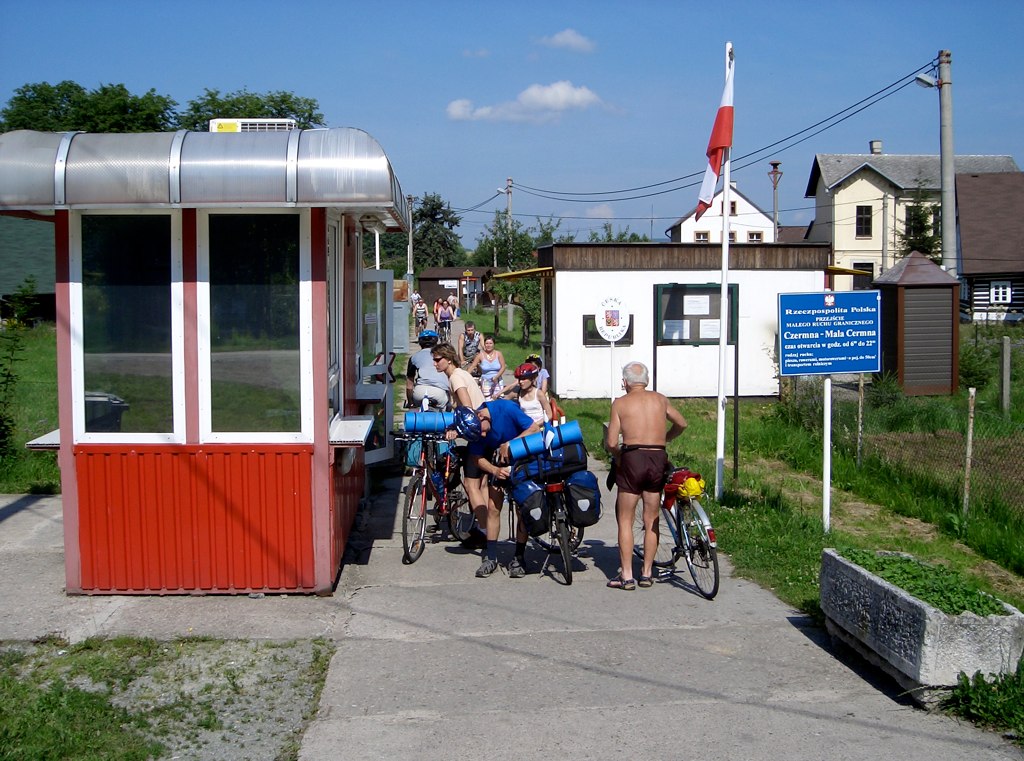
This past Monday, Polish Prime Minister Donald Tusk began the implementation of temporary border controls with Germany and Lithuania, heightening border tensions in the region. 30-day border checks will now be set up at 13 locations along the Lithuanian border and 52 locations along the German border, though this period may be extended. This decision comes as a response to both Germany’s recent change in migration policy as well as Poland’s surge in fears of smuggling schemes. Since May of this year, Germany has been refusing entry to asylum-seekers per the Interior Minister Alexander Dobrindt. Due to an increase in far-right sentiment in Poland, civilian border patrols have also been making appearances since June.
Prime Minister Tusk contends that Poland is doing this in the protection of the rest of the European Union: “We are doing this for you, for the Germans, the Dutch, the French, because it’s the border of the European Union.” According to A.P. News, Lithuania hopes for its borders to return to normal as soon as possible, with President Gitanas Nauseda saying that “such measures must undoubtedly be temporary and must achieve results as quickly as possible and be terminated.” Some residents of these border towns are worried about the implications these stops will have on their daily lives. Examples of the effects these decisions have had on the daily lives of residents in the region can be seen in the Polish town of Slubice, which has faced border controls on the German side for a few years now. The mayor of Slubice told D.W. News, “The checks that have been in place on the German side for some time now have a negative impact on us,” referring to resulting economic and traffic disruptions.
The recent trend of restriction of passage between these neighbors has created difficulties for those wanting to go about their daily lives in the region. Additionally, the restriction of movement stokes far-right notions already on the rise in countries like Germany and Poland. Provoking fears of migrant aggression creates an environment that is based on anxiety more than facts and creates a hostile environment for those seeking safety. The European Union is supposed to be a region of freedom of movement between countries, with many citizens often crossing borders for school, work, or leisure. Now that fear of immigration is on the rise in the region, a sentiment hauntingly familiar in the U.S., these countries are dangerously trending towards nationalism, which makes friendship between countries more trepidatious.
The countries of Poland, Lithuania, and Germany are all a part of the Schengen Zone, a region established across much of the European continent intended to be without border control. The Schengen Zone Agreement was signed in 1985 and at the Convention of 1990. According to the European Council of the European Union, countries in this region “do not carry out checks at their internal borders, except in cases of specific threats.” In Poland and Germany, one may wonder if their situations are truly emergencies, or if their decisions are based on domestic political pressures.
The rise of migrant fears in Europe risks alienating communities on the borders of these regions as well as cutting off asylum-seekers from vital resources. Unfortunately, these recent tensions create fertile ground for prejudice against migrants simply seeking a reprieve from violence and a better life. Creating tensions between neighbors based on fear of asylum-seekers makes lives harder for citizens and non-citizens alike.