
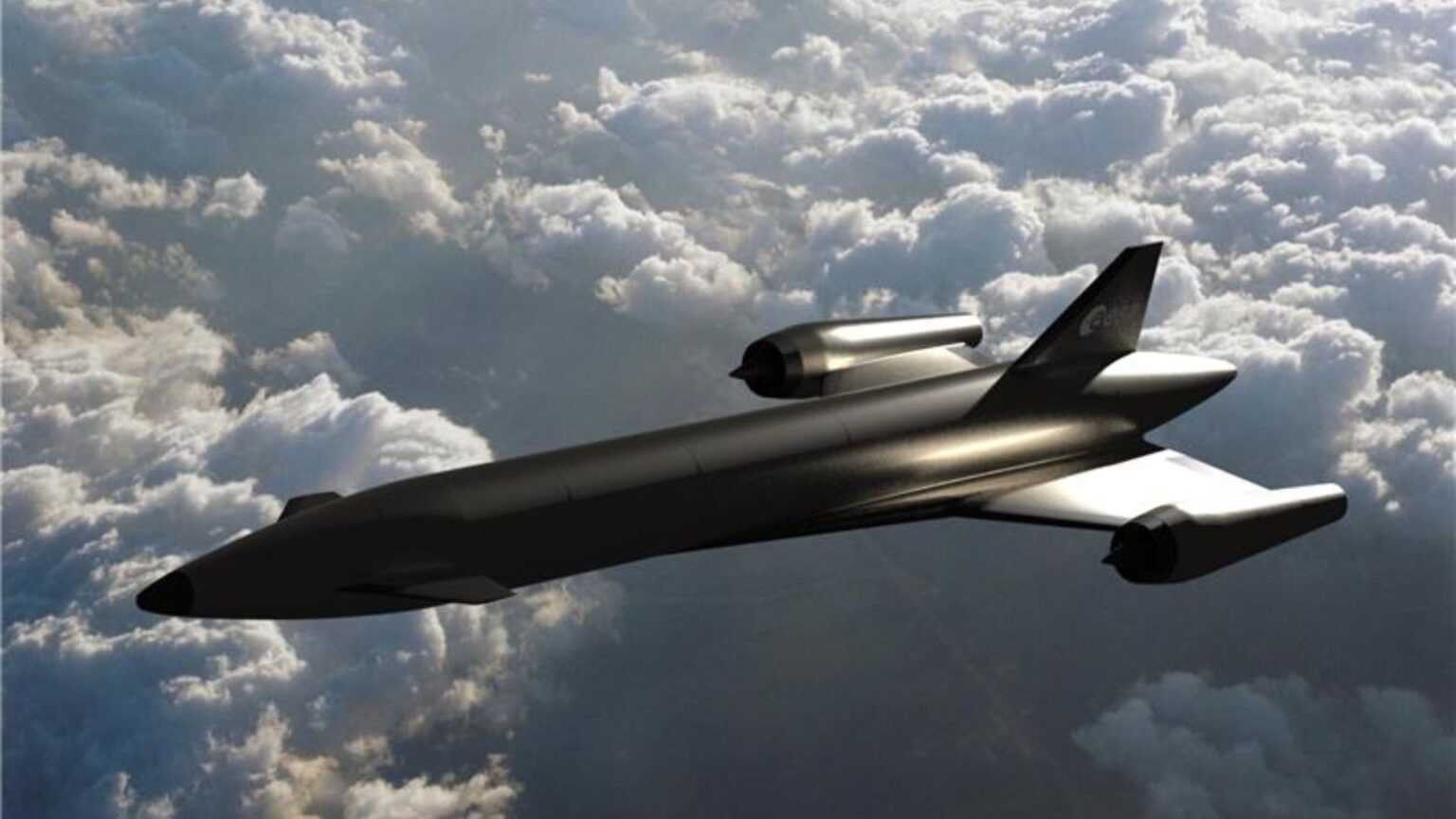
The European Space Agency (ESA) has kicked off a research program to develop hypersonic technologies applicable to future vehicles capable of horizontal launch.
The ESA has partnered with the United Kingdom-based engineering and technology company Frazer-Nash for the Invictus research program. Invictus will be a fully reusable experimental vehicle capable of flying at hypersonic speeds of Mach 5 or 3836 miles per hour.
The program is funded through ESA’s General Support Technology Program (GSTP) and Technology Development Element (TDE).
Invictus will build on the previous tech developments managed by the ESA. The agency hopes that the platform will provide industries, other agencies, and academia with an opportunity to test future hypersonic technologies in a relevant environment.
The consortium for Invictus also includes Spirit Aero Systems and Cranfield University, UK. The first goal, set for 12 months, is to deliver the preliminary design of the full flight system.
Invictus – ESA’s hypersonic test vehicle
The Invictus program will aim to design a hypersonic vehicle that will be able to endure the tough parameters needed to fly safely for a craft.
The main challenges for a hypersonic vehicle, the ESA says in a press release, are that the outer surface of the craft and the air entering its engines get extremely hot. This happens because of the shock heating and the surface friction caused by the aircraft flying at high speeds.
Therefore, there is a need for specialized technology to control it, alongside developing a propulsion system that can make the craft reach hypersonic speeds. The Invictus program will be using a hydrogen-fueled precooled air-breathing propulsion system, as per the agency’s officials.
“The INVICTUS program will prove the suitability of a hydrogen-fueled precooled air-breathing propulsion system for horizontal take-off and hypersonic flight. It will provide an invaluable opportunity to test the complete engine flow path, from intake to afterburner, at full scale in an integrated aircraft,” said David Perigo, ESA’s chemical propulsion engineer and the program’s technical lead.
Past technological advancements to help the ambitious program
The precooler system will be built upon the learning gained during the ESA’s SABRE study. The system was designed by UK-based Reaction Engines Ltd and funded through ESA’s GSTP in its initial stages.
The tech has already been demonstrated successfully through integration with conventional jet engines. It is able to chill superheated air in a fraction of a second.
Moreover, the light architecture of a SABRE-like engine also paves the way for spaceplanes that are able to take off horizontally from the runway.
“Invictus is an important next step in developing the technologies required for future spaceplanes and will give Europe a unique asset for exploring this type of flight,” said Mark Ford, Head of ESA’s Chemical Propulsion Section.
Tommaso Ghidini, the Head of ESA’s Mechanical Department, further said that hypersonic flights are the gateway to a new paradigm of mobility, defense, and space access. The mastery of reusable, air-breathing propulsion will give Europe the foundation “for aircraft that take off like planes and reach orbit like rockets.”
The race for hypersonic missiles and crafts has picked up in the last decade, with China emerging as a frontrunner as per its claims. Beijing has been testing reusable drones that can travel at hypersonic speeds. The ongoing war between Russia and Ukraine has also seen the use of hypersonic missiles by Moscow to target Kyiv-controlled areas. They also emerged as a significant worry for Israel during the war with Iran.
Therefore, Europe and the US are also beginning to see the reality and develop technologies that can fly at superfast speeds when needed. The Invictus program by ESA could help European nations in the race for hypersonic superiority.