
From reproductive rights to climate change to Big Tech, The Independent is on the ground when the story is developing. Whether it’s investigating the financials of Elon Musk’s pro-Trump PAC or producing our latest documentary, ‘The A Word’, which shines a light on the American women fighting for reproductive rights, we know how important it is to parse out the facts from the messaging.
At such a critical moment in US history, we need reporters on the ground. Your donation allows us to keep sending journalists to speak to both sides of the story.
The Independent is trusted by Americans across the entire political spectrum. And unlike many other quality news outlets, we choose not to lock Americans out of our reporting and analysis with paywalls. We believe quality journalism should be available to everyone, paid for by those who can afford it.
Your support makes all the difference.
Read more
July’s peach harvest in Greece‘s northern orchards, a period typically marked by meticulous picking and processing for canning, is now shrouded in uncertainty. The industry, which often supplies consumers in the United States, faces a significant threat following US President Donald Trump’s announcement of a 30 per cent tariff on European products.
This new levy has sent shivers through a range of European sectors, from wine and olive oil to the automotive industry. For Greek peach farmers and factory owners, the timing is particularly critical. As they prepare to send their fresh produce overseas, there is growing concern that the tariffs will severely dent demand, leaving them with little time to adapt or find alternative markets for their fruit.
Greece is the world’s biggest exporter of tinned peaches, about one fifth of which goes to the United States, its second biggest market after Europe.
Peaches, like some other goods, are already subject to a U.S. import levy of 17%. The new tariffs could increase the total import duty to 47%.
open image in gallery
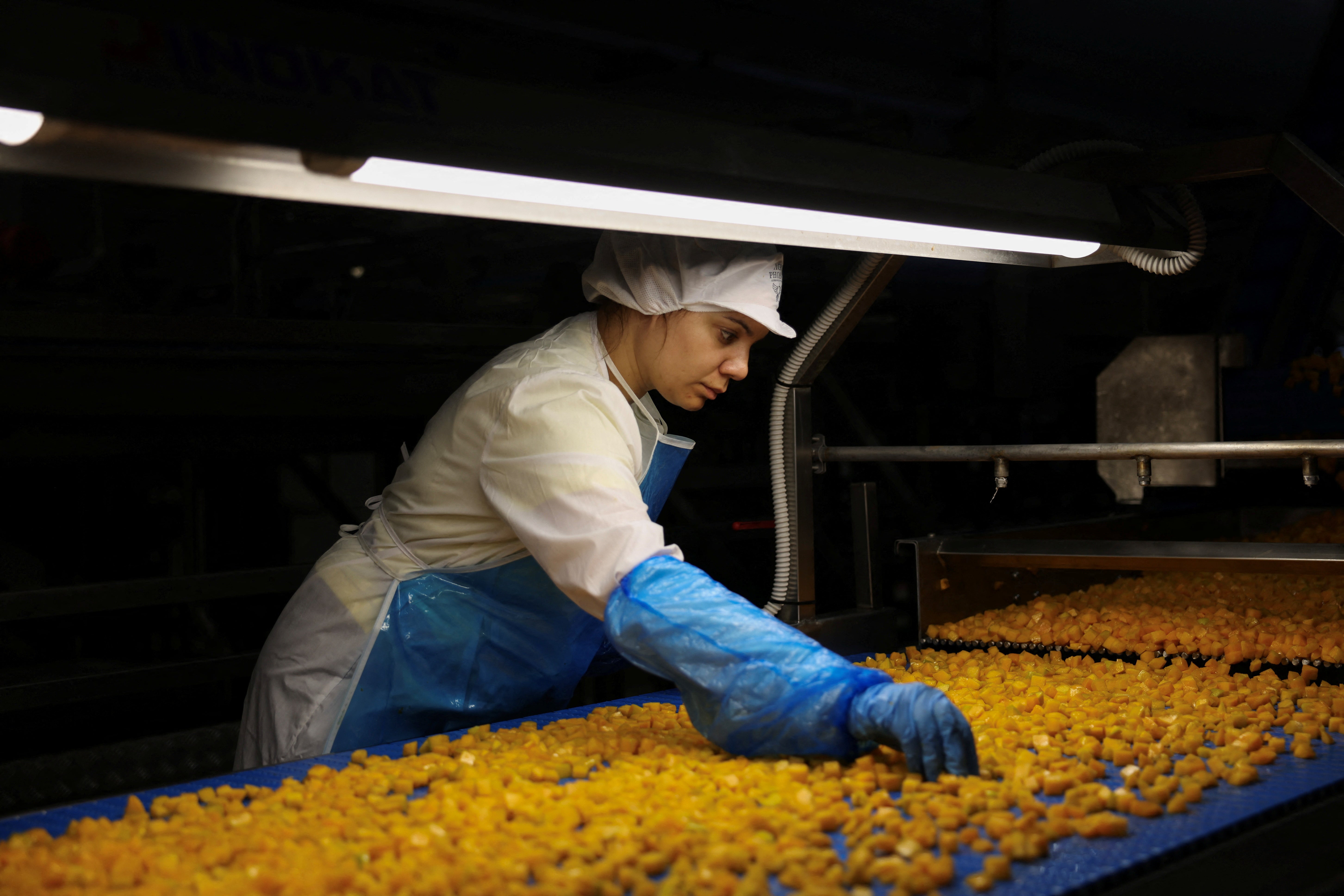
A worker performs a quality control of chopped peaches in a fruit factory producing canned peaches, in Ano Zervochori, near Naoussa, Greece, July 15, 2025. REUTERS/Alexandros Avramidis (REUTERS)
“Now is even worse because it finds us at the peak, where the entire plant and all the production lines are working at full speed,” said Lazaros Ioannidis, co-owner of a peach and fruit processing plant near Naoussa that sends about 40% of its produce to big U.S. companies like Dole.
The fertile plain of Central Macedonia in Greece is one massive peach orchard. A sea of pink greets visitors in the spring, when the trees blossom.
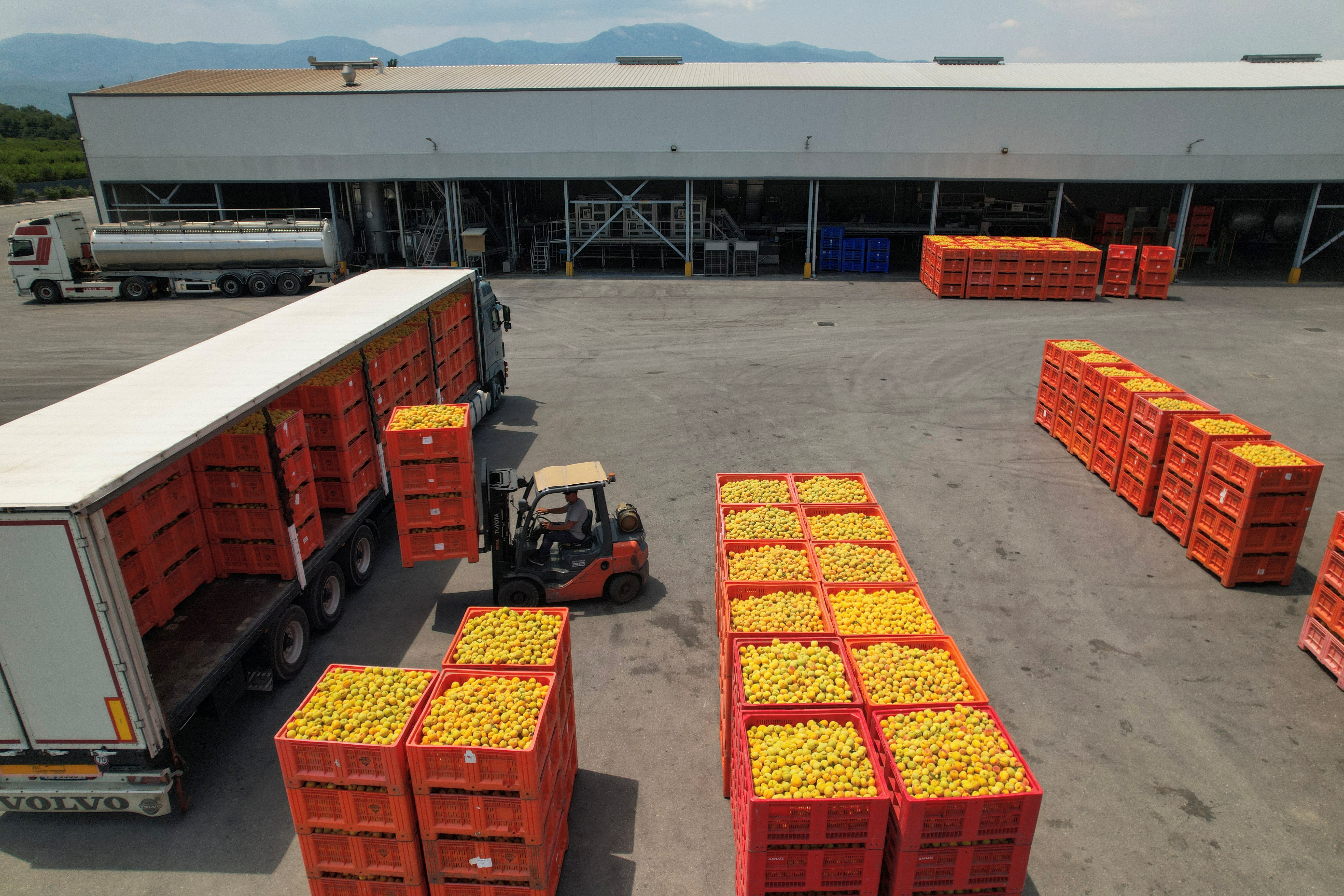
This week, trucks offloaded crate after crate brimming with thousands of yellow peaches at Ioannidis’ plant, where they were loaded onto conveyor belts for processing.
Greece’s annual turnover from exports of tinned peach and other packaged peach products amounts to more than 600 million euros, with about 120 million euros coming from the U.S. market.
Exports to the United States represent about 4% of Greece’s total exports. Canned peach and peach derivatives, olives and olive oil are the three top exported agriculture products to the U.S., bringing home about half a billion euros annually.
open image in gallery
A forklift unloads crates of peaches outside a fruit factory, in Ano Zervochori, near Naoussa, Greece, July 15, 2025. REUTERS/Alexandros Avramidis (REUTERS)
More than 20,000 families, farmers and workers make their income from peach farms and peach factories in Central Macedonia, according to Kostas Apostolou, head of the Greek Canners Association.
“Our size might be small as a percentage for the country or the EU but for the region its a big source of income, vital for it’s survival.”
“For the past 6 months, since Trump took office, we have been in a period of an absolute turmoil,” says Apostolou.
He said that the only alternative is to diversify exports to Mercosur countries in South America or to Mexico and India and urged the EU to sign a trade agreement with those countries. The EU was planning to approve a trade deal with Mercosur but has faced opposition from some countries.
Still, there are also optimists
“Trump is unpredictable. We hope that he will prove that and he will change this decision,” said farmer Vangelis Karaindros as he and his employees picked ripe peaches by hand.