
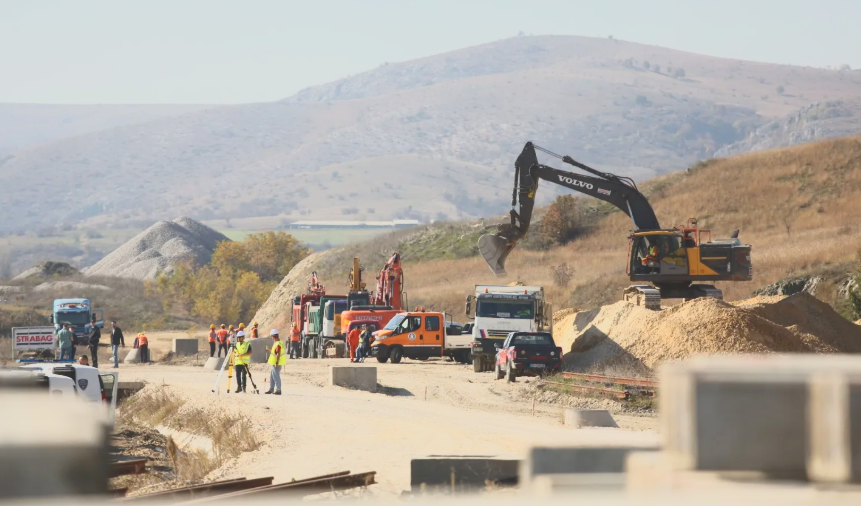
North Macedonia and Bulgaria to jointly build a tunnel in Deve Bair

Express newspaper
17/07/2025 12:03
North Macedonia and Bulgaria are one step closer to realizing the joint project for the construction of a cross-border railway tunnel between Gjueshevo and Deve Bair, as part of the completion of the eastern segment of Corridor 8. At a meeting in Brussels, both sides agreed to finalize the text of the intergovernmental agreement by the end of July, which will determine the technical, financial and operational aspects of the project, reports Portalb.mk.
The meeting, organized by the European Commission, was attended by senior representatives of the transport institutions of both countries, including the State Secretary of the Ministry of Transport of the Republic of Macedonia, Stefan Volkanovski, and the Director of the PE Railway Infrastructure, Sinisa Ivanovski, as well as the Deputy Minister of Transport of Bulgaria, Ljuben Nanov. Representatives from the European Investment Bank and the Transport Community were also present.
The agreement, whose signing is expected this fall, will enable the start of construction works on the tunnel in the first half of 2026. The tunnel will be built according to the existing technical project prepared by the Macedonian side, and the two countries will form working groups for its implementation.
North Macedonia pledged to re-announce the tender for the Kriva Palanka section – tunnel entrance – by the end of 2025, while Bulgaria presented its activities on its territory.
Both parties expressed their willingness to apply jointly for financial support from the EU and international partners, with the aim of securing funds for the implementation of this strategic project.
We recall that, in recent months, the two countries have repeatedly accused each other of blocking the project for the construction of the railway line in Corridor 8. Minister of Transport, Aleksandar Nikolloski, accused Bulgaria in April “because it does not want to build the line.”
On the other hand, Bulgarian Deputy Prime Minister and Minister of Transport Grozdan Karadzov he answered that Bulgaria is already working on the line on which, by 2032, trains will operate at 160 kilometers per hour, while nothing is being done on the other side.
Corridor 8, which connects the Adriatic to the Black Sea through Albania, Macedonia and Bulgaria, is part of the wider European transport corridor Western Balkans – Eastern Mediterranean and has strong support from the European Union.