
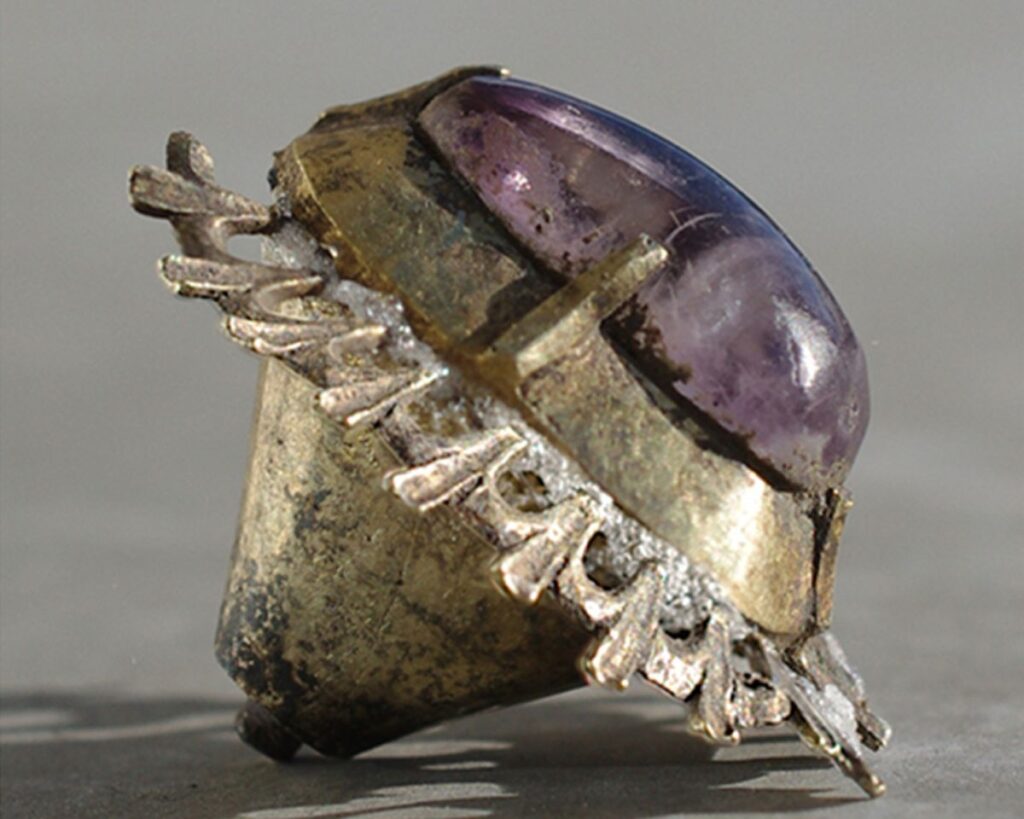
Archaeologists in Poland uncover a rare medieval amethyst jewel in Castle Kolno, shedding light on noble life centuries ago. Credit: Lech Marek / CC BY 4.0
A stunning piece of medieval amethyst jewelry, likely once worn by a member of the nobility, has been uncovered in the ruins of Castle Kolno in southwestern Poland. Discovered in the remnants of a centuries-old moat, the jewel is a silver ornament decorated with gold and set with a deep purple amethyst. Experts believe the item was part of a brooch, lost unexpectedly during the Middle Ages.
This rare find is providing fresh insight into the personal belongings of the upper class during medieval times. The jewel was not found in a burial site or a hidden stash of valuables, which is typical for artifacts from the era. Instead, archaeologists believe it slipped from its owner’s clothing during routine travel near the castle grounds. This everyday loss has turned into a significant archaeological discovery.
Lost amethyst jewel unearthed by ongoing excavations in Poland
The discovery was made by a research team led by Lech Marek from the University of Wrocław. Marek and his colleagues have been excavating Castle Kolno since 2010. He described the jewel as an extremely rare item to find in this type of settlement.
Unlike many other historical artifacts that are carefully buried or intentionally hidden, this ornament appears to have been lost without ceremony. According to a study published in the journal Antiquity on July 11, archaeologist Beata Miazga, who worked alongside Marek, said the owner likely dropped it while passing through the area.
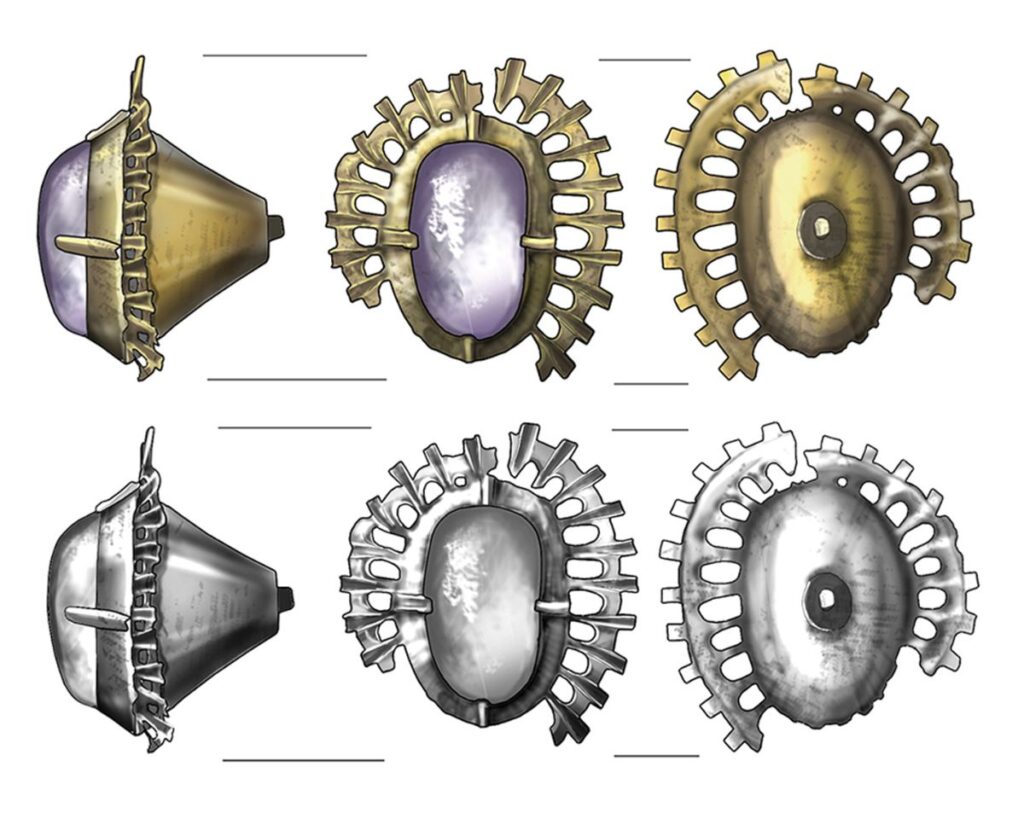
Historic amethyst ornament, likely worn by a noble. Credit: Lech Marek / CC BY 4.0
Castle Kolno dates back to the early 1200s and once served both as a fortress and as the home of Duke Bolesław III of Brzeg. The structure also played a role in regulating local timber trade, acting as a checkpoint. Over time, the property changed hands, ending up with a group of wealthy knights. The castle was destroyed by fire during the civil wars in Silesia in 1443 and remained in ruins for hundreds of years.
A symbol of wealth and meaning
The jewelry piece stands out for its quality and symbolic value. Tests confirmed the gem is an amethyst, set in silver and coated with gold using a historical method that involved mercury. The amethyst, known for its vibrant purple color, held spiritual meaning during medieval times. It was believed to protect its wearer from harm, including poisoning and betrayal. Some thought it helped prevent nightmares or symbolized purity and faith.
The combination of rare materials and expert craftsmanship suggests the jewel belonged to someone of high social status. Similar designs have been seen in noble attire from the same period, strengthening the theory that this was not an ordinary item.
What makes this discovery particularly special is how it was found—not in a grave or a hidden hoard, but likely lost in a moment of everyday life. For researchers, it offers a more personal look at the past—one that connects today’s world with a forgotten moment in history.