
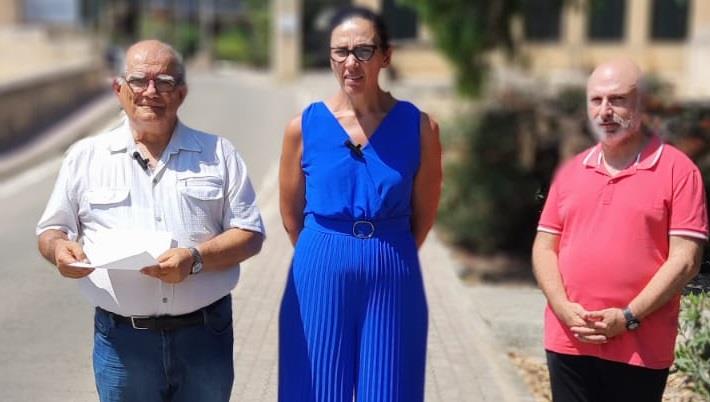

In Malta’s public administration-particularly in land administration and development-laws are routinely flouted, creating a state of anarchy rather than upholding the rule of law. This was the central message delivered by ADPD – The Green Party during a press conference outside the Planning Authority in Floriana.
ADPD Deputy Chairperson, Architect Carmel Cacopardo, highlighted a culture where individuals act as they please and are later absolved. This has become entrenched over time, exemplified by the Planning Authority’s handling of Charles Polidano’s Montekristo Estate in Ħal-Farruġ. Despite numerous irregularities accumulating over the years, the Authority failed to take timely action, reinforcing the perception that any illegality can be retroactively “fixed.”
Cacopardo criticized how politicians, including MEPs, have continued to hold events at the Montekristo Estate, implicitly endorsing its illegality. He argued that such behaviour has normalised a culture of impunity. While some may see this as preferential treatment, Cacopardo stressed that this is unfortunately standard practice. The regularisation system is supposed to address minor breaches, but it’s also used to justify large-scale unpermitted developments through fines, which effectively legalise wrongdoing.
The difference with Montekristo, he noted, is its scale – not its treatment. In essence, the Planning Authority treats both small and massive infractions the same: pay a fine and move on.
ADPD Chairperson Sandra Gauci pointed to another recent example-the Suncrest Hotel, owned by Anġlu Xuereb. The hotel has occupied public land without title for 38 years, yet was allowed to continue operations following a €2 million fine, payable in instalments. The agreement even exempts the operation from public access laws.
Gauci argued that such cases illustrate how institutions promote, rather than prevent, illegal development. Authorities appear more interested in facilitating violations than enforcing regulations. She questioned the lack of accountability, especially in the wake of building-related accidents, and asked who bears responsibility for unsafe or illegal construction.
She also criticised the public’s complacency and the futility of inquiries and reforms when enforcement is absent. True change, she said, requires more than appearances-it demands integrity and serious governance.
Without a genuine commitment to good governance and a shift away from profit-first thinking, Gauci concluded, Malta will remain trapped in this cycle of abuse and impunity.