

A few weeks ago, one of the most iconic museums in the world – the Louvre – closed its doors not because of war or pandemic, but because of its own staff walking out in protest. Their grievance? An institution overwhelmed by a relentless flood of mass tourism. The image of staff halting the operations of the world’s most-visited museum was a powerful signal: tourism, unchecked, can become a threat not just to infrastructure, but to culture and sanity.
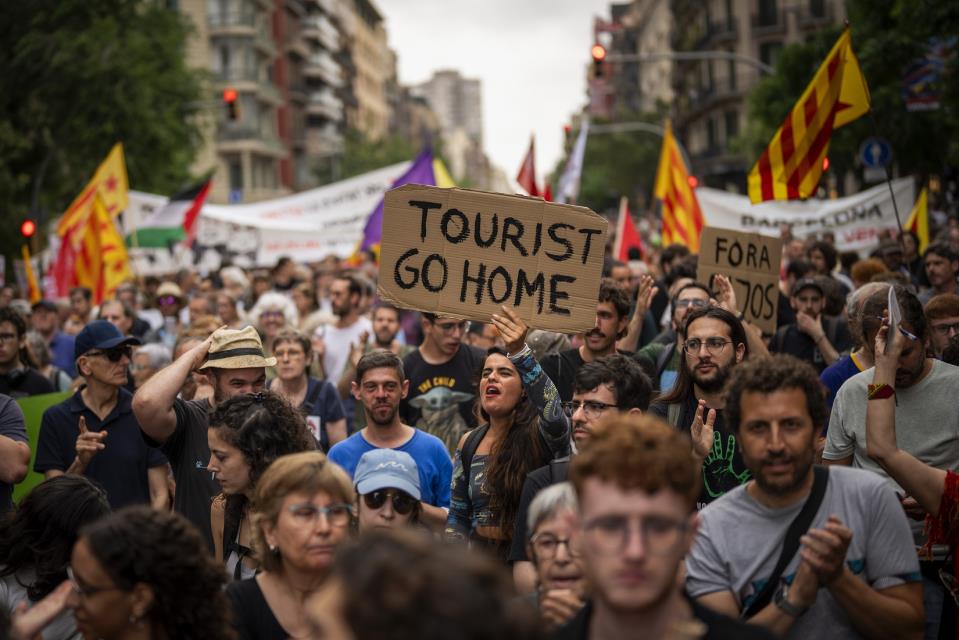
It was not the first protest related to over-tourism. In Barcelona, activists resorted to theatrics, spraying tourists with water pistols in a bid to “cool down” the overwhelming tide of visitors. In Mallorca, Lisbon and Venice, thousands rallied against an economic model they say displaces locals and erodes community life. While these protests may seem dramatic, they reflect a growing frustration – one born of daily disruption and cultural dilution.
In Malta, no one has yet taken to the streets with water pistols or placards. But that doesn’t mean the pressure isn’t building. The signs are plain for all to see: overcrowded beaches, clogged roads, strained infrastructure, and public spaces that feel more like open-air tourist attractions than community amenities.
According to the National Statistics Office (NSO), a staggering 1,418,954 inbound tourists arrived in Malta between January and May – a 14.3% increase compared to the same period in 2024. That trajectory could see the island exceed four million tourist arrivals this year, just a year after surpassing three million. For a country with a population of just over 550,000 and only 316 square kilometres in size, the scale of tourism is unprecedented – and unsustainable.
Malta’s charm – its history, coastlines and Mediterranean lifestyle – has long been its greatest asset. But these very qualities are now at risk of being overrun. Much like the Louvre, which struggles to accommodate millions within the limits of a historical structure, Malta too is grappling with how to balance preservation with profit.
The issue is not tourism itself, but excess. Tourism has long been a pillar of Malta’s economy, vital to jobs and growth. But when growth becomes uncontrolled expansion, the consequences mount. More arrivals mean increased need for accommodation. More rental cars mean more traffic on roads never designed for this volume. More cruise ships mean heavier pollution. And the cumulative effect? Locals squeezed out, landscapes degraded, and the visitor experience itself diminished.
Comino: A microcosm of a larger problem
Nowhere is the pressure of over-tourism more visibly felt than on the tiny island of Comino. With its crystalline Blue Lagoon and rugged cliffs, Comino is often marketed as an untouched paradise. But in peak season, that paradise turns into a sardine tin of deckchairs, kiosks, and queues of boats. Authorities introduced a capping system to limit visitor numbers, but questions persist about its effectiveness – and about who is actually enforcing it.
In theory, daily visitor numbers to Comino are meant to be controlled. In practice, enforcement has been patchy at best. Commercial operators continue to ferry hundreds – if not thousands – to the island daily. Even with caps in place, the infrastructure on Comino remains minimal, its ecosystem fragile. The line between access and exploitation has grown worryingly thin.
If Comino, a site of both environmental significance and national pride, cannot be adequately protected through caps and regulation, what does that say about Malta’s readiness to deal with larger tourism-related challenges?
The case for visitor caps on Comino is straightforward: it’s a small, ecologically sensitive area that cannot bear unlimited footfall. But what about the rest of Malta? Should other highly-visited sites – Mdina, Valletta, St Julian’s – also begin to consider restrictions?
The idea may seem extreme, even unwelcoming. But a cap is not a wall; it is a management tool. It says: “We value our spaces – and your experience – enough to avoid ruin through overcrowding.” The goal isn’t to deter visitors, but to preserve quality – both for tourists and residents. A peaceful Mdina alley is more memorable than one jostling with selfie sticks. A cleaner Blue Grotto speaks more of the beauty of Malta than one choked with diesel fumes and floating trash.
Yet a cap without enforcement is little more than a press release. And this is where Malta’s challenge deepens. For any serious policy to work – whether in Comino or anywhere else – enforcement must be visible, consistent, and uncompromising. That means boots on the ground, not just guidelines in brochures. It means penalties for operators who flout limits. It means better coordination between tourism bodies, local councils, and environmental agencies. Without this, even the most well-intentioned policies will buckle under the weight of commercial interests.
Beyond caps: rethinking the tourism model
Of course, visitor limits are only one part of a broader solution. Malta needs a fundamental rethink of its tourism model. Relying on continuous volume growth is not only environmentally damaging, it’s economically short-sighted. A race to the bottom in prices, accommodations, and experiences benefits no one in the long run – least of all the tourism industry itself.
Malta must transition from a volume-driven model to a value-driven one. That means attracting fewer, but more respectful and higher-spending tourists. It means promoting culture, heritage, gastronomy, and nature – not just sun and cheap booze. It also means regulating short-term rentals, many of which contribute to rent inflation and social tension in urban areas. Local residents are increasingly being priced out of their own communities.
Urban planning, too, needs an urgent overhaul. Areas like Bugibba, St Paul’s Bay, St Julian’s and Sliema have become concrete jungles, their coastlines choked with development. The tourism strategy should not simply be about spreading numbers more evenly across the island, but about deciding where tourism should not be encouraged at all.
European cities are starting to take action. Venice has imposed a tourist tax and restricted daily entries; Amsterdam is limiting cruise ships and Barcelona is cracking down on illegal rentals and reimagining tourism zones. Even the theatrical “cooling off” protests are designed to provoke a policy response.
Malta must take heed. We have not yet reached a breaking point, but we are moving closer with each record-breaking arrival figure. The writing is on the wall, and the ink is fresh.
Malta’s success as a destination has come at a cost. If it wishes to remain both a home for its people and a haven for respectful visitors, it must act now to restore balance. Over-tourism doesn’t just wear down roads and beaches – it wears down the soul of a place. When locals no longer feel ownership of public spaces, when heritage sites become selfie stages, when nature becomes a commodity – something essential is lost.
We haven’t seen protests here yet. But we shouldn’t wait before we admit there’s a problem. The choice is clear: proactive management – or reactive crisis.
Malta, still in control of its destiny, should choose the former.