

‘How to Train Your Dragon’ takes flight in live action: Watch
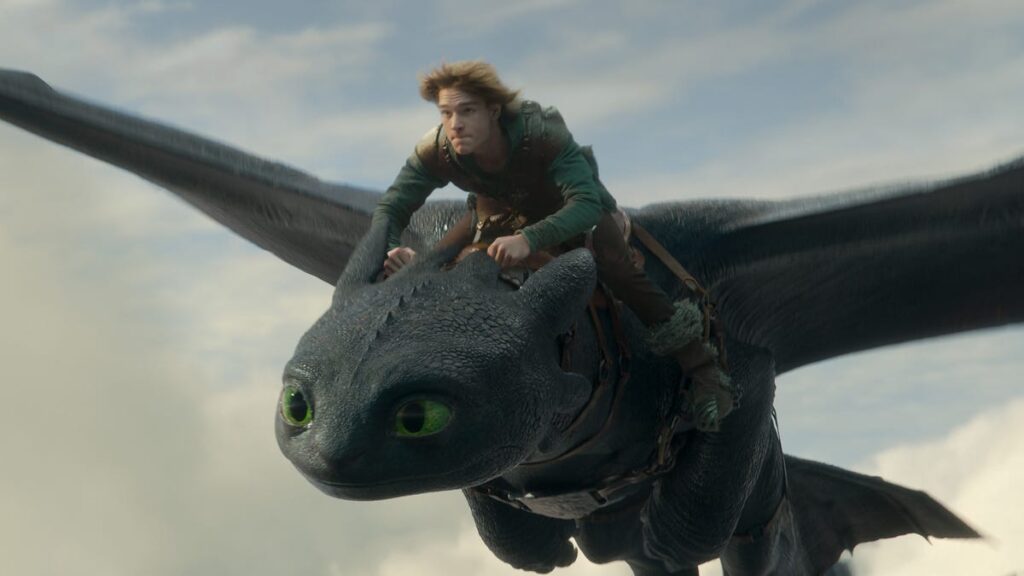
Mason Thames stars as the Viking boy Hiccup, who instead of slaying dragons befriends one in the live-action remake of “How to Train Your Dragon.”
- The live-action “How to Train Your Dragon” remake is a commercial and critical success, surpassing the original animated film’s box office earnings.
- Director Dean DeBlois, who co-directed the original animated film, returns to helm the remake, ensuring faithfulness to the source material while enhancing the story.
- A sequel is already in the works, slated for release in 2027.
The new live-action/computer-animated remake of “How to Train Your Dragon” soars high over a stunningly beautiful landscape — and over the remains of so many lackluster do-overs of animated blockbusters that came before it.
Like it or not, live-action remakes — or photorealistic animated retreads — of hit animated movies are here to stay as long as the studios can make money off of them.
But Universal Pictures has charted a new course for these types of remakes with “How to Train Your Dragon,” a massive commercial hit that’s thrilling both established fans and younger moviegoers by staying true to the spirit of the original 2010 DreamWorks Animation movie while using the chance to revisit the title 15 years later to create a high-flying new cinematic experience.
A month after arriving in movie theaters, the new film adaptation of Cressida Cowell’s book series has made more than $560 million worldwide, zipping well past the $495 million global box-office total of the first animated movie and nesting on the list of Universal’s 25 highest-grossing movies in domestic box-office history.
It’s also been “certified fresh” by critics and “hot” among moviegoers on RottenTomatoes.com.
Here’s how to watch ‘How to Train Your Dragon’ at home
Although it’s still playing in many theaters, “How to Train Your Dragon,” officially landed this week on home viewing: It’s available to buy or rent on digital platforms like Amazon Prime Video, Apple TV and Fandango at Home, as of Tuesday, July 15.
Watch “How to Train Your Dragon” with Prime Video
The remake flies onto 4K UHD and Blu-ray on Aug. 12, from Universal Pictures Home Entertainment.
Home viewers can catch a ride behind the scenes with more than 75 minutes of bonus content, including deleted scenes, a gag reel and making-of vignettes that dive deep into the cutting-edge visual effects, canny character transformations and beloved story that bring the Isle of Berk, with its warring dragons and Vikings, to life with eye-popping realism.
Universal Pictures’ films typically start streaming on Peacock a few months after their theatrical release.
How does Universal raise the bar for live-action remakes with ‘How to Train Your Dragon?’
With 2010’s “How to Train Your Dragon,” writer-directors Chris Sanders and Dean DeBlois famously swooped in to save DreamWorks’ bogged-down, multi-year attempt to adapt Cowell’s whimsical 2003 children’s book, the first of her successful series, into an animated adventure. They pulled off the seemingly impossible quest of turning the project into a commercially and critically successful smash, launching a blockbuster trilogy.
Since that animated trilogy earned four Academy Award nominations and grossed more than $1.6 billion at the global box office, “How to Train Your Dragon” was the natural launching pad for Universal to leap into the lucrative yet somewhat risky business of remaking its animated movies, like Disney has been doing for years.
When Universal set out to make a live-action remake of the boy-and-his-dragon tale, the powers-that-be wisely invited DeBlois to co-write and direct. Surprisingly, that’s apparently not standard practice for Disney: Although he and Sanders also co-directed the Mouse House’s 2002 animated hit “Lilo & Stitch,” DeBlois told The Hollywood Reporter that he didn’t get a similar invitation from Disney to be involved in this summer’s smash live-action do-over of the extraterrestrial island romp.
As one of the filmmakers who solved the puzzle of how to successfully adapt “How to Train Your Dragon” to begin with, DeBlois proves his deep love and understanding of the story with his live-action/computer-animated version. From the casting and special effects to the action sequences and dialogue, he and co-writer Will Davies (“Flushed Away”) keep the narrative largely the same while making mostly subtle changes to reimagine, enhance and reshape the story to its new cinematic form.
What are the key changes in the ‘How to Train Your Dragon’ live-action remake?
Back at the helm of “How to Train Your Dragon,” DeBlois demonstrates has savvy at knowing what to change and what to keep largely the same but elevate in his live-action/computer-animated remake.
For instance, Gerard Butler (“300”) does an excellent job embodying his voice role from the animated franchise as Stoick the Vast, the powerful chief of the Viking tribe that lives on the far-flung, frequently dragon-invaded island of Berk.
Mason Thames (“The Black Phone,” the upcoming Oklahoma-made Green Day movie “New Year’s Rev”) brings more emotional range to the lead role of Stoick’s misfit son Hiccup (voiced with delightfully squeaky nervousness by Jay Baruchel in the original), who uses a giant slingshot contraption of his own making to bring down a dragon of the mysterious Night Fury variety. But Hiccup can’t bring himself to kill the downed dragon, befriending it and naming it Toothless instead.
Thames is joined by fellow franchise newcomers Nick Frost (“Shaun of the Dead,” HBO’s upcoming “Harry Potter” series) as Gobber, Gabriel Howell (“Bodies”) as Snotlout, Julian Dennison (“Deadpool 2”) as Fishlegs, Bronwyn James (“Wicked”) as Ruffnut and Harry Trevaldwyn (“Smothered”) as Tuffnut, who develop their familiar characters in interesting ways.
Nico Parker (“The Last of Us”) proves well-equipped to take on the beefed-up role of Astrid, Berk’s most talented teenage dragon fighter, whose fierce drive and disdain for Hiccup, who clearly has a crush on her, get deeper motivation. As has become par for the course with sci-fi and fantasy fandoms, the casting of the mixed-race Parker as Astrid, who was voiced by Latina actress American Ferrera but portrayed as a blue-eyed blonde in the animated films, has caused some controversy.
Perhaps anticipating — but thankfully not pandering to — the tired squawking over diverse casting, DeBlois and his team reimagined the people of Berk as top warriors from around the globe who have gathered on the remote island to try to solve the world’s dragon problem, a clever narrative notion that has its roots in real-life Viking history.
Composer John Powell, who nabbed an Oscar nomination for his work on the 2010 animated film, revisits his stirring score but adds real bagpipes, arranged and played by Scottish musician Lorne MacDougall.
To give the movie an authentic look, costume designer Lindsay Pugh incorporated sheepskin and embroidery into the characters’ outfits, while production designer Dominic Watkins even used fossilized ironwood beams removed from a harbor in Belfast, Northern Ireland, to build the dragon arena.
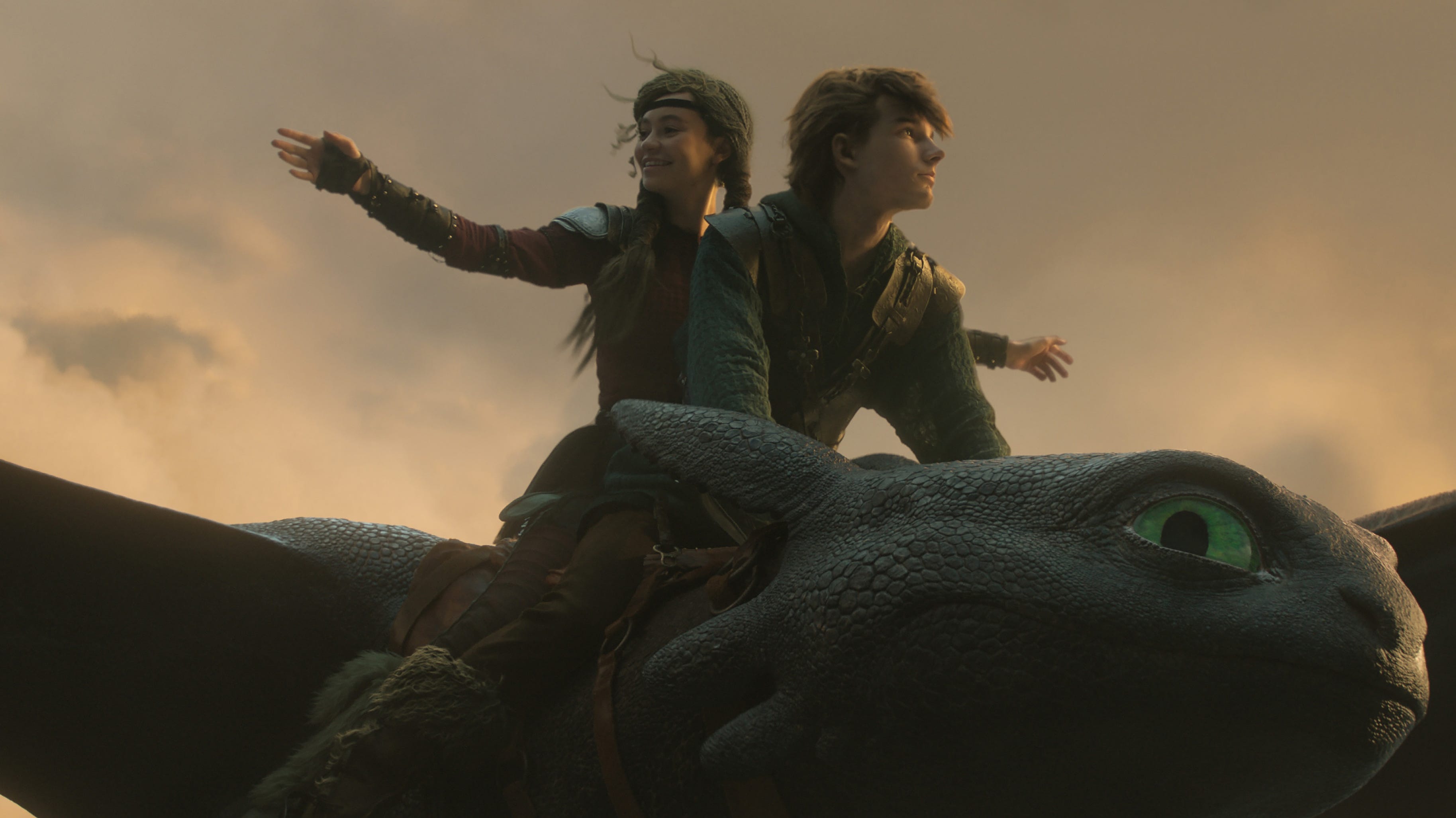
And the remake’s gorgeous landscapes, which are especially showcased during the scenes where Hiccup rides the soaring Toothless, come from the movie being filmed on location in Northern Ireland, Iceland and the Faroe Islands.
Since the team behind the wildly popular “Game of Thrones” has taken creating digital dragons to new heights, DeBlois and Co. spent a year and $50 million on pre-production development to figure out how to re-create Berk, Toothless and all the other “How to Train Your Dragon” reptiles of various species in stunningly realistic glory.
They even built “rideable” puppet dragons for the scenes where humans were flying through the skies atop their dragon friends to boost the realism of those scenes. After seeing lackluster visual effects in remakes like 2019’s “Aladdin,” it’s a delight to see such care and attention to detail deployed to bring the dragons of Berk to cinematic life.
With DeBlois back at the helm, work has already started on a new “How to Train Your Dragon” sequel, which is set to land in theaters June 11, 2027, and if the writer-director and his team stay the course, it will be a thrill, rather than a dreaded obligation, to see their next do-over soar into the cineplex.