
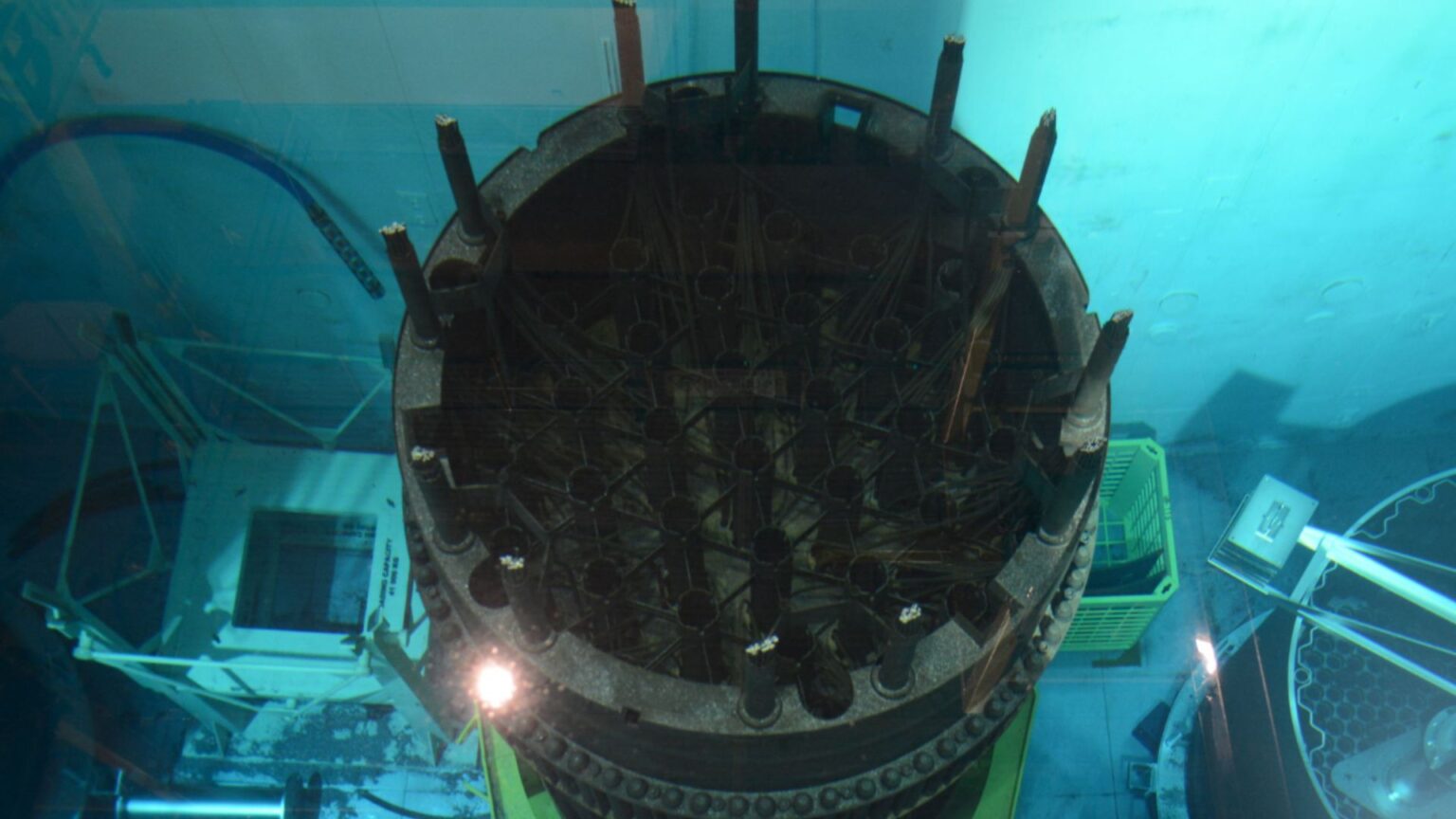
Two Soviet era VVER‑440 pressurised‑water reactors at the Bohunice nuclear power plant in western Slovakia have been completely removed and dismantled, the European Bank for Reconstruction and Development (EBRD) has confirmed.
The operation, which extracted and processed 6,700 tonnes (nearly 7,400 tons) of radioactive and contaminated structures, marks the formal end of the main decommissioning phase and clears the way for the site to be redeveloped by 2027.
A consortium led by Westinghouse, working with Slovak nuclear engineering firm VUJE, carried out the work under the EBRD‑managed Bohunice International Decommissioning Support Fund (BIDSF).
In addition to the large components of the reactor coolant system, steam generators, main circulation pumps, pressurisers, and pressure‑vessel internals, the team dealt with 479 tonnes of secondary radioactive waste. It released a further 3,800 tonnes of obsolete non‑radioactive material.
Long road from operation to shutdown
The two V1 units of the VVER‑440/V‑230 design were the first Soviet‑designed power reactors to be built outside the USSR, supplied by Atomenergoexport. They assembled with the help of Czechoslovakia’s Škoda Works.
They entered service in the late 1970s and became the backbone of Slovak nuclear generation after the 1977 refuelling accident that ended operation of the older Bohunice A1 gas‑cooled reactor.
According to the World Nuclear Association, between 1991 and 2000, the V1 plant underwent a US$300 million safety‑upgrade programme, covering emergency‑core cooling, instrumentation, seismic reinforcement, and fire protection, that an International Atomic Energy Agency review in 2000 found had brought the units up to Western safety standards.
Nevertheless, as a condition of Slovakia’s accession to the European Union, Bratislava agreed to close the reactors “as soon as possible”; Unit 1 went offline in 2006 and Unit 2 followed in 2008.
Their loss temporarily turned Slovakia into a net electricity importer, prompting domestic criticism and, in the depths of the 2009 Russia–Ukraine gas crisis, a short‑lived proposal by then‑Prime Minister Robert Fico to restart Unit 1. An idea that was never implemented.
International funding and technical effort
Decommissioning preparations began in 2012. By the end of 202, the BIDSF had received €638 million (USD745 million) from the European Union and donor governments including Austria, Denmark, France, Ireland, the Netherlands, Spain, Switzerland, and the United Kingdom.
Robotic decontamination systems and a combination of wet‑ and dry‑cutting techniques were used to disassemble the radioactive circuit safely and on schedule.
“This project shows what international cooperation can achieve. It also confirms our collective commitment to nuclear safety and environmental protection across the region and demonstrates that these complex and challenging tasks can be completed cost-effectively and promptly,” said Steven White, Head of the BIDSF at the EBRD.
Massimo Garribba, Deputy Director‑General for Energy at the European Commission, added: “By completing this decommissioning activity at the Bohunice nuclear power plant, we have set a benchmark for other decommissioning projects. This major international undertaking, financed by the EU and other donors, was successful thanks to the supervision of the Slovak nuclear and decommissioning company JAVYS and the work of the EBRD‑managed BIDSF fund.”
Slovakia’s nuclear landscape after V1
According to World Nuclear News, Slovakia today operates five reactors that supply roughly half of the country’s electricity, with a sixth unit under construction. The two remaining units at Bohunice, commissioned in 1984 and 1985, continue to run alongside Mochovce 1 and 2 (1998 and 1999). Mochovce 3 entered commercial operation in 2023, while construction of Mochovce 4 continues.
With the dismantling of Bohunice V1 complete and the site moving toward green‑field status, Slovakia has demonstrated that even first‑generation Soviet‑era reactors can be taken apart safely and efficiently. The experience is expected to inform similar projects across Central and Eastern Europe, where several VVER‑440 units are approaching the end of their operational lives.