
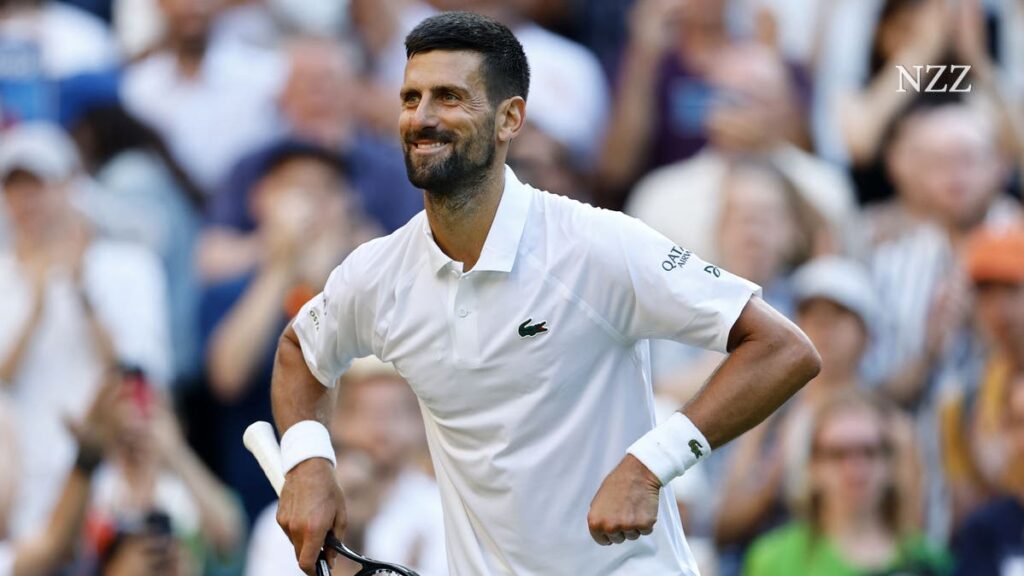
The world’s top tennis player and the award-winning director used to be held up by the government as icons of Serbian patriotism. Now, their support for the student and citizen protests in their home country are costing them the regime’s favor.
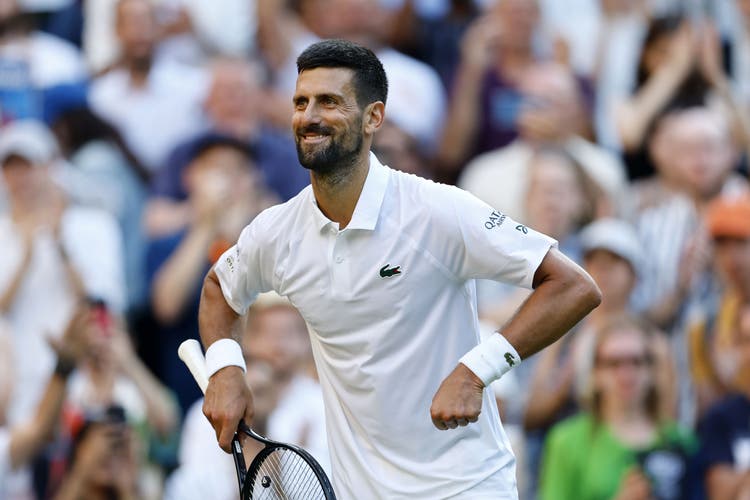
Tolga Akmen / EPA
For nine months, students and citizens in Serbia have taken to the streets to defend the rule of law and demand new elections. The pressure on President Aleksandar Vučić and his government is rising. They describe the protests as a so-called «color revolution» orchestrated by foreign forces seeking to destroy Serbia. The fact that two national heroes and patriotic Serbs are now supporting the students is a thorn in the regime’s side.
This is why the Serbian government has set its sights on Novak Djokovic, the world’s top tennis player, and award-winning film director Emir Kusturica. By discrediting the two, Vučić and his government hope to win back public support for the state. Whether or not this tactic will pay off remains to be seen.
Djokovic supports the youth, Kusturica opposes Vučić
On Dec. 18, Djokovic first commented on the protests, which were sparked by the collapse of a station roof in the Serbian city of Novi Sad on Nov. 1. Sixteen people died in the accident, which was the result of negligence and nepotism.
At the time, the tennis star wrote: «As someone who deeply believes in the power of young people and their desire for a better future, I believe it is important that their voices are heard.»
In January, he dedicated one of his victories to a student who had been hit by a car during a protest and hospitalized. On March 15, he shared photos of the largest protest to date, in which around 300,000 people participated, on his Instagram with the caption «History, amazing!» He also celebrated his recent Wimbledon victories with the signature pumping gesture linked to the student protest slogan «Pumpaj!» (Pump!)
Djokovic has primarily expressed support for students and young people in the country. He has not explicitly opposed Vučić or the Serbian government. Emir Kusturica, on the other hand, has openly criticized Belgrade.

Edgar Su / Reuters
Kusturica had already fallen out with Vučić in the months leading up to the tragedy in Novi Sad. He had spoken out against the planned mining of lithium in Serbia, a project that promises to guarantee Vučić the goodwill of the EU. In January, Kusturica claimed that he had received death threats, which Vučić and the public prosecutor’s office had allegedly ignored. Around that time, he also welcomed the student protests for the first time.
Kusturica has also recently called for the release of protesters who had been arrested for allegedly threatening the constitutional order. He has accused the Serbian government and Vučić of violating the constitution in an effort to normalize relations with Kosovo.
Mikhail Metzel / Sputnik via Reuters
Djokovic and Kusturica used to be Belgrade’s figureheads
For Vučić, this show of solidarity with the civil protests poses a serious problem as both Djokovic and Kusturica are highly regarded in Serbia.
Djokovic is the Serbian superstar par excellence. He is considered the best tennis player in history and has repeatedly used the tennis court to make political statements, for instance by opposing Kosovo’s independence. He presents himself as a proud Serb, has his children baptized in Orthodox monasteries and regularly supports charitable causes in the country. Many Serbs hold this in high regard. According to a survey, a majority of them would like Djokovic to run in new elections.
Kusturica, on the other hand, is renowned both in Serbia and abroad for his award-winning films. Serbian nationalists in particular celebrate the Bosnian-born director for adopting a Serbian identity and siding with Milošević during the Yugoslav Wars.
Both celebrities also served to enhance the president’s prestige in the past. They embody a Serbia that is cosmopolitan and internationally successful, but at the same time religious and patriotic – just how Vučić likes to portray himself. He courted Djokovic and Kusturica accordingly, supporting their projects with considerable funds and presenting himself to the public as their friend and helper.
Now, this mutual instrumentalization – which benefited everyone involved – threatens to backfire: By supporting the students, Kusturica and Djokovic are lending the protests a patriotic legitimacy that the president claims only for himself. Vučić’s conservative and nationalist voters could now side with the students. In fact, many already have.
This explains the fierce attacks that regime-friendly media have launched against the prominent duo. The campaign is being led by the tabloid newspaper Informer, which remains loyal to Vučić.
Kremlin Pool / Imago
Media campaign against Djokovic and Kusturica
After the large protests on March 15, the tabloid called Djokovic a «disgrace,» accusing him of supporting violence and the alleged «color revolution.» When it became public that Djokovic wanted to move to Athens with his family, Informer called him a false patriot who had presented himself as a symbol of Serbia for years only to now flee to Greece. A few days ago, an entrepreneur and opponent of the protests published a video linking Djokovic’s father to an alleged pedophile.
Kusturica has also been branded an activist of the «color revolution» by the government-friendly outlet. Because the director often appears on the Russian-funded propaganda channel Sputnik, Informer promptly claimed that Russia was another alleged mastermind behind this supposed revolution.
For the pro-president media, the protests seem to be coming from everywhere except the center of society. Meanwhile, Vučić himself paints himself as the level-headed father of the nation. After Djokovic missed out on a place in the Wimbledon final, Vučić refrained from gloating. On the contrary: He called the tennis player a «Serbian legend,» Informer wrote. According to the tabloid, Vučić expressed his wholehearted support for Djokovic: «He can say whatever he wants against me and support my opponents. But saying something bad about him is stupid and silly.»
Edgar Su / Reuters
Latest articles
NZZ Geopolitics – The independent Swiss view
Standing outside the American media establishment, the NZZ offers distinctive insights that challenge the polarized narratives often found in U.S. coverage. Our goal is to provide in-depth, nuanced reporting on global affairs, including developments in the United States, Europe, China and beyond. Taking a nonpartisan stance, we approach events with a sober and critical eye. Backed by a trusted network of international correspondents and expert reporters based in Switzerland, we deliver sharp analysis and a deeper understanding of geopolitics and the global economy.
Sign up for our free newsletter or follow us on Twitter, Facebook or WhatsApp.