
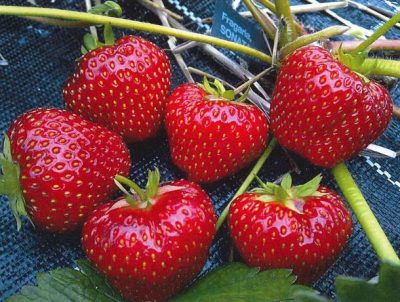
They were once a local seasonal delicacy, known for being small but loaded with flavour. Anyone serving strawberries from May and through the summer could expect to be challenged: “Er de norske?” (Are they Norwegian?), as opposed to imports from Belgium, for example. The Norwegian strawberries (jordbær) were always reputed to be far superior, but now the locals aren’t so sure.
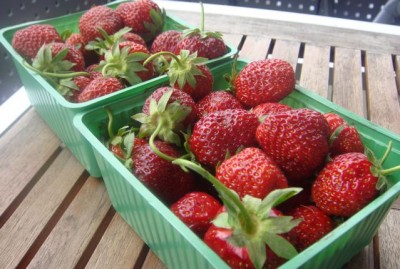 Locally grown strawberries are still considered a delicacy in Norway, but are no longer sold in plastic boxes like these and don’t taste the same. PHOTO: NewsinEnglish.no
Norwegian consumers have noticed some clear differences in the berries now sold both straight from the farm or at the grocery store. They’re bigger, tend to be shinier and even berry growers themselves admit they don’t taste the same.
They’re still much more expensive than the strawberries imported to Norway before local berries hit the market. A small basket-like paper box (the green plastic baskets used earlier are no longer) costs as much as NOK 89 (nearly USD 9) or more when they first appeared this season. Now the price has fallen to around NOK 69, even NOK 49 at some discount grocery store chains, but that’s still double what they cost a few years ago.
The biggest difference, though, is that most are no longer the so-called Senga Sengana type of berry from the 1960s that was mostly replaced in the 1980s by the norsk korona strawberry, both of which were small, dark red and super-sweet. Berry grower Håkon Myklebust of Valldal in Sunnmøre told news bureau NTB that the korona berries now only account for around 3 percent of strawberries now on the market.
“They’re seldom grown because they’re no longer profitable,” Myklebust told NTB. Nor are most berries grown in the ground in open fields any longer. That’s because they have a shorter shelf-life, are more susceptible to weather problems and carry higher labour costs tied to berry-pickers in the fields.
Myklebust thinks most Norwegian berry growers have switched over to substrat growing, not in dirt but in other material and often covered up in plastic tunnels where growing conditions can be controlled. He’s still a “free land” grower in the fields and has noticed the taste difference himself.
“The types grown in the tunnels are also very good but maybe don’t have the same taste as in the old days, what folks remember from before,” he said. Random taste tests conducted by several Norwegian media outlets this year including broadcasters NRK and TV2 also confirmed how tasters couldn’t distinguish a Norwegian strawberry from a Belgian one.
Logistics and distribution are likely behind the new types of berries grown in Norway that don’t taste the same as the Norwegian strawberries from earlier years. Those with arguably the most taste, meanwhile, are the tiny wild strawberries that can be found while out walking in the local countryside or woods, especially along dirt roads at this time of year. They have an intense taste, and are completely free.
NewsinEnglish.no/Nina Berglund