

The figure was supposed to “grab some attention” and sound a timely warning in the hope of avoiding more needless deaths, said Friederike Otto, one of the scientists involved in the research.
“We are still relatively early in the summer, so this will not have been the last heatwave. There is a lot that people and communities can do to save lives,” said Otto, a climate scientist at Imperial College London.
Heat can claim tens of thousands of lives during European summers, but it usually takes months, even years, to count the cost of this “silent killer”.
Otto and colleagues published their partial estimate just a week after temperatures peaked in western Europe. While the underlying methods were not new, the scientists said it was the first study to link heatwave deaths to climate change so soon after the event in question.
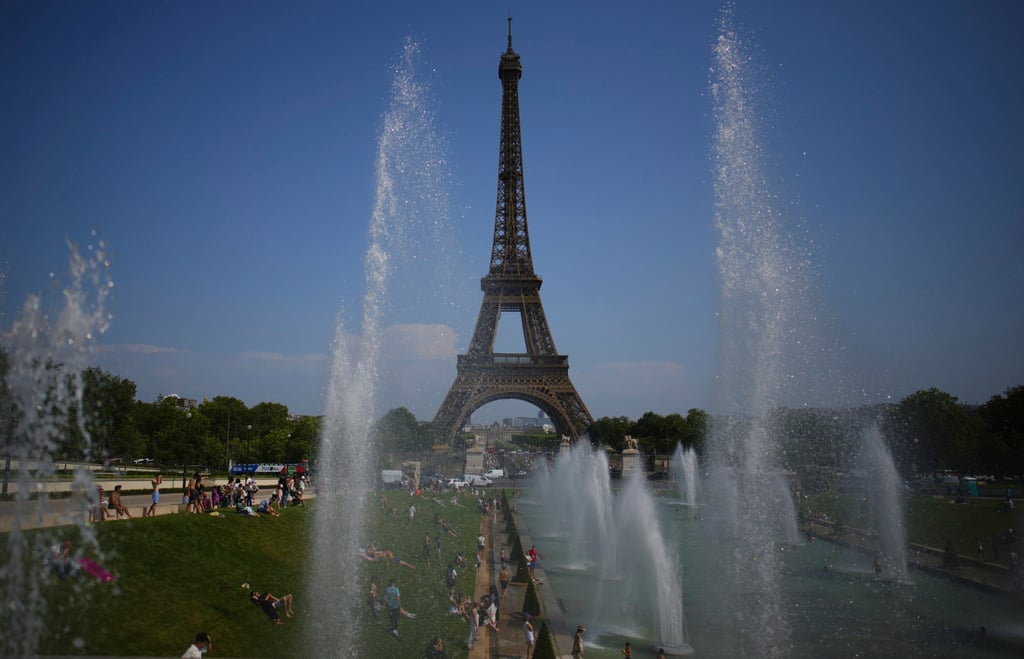
People cool off at a fountain at Trocadero near Eiffel Tower during a heatwave on July 2 in Paris. Photo: AP
Early mortality estimates could be misunderstood as official statistics but “from a public health perspective the benefits of providing timely evidence outweigh these risks”, said Raquel Nunes from the University of Warwick.