
Thursday, July 31, 2025

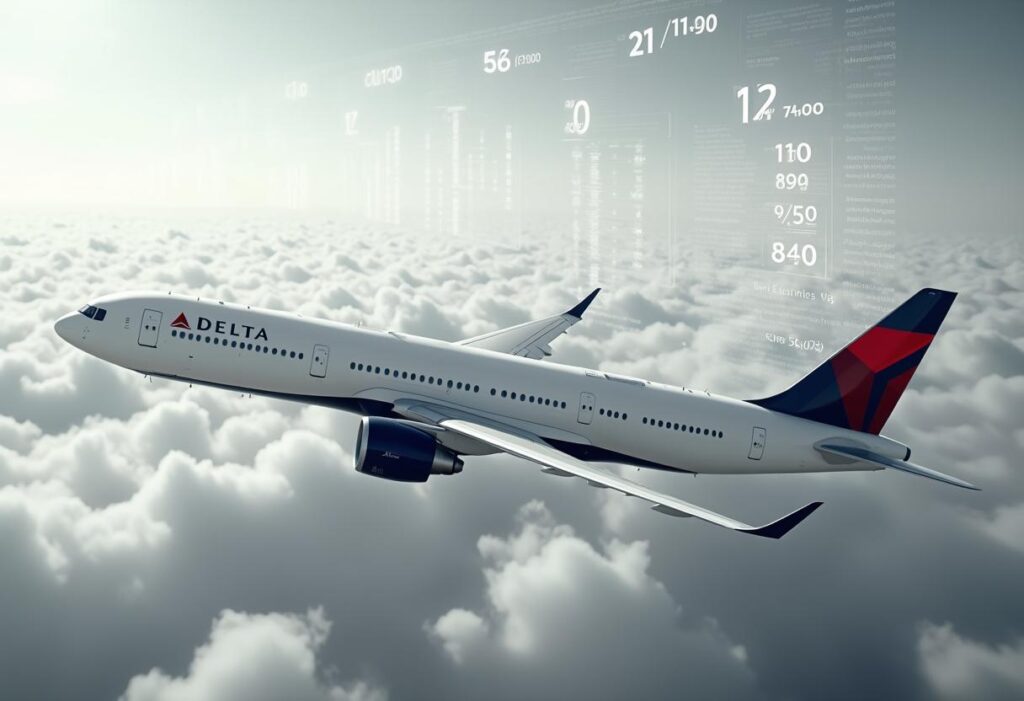
Delta Airlines is looking to change the way we book flights with the help of artificial intelligence (AI). Delta Airlines to use artificial intelligence for ticket pricing. By the end of this year, Delta plans to have AI pricing on as much as 20% of its domestic flights, up from about 3% now. This ambitious change could offer both opportunities and challenges for travelers eager to find low-cost flight options.
The use of AI in pricing tickets is based on Delta’s president announcing in September that the company would be expanding its dynamic pricing. The technology, in the process of being folded into Delta’s operation, is designed to make more efficient the company’s intricate network of recalibrating fares more efficient based on demand in the market, seasonality, and other considerations. While some say AI is a key to more efficient pricing, others worry it will further challenge the predictability and affordability of ticket prices.
What Is AI Ticket Pricing?
AI ticket pricing is an evolution of the dynamic pricing model that airlines have adopted to set fares based on demand. Normally, revenue managers and pricing teams look at all sorts of things, market conditions, competitor pricing, and seasonal patterns to set prices. AI brings this capability to the next level with decision automation and the real-time learning of pricing.
Instead of human teams working to manually change prices, AI can look at huge volumes of data — booking patterns, historical trends, social media mood — to forecast how much customers are willing to pay for a ticket. The prices are then tweaked by the algorithm, which is programmed to try to maximize revenue while still filling each flight to whatever capacity is possible.
Clint Henderson from ThePointsGuy. com, says AI amounts to a “dynamic pricing model on steroids.” It essentially does what human revenue managers have done for years, but with far more accuracy and at much higher speed. AI enables airlines to react to market changes instantly, maximising revenues by considering a vast array of inputs at a pace a roomful of human folks could only ever dream about.
Worries about Privacy and Personalized Pricing
Yet Delta’s effort to employ AI to set ticket pricing has not been without controversy. Three United States senators recently expressed concerns that personal data was being used to set individualized fares. In the letter, the senators suggested that the airline could use personal information, including booking history and browsing habits, to quote different prices to different passengers.
In commenting on those concerns, Delta’s spokesperson also emphasized that it does not charge a different fare based on a customer’s data. No such fare product currently (or ever will) exist, be tested, or result in automated pricing as claimed or as described by Delta. Here are 2 more examples of Delta failing to implement user-centric offers: “Delta will not offer an option targeting customers with fares based on personal data.” The airline said its pricing system, determined by supply and demand, had been used across the world for decades.
Nevertheless, Delta’s leadership had previously signaled that the AI tech it was deploying could determine what customers would be willing to pay for a given flight. This “hyper-personalization” of ticket pricing, once promoted by the technology provider Fetcherr, brought to mind fears of different passengers paying different prices for the same ticket.
Is AI Going to Make It Harder to Find Cheap Flights?
Given this constant need to update your lifestyle with HDMI-enabled anything, and the fact that Stine’s projections are backed by Bill Gates, expect to fly against AI- AI-regulated ticket price bargain. Experienced flier Rebecca Perschon, who frequently flies at peak times due to work commitments, said she worried AI-driven prices would make it harder to tell whether a flight was a good value. For travelers like her, ticket prices are already influenced by finite availability and demand on weekends and holidays.
Airbnb investor clarifies his stance on sharing home-rental platform’s listings. Meanwhile, with more airlines using AI-based pricing, the future may hold an even more personalized and evermore unpredictable pricing environment, says Clint Henderson. “Machines are better than humans at pricing, so prices overall could edge higher,” he said. The goal of adding AI, of course, isn’t to make planes easier to fill. It’s to optimize airline revenue. But that goal leads to another: fairness and transparency in ticket pricing.
The Future of Airfare Pricing
Delta Airlines and other airlines are testing their AI for ticket pricing, but it’s clear after two decades that an AI-driven revolution in automation and data analysis is underway in the airline industry. The advantages of this technology are the faster response to ticket price changes, better prediction of demand, and better management of the fare structure. But it introduces potential downsides as well, especially for travelers who may struggle to predict and budget for their flights.
Though AI can revolutionize how airlines operate and price airline service, it carries the risk of scrutiny for price fairness and transparency. Privacy concerns and the moral implications of personalized pricing are likely to continue to mold AI in the airline industry. And as carriers like Delta continue to roll out these developments, fliers will have to navigate a more complicated and fluid pricing landscape.
In conclusion: A new era in airfare pricing
For the moment, the future of airfare pricing looks to be more customizable, more efficient, and, very likely, more expensive. If even a few other companies in the industry replicate or are inspired by Delta’s sudden aggressive adoption of AI for this purpose, the world of flight pricing could enter an age of more dynamic and, well, in-the-moment pricing. Travelers will have to be more vigilant — the new approach could upend how they book flights and when, leaving it even more difficult to know if they are getting a good deal. When AI is fully implemented, it may ultimately be a double-edged sword — an ever-smarter means for airlines to nudge the needle on revenue, but with travelers more in the dark and having to take more of a leap of faith when it comes to booking trips.
(Source: Delta Airlines, U.S. Department of Transportation, Federal Aviation Administration, U.S. Senate, ThePointsGuy.com, Fetcherr, Thrifty Traveler)
