
It didn’t take long for one of Norway’s major furniture producers to warn of price hikes on exports to the US, after US President Donald Trump slapped a new 15 percent tariff on all imports from Norway. Norwegian government officials were also disappointed by Trump’s new tariff, with Finance Minister Jens Stoltenberg calling it “a one-sided American decision with which we disagree.”
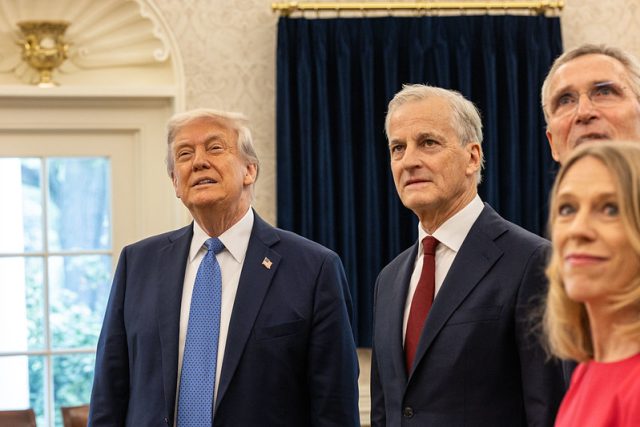 A high-level Norwegian delegation visited US President Donald Trump at the White House last spring, but didn’t manage to ward off Trump’s new 15 percent tariff on Norwegian imports. From left, Trump, Norwegian Prime Minister Jonas Gahr Støre, Finance Minister Jens Stoltenberg and Norway’s ambassador to the US, Anniken Huitfeldt. PHOTO: Daniel Sannum Lauten/Pool/TV2/Statsministerens kontor
Stoltenberg got along well with Trump when he was NATO’s secretary general, but there have been several disagreements since. Prime Minister Jonas Gahr Støre and Trade Minister Cecilie Myrseth claimed, as did Stoltenberg, that “conversations” with the US continue, “but there’s a limit to how far Norway should stretch itself to strike a deal with the US, if we think it contains elements that are against Norwegian interests,” Stoltenberg told state broadcaster NRK on Friday.
“We’re not going to pay just any price in order to get a lower tariff,” Stoltenberg said. He seemed to be referring to how the EU and UK promised investment and purchasing in the US in return for tariffs lower than Trump first threatened them with. Stoltenberg has worked hard to get Trump and his troops to rein in their tariff threats, staying in close touch with the White House in recent months and telling newspaper Dagens Næringsliv (DN) in early June that “the tone is good.” Stoltenberg also interruped a brief summer holiday earlier this month to dash off to the G20 summit in South Africa, to carry on tariff conversations with all involved.
Now he’s clearly disappointed but not giving up yet, sending an email to DN in which he called the 15 percent tariff “unfortunate” but that “we are sill in a process with the USA, with a goal of coming to agreement.” Both Stoltenberg and Støre support a rules-based international free trade system that Trump is now trying to tear apart. “We are of course skeptical towards this manner of developing trade,” Støre told NRK. “The world was going in the direction of lower (or no) tariffs, but now the Americans want more tariffs.”
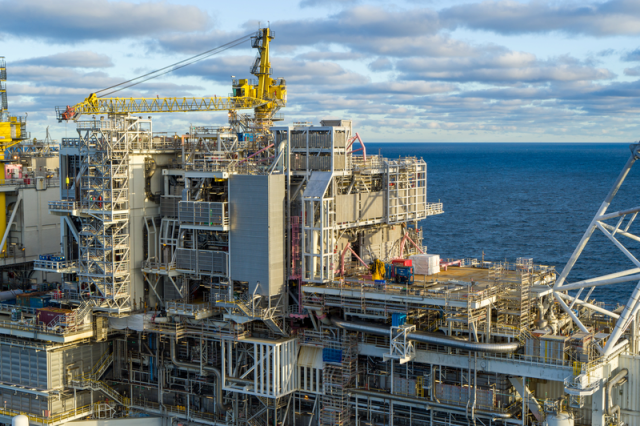 Norway’s offshore oil and gas industry accounts for the majority of Norwegian exports, with not much of that going to the US. The EU remains Norway’s largest trading partner, with only 3.5 percent of total exports going to the US: PHOTO: Equinor
Norway is at least in a better situation than Switzerland, which got hit with a tariff of 39 percent, and other countries like Brazil even higher. The EU now also faces a 15 percent tariff but in addition was pressured into going along with promises to both invest in the US and purchase US goods. Earlier threats of reciprocal tariffs against the US seem to have been abandoned.
Norway is also fortunate that only about 3.5 percent of its total exports go to the US market, mostly in the form of fish and other seafood, petroleum and chemical products, metals, machinery and furniture. Fully 66 percent of Norway’s trade is with the EU, and the remaining 30.5 percent with other countries.
Several Norwegian economists think Norway will tolerate the new tariff, although some companies that send lots of products to the US face tougher times. They note that at least some of the uncertainty that Trump planted after unveiling his punitive tariff plan is now gone, and he may end up creating trouble for himself if higher prices on imports send US inflation up.
Norwegian furniture maker Ekornes, for example, seemed set on Friday to pass on the extra expenses of a 15 percent tariff on its products sent to the US. The Norwegian company, which produces among other items the internationally popular Stressless chairs, was stressed itself on Friday and told TV2 that it will now need to boost its prices in the US.
 Norwegian furniture maker Ekornes is behind the internationally popular chairs known as “Stressless,” but Trump’s tariffs are raising stress levels at the company. PHOTO: Ekornes
“It will be first and foremost American customers who will see price increases,” Ekornes boss Trine Hammernes Leopold later told NRK. “We evaluate prices based on the competitive situation in various markets.” Now that Trump has made his tariff hike known, “we will have to adjust our prices” accordingly, Leopold said.
Ekornes, based in the mountain town of Sykkelven on Norway’s west coast, also ranks as the Nordic region’s largest furniture producer. It has 19 sales offices in 13 countries and more than 4,000 outlets serve 48 markets worldwide. It also has some production sites in other countries, but has no plans on moving more production to the US. “Sykkelven is our home and remains the most important for us also in the future,” Leopold told NRK.
American consumers are also likely to see price hikes on Norwegian salmon imports, one of the biggest sectors of the Norwegian seafood industry that itself ranks second only to oil and gas in Norway. Norwegian-based Salmar, one of the world’s biggest salmon producers, seemed unsure of how Trump’s new tariff will affect the company.
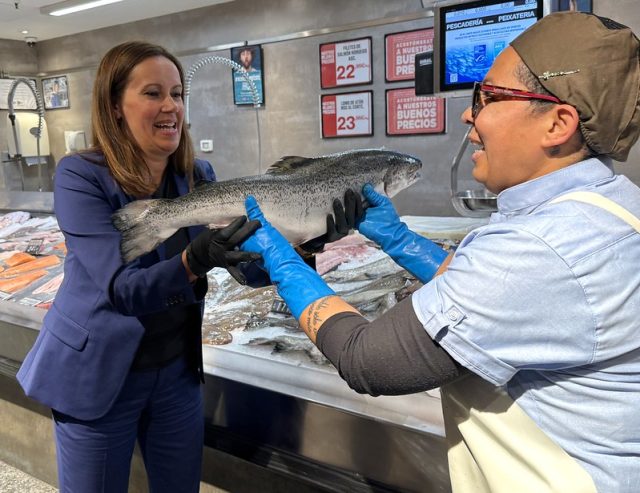 Norway has long been a major exporter of salmon, promoted here by Fisheries Minister Marianne Sivertsen Næss at a market in Barcelona earlier this year. Now more of it may go to countries other than the US, given the new 15 percent tariff on it. PHOTO: Nærings- of fiskeri departementet
“Our salmon finds its way to markets all over the world,” wrote Salmar’s strategic director Runar Sivertsen in a statement on Friday, “how and to what degree the new tariffs will affect us are still difficult to determine.” Some exports may be re-routed to other markets, a strategy also being pursued by Norwegian ecological toilet producer Cinderella: “We won’t concentrate on the US as much, since our products would need to become more expensive.”
Norwegian seafood producers will also face more competition from British competitors after the UK negotiated a 10 percent tariff with Trump in return for other British promises of investments and purchases in the US. “It’s unfortunate that the US is breaking agreements though the World Trade Organization,” said Geir Ove Ystmark, leader of the seafood industry’s organization Sjømat Norge.
There was some other negative reaction to the new 15 percent tariff on Norwegian goods Friday. Both the price of Norway’s offshore oil and the Oslo Stock Exchange fell, if only around 1 percent by late afternoon. Karianne Alsvik Nelson, an economist at Handelsbanken in Norway, thinks the markets are beginning to get used to Trump’s tariff threats but they’re weakening prospects for economic growth. She also thinks they will lead to “higher inflation pressure” in the US, and higher costs.
NewsinEnglish.no/Nina Berglund