
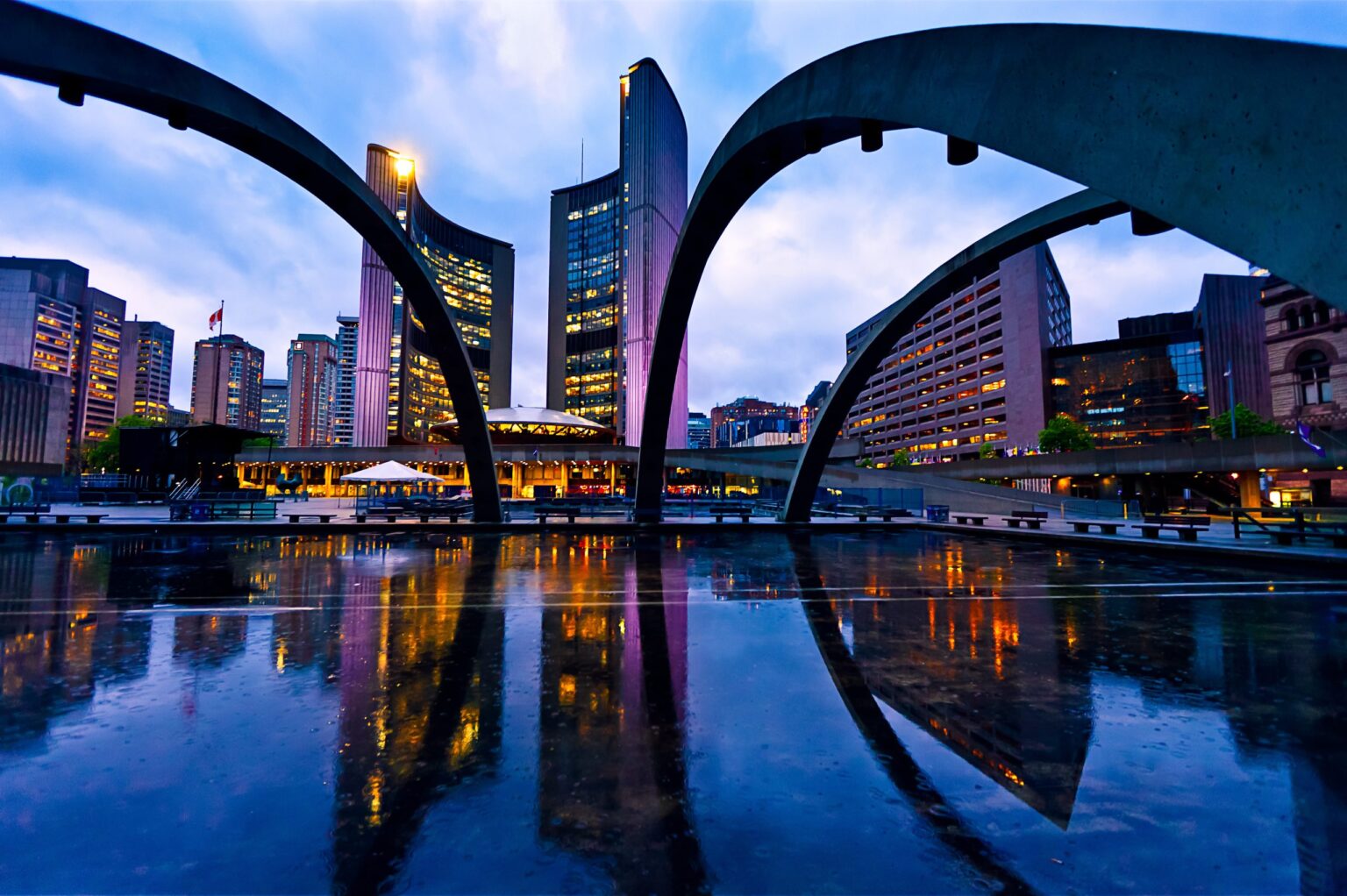
The Canadian spirit of unity and resilience was on full display during my visit to Toronto, Ottawa and Montreal to study the country’s system design and infrastructure delivery.
Unity often arises from external threats, and Canada’s defiance at the suggestion that it becomes the 51st state of the United States, coupled with the landslide election victory of Prime Minister Mark Carney, has brought the nation together like never before.
Why Canada? For many years Infrastructure New Zealand has examined what other countries are doing to unlock opportunities and create system settings and partnership models that build infrastructure faster and better with a more intentional investment of private capital.
Aotearoa New Zealand and Canada have often been examined together in cultural mapping surveys: small populations relative to large lands, liberal democracies, dominant neighbours, diverse citizenry, indigenous peoples as their foundations, Commonwealth nations, and a tradition of down-to-earth ‘egos-in-check’ humility reflected in their national character.
I came away from Canada with six strong impressions:
1. Inherent focus on investment outcomes. Conversations with public and private infrastructure developers in Canada were consistently threaded with ‘what we’re getting’ rather than ‘what it’s costing.’ This does not suggest Canadians are impervious to what infrastructure developments cost, or the ongoing investment needed for maintenance, but it does point to a mindset that focuses on holistic 10, 20, 50 year economic and social benefits of land use uplift, rather than the shock horror of short-term costs.
2. How a project starts is critical to how it ends. You can never get complete certainty of price before a shovel breaks ground, as there is always risk – especially on mega-scale projects. Confidence in the process comes when the majority of risks are well understood, properly considered, mitigated and accepted by all the parties upfront. Projects go wrong for many of the same reasons: geotechnical issues or unknown utilities underground, adversarial regulatory approvals processes, rigid procurement and contract models, access to property. In Canada I noted signs of early engagement on controversial topics, a bias towards what is right for the long-term rather than short-term attention to the loudest voices, and social license processes that bring all parties together upfront to understand risks, rules and rewards, and ways to co-create.
3. Collaboration, not command, is the approach to procurement. In observing public and private initiatives in Canada, there was acknowledgement that the individuals involved across parties have unique experiences and strengths, and that these can be respectfully acknowledged and incorporated into decision-making. Canada’s progressive procurement model, as outlined in the INZ ‘Building Strong Foundations: Canadian System Design and Infrastructure’ summary report, has been shown to offer flexibility and ways to co-create, identifies risks in a collaborate way, and helps to balance the influence of owners, with hands-on market and delivery experience. The key is to keep going and evolving – to retain those positive aspects of flexibility, collaboration and balanced inclusion of stakeholders – rather than throwing the baby out with the bathwater and starting again.
4. Exceptional projects need exceptional project leaders. I saw in Canada a rare breed of people I’d call ‘grunty diplomats.’ These are ‘get stuff done’ people who make projects succeed, and in their absence, fail. They are robust managers who can stay the course, manage scope and risks, and command the collaborative process. This is not kumbaya; it’s being hard-nosed about making the right choices to move the whole community forward, which includes pivoting when necessary. The ideal person is a cross between Robert Moses and Jane Jacobs. Moses was the planning czar responsible for the transformation of New York city and suburbs whose approach personified ‘be part of the steamroller or part of the road.’ His nemesis was Jane Jacobs, the American-Canadian urban theorist, writer, and urban advocate, who championed community-led planning approaches, and fought Moses for the soul of the city.
5. Government settings are the primary actor. The new Prime Minister Mark Carney is refreshingly inspirational in his no-nonsense articulation of plans to tackle some of Canada’s most complex infrastructure challenges, unaddressed for decades. “The scale of the problem, and the solutions, are generational,” he said in instigating a raft of measures including provision of government capital, investment in skilled trades, urban densification, modular and prefab housing, innovations in timber, and tax incentives for developers and first home buyers. He predicts long-term economic and social outcomes adding three or four points to Canadian GDP.

6. Change is popular after it happens. In Canada as in Aotearoa, there is almost always opposition to change. Projecting this locally, the Sky Tower and Waterview Tunnel to Auckland Airport may never have proceeded if their most vocal opponents had prevailed. The City Rail Link has had pain points in the Auckland CBD for several years now. Beca was intimately involved in the formation of all three projects, and all three have, or will in the case of the CRL, added immeasurably to the vibrancy and connectedness of the city. A current contention is the densification of Auckland’s inner-city ridgelines, with some expressing concern about potential impacts on heritage values. In my view, while our shared heritage is important and deserves to be cherished, it can be counterproductive to treat all such areas as if they must remain in a mummified, museum-like state. The city as a whole stands to benefit from considered, high-quality redevelopment in selected locations – there are areas fertile for good quality development, without compromising the holistic character of the inner city.
My overriding impression is that Canada felt not only like a country united, but a movement. “Oh Canada! The True North strong and free.” How do we in Aotearoa get infused with this spirit? The doldrums are not safe zones for lingering. Let’s get going.